
Handle profile guide
G Profile vs J Profile Handle — Differences and Which to Choose
How the two edge-handle sections differ in shape, grip and fixing, and how to pick one before the shutters are ordered.
The short answer
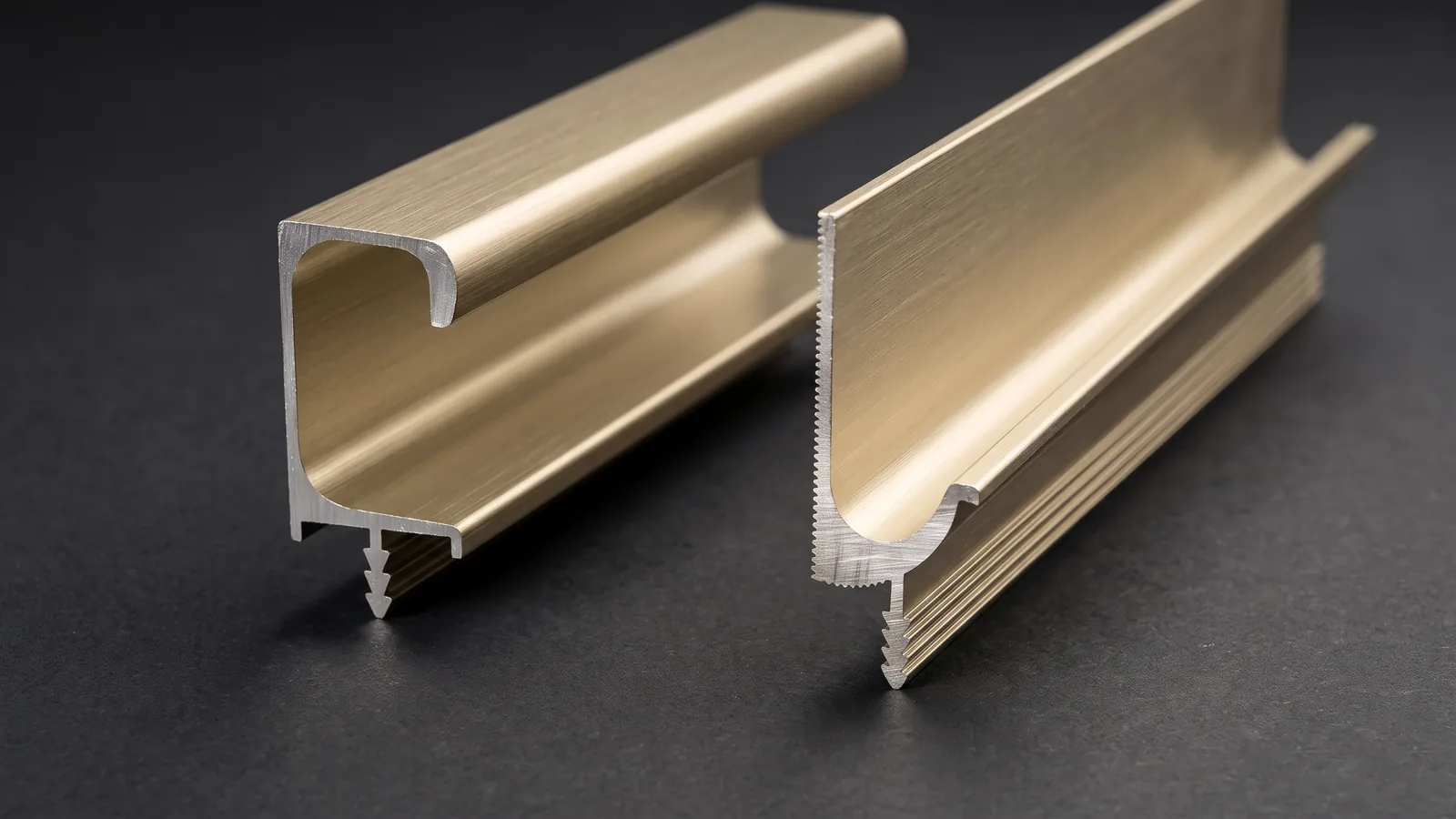
A G profile has a squarer groove and lip; a J profile has a rounder finger channel. Both are extruded aluminium sections that fix to the top edge of a shutter or drawer front and move with it, so the choice is mostly about grip, look and the board you are fitting to. Check the physical sample, because the grip is the one thing a render cannot show.
The same kitchen can look sharp or bland depending on a section that is only a few millimetres deep. G and J profile handles are both used to replace surface handles on shutters and drawer fronts, and designers often ask which one to specify. The honest answer is that the two do the same job in different shapes.
This guide compares the G profile and the J profile handle, clears up a naming confusion that catches people out on site, and gives a short checklist for choosing between them. It is written for interior designers, architects, modular kitchen manufacturers and carpenters specifying in India. The product detail comes from Mirano's published G profile handle page.
The basics
What a G profile and a J profile handle are
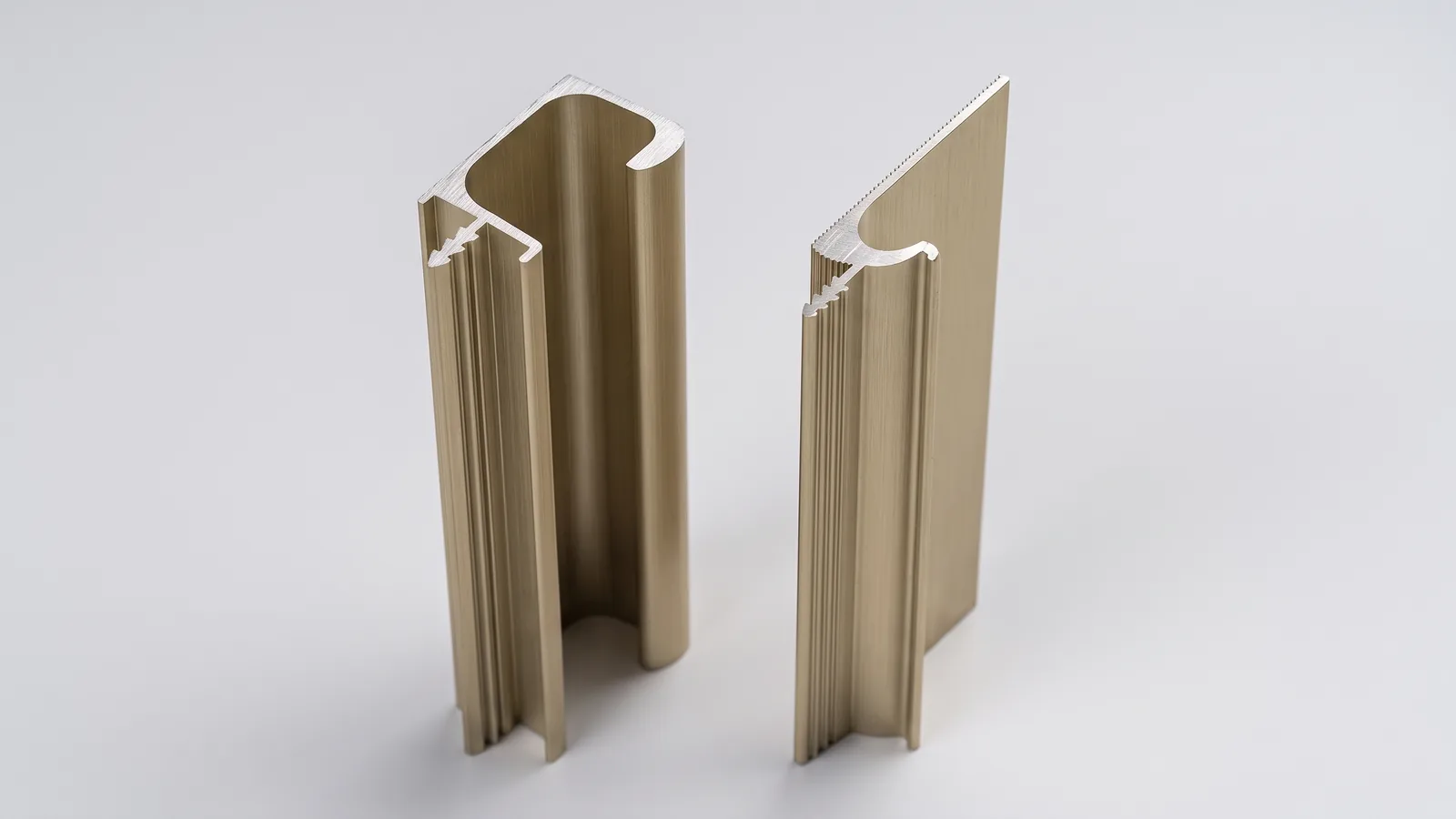
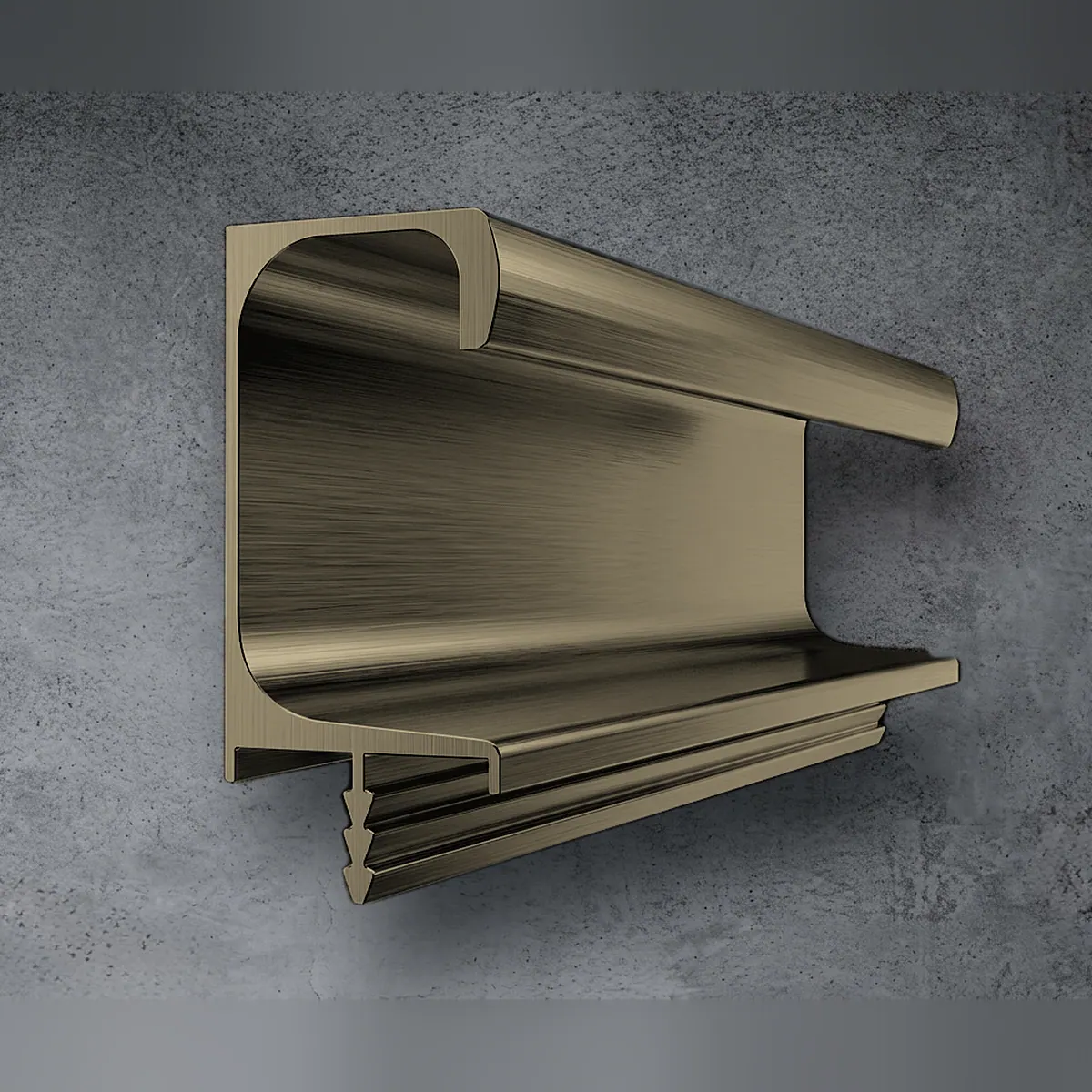
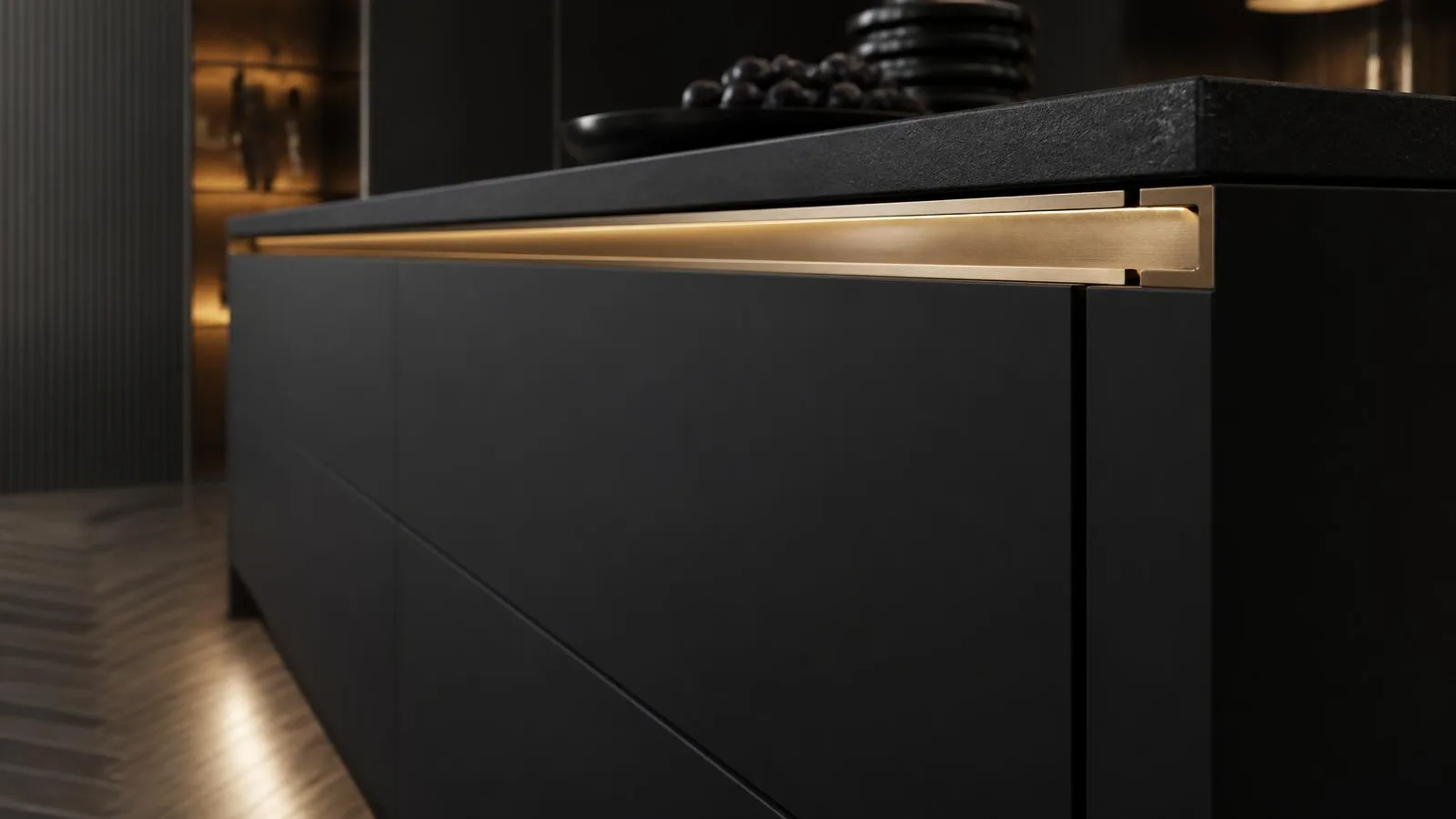
G profile handle. An extruded aluminium section fixed along the top edge of a shutter or drawer front. It caps the board edge and gives a finger groove, so no separate handle is needed. In Mirano's range the G-Section has a squarer groove-and-lip form with a ribbed stem on the back that locates it in the panel edge.
J profile handle. The same idea in a different section. The Eureka J has a J-shaped section with a rounded finger channel and a ribbed stem. The lip curves instead of ending in a squared step, so the edge feels softer under the fingers.
Both are supplied by Mirano in 3 m lengths and are cut to the width of each front. See the G-Section and Eureka J sections for the profiles themselves.
Read before you specify
The J profile naming trap
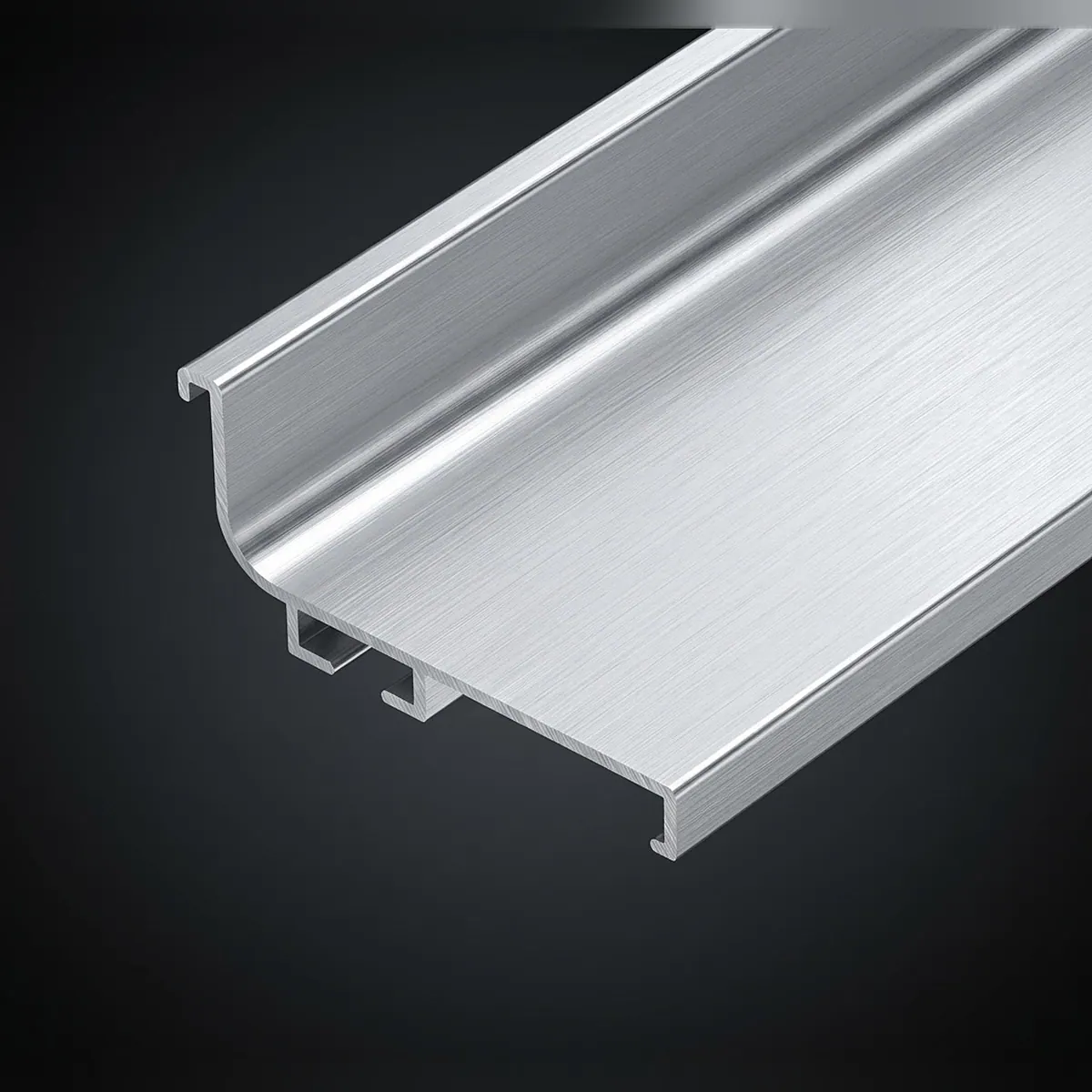
In Indian kitchen drawings, "J profile" is used for two different things. One is a shutter-edge J handle like the Eureka J, fixed to the front and moving with it. The other is a J-shaped channel in a gola system, fixed to the carcass so that the gap above the door becomes the finger grip. Gola systems are usually described with C and J shapes.
The two are not interchangeable. A gola channel has to be planned into the cabinet at the design stage, while a G or J handle can be added to a front. If a drawing or quote says only "J profile", ask where it is fixed. For the carcass-fixed type, see the horizontal gola profile range, and for the wider comparison read handleless kitchen options: gola vs G profile vs push-to-open.
Comparison
G profile vs J profile handle
| Factor | G profile (G-Section) | J profile (Eureka J) |
|---|---|---|
| Section shape | Squarer groove with a defined lip | J-shaped, rounded finger channel |
| Back of the profile | Ribbed stem that fixes into the panel edge | Ribbed stem that fixes into the panel edge |
| Fixed to | Top edge of the shutter or drawer front | Top edge of the shutter or drawer front |
| Moves with the front | Yes | Yes |
| Published length | 3 m | 3 m |
| Published panel thickness | 18 mm (typical range 16–19 mm) | 18 mm (typical range 16–19 mm) |
| Uses listed by Mirano | Openable kitchen shutter, pull-out, drawer | Openable kitchen shutter, pull-out, drawer |
| Finishes | Same ten Mirano finishes | Same ten Mirano finishes |
| Corners | 45° mitre with matching connectors | 45° mitre with matching connectors |
| Groove width and section depth | Not published; confirm in the datasheet | Not published; confirm in the datasheet |
Mirano publishes the lengths, panel thickness and finishes above. Groove width and section depth are not published on the product page, so ask for the datasheet before you detail the front.
How to choose
How to choose between G and J
- Decide the look first: A G section gives a crisp, architectural edge. A J section reads softer. Choose the one that suits the shutter style and the rest of the hardware.
- Test the grip: Hold a physical sample and open a drawer with it. Finger size, drawer weight and how often the front is used all change how a groove feels.
- Check the board: Both are published for 18 mm panels, and most profile handles suit 16 to 19 mm boards. Heavier tall-unit or wardrobe shutters may need a profile compatible with 25 mm. Confirm before cutting.
- Keep one section per run: Mixing G and J on adjacent fronts looks unplanned. Pick one for a continuous run and keep the other for a different zone, if at all.
- Match the finish to the shutter: Choose the profile finish together with the shutter finish. The ten finishes can be previewed on the product page, but physical samples are the reference.
- Plan the corners and ends: Decide where the profile turns a corner, where it stops and where end caps go. Order connectors and caps with the profile.
Avoid these
Common mistakes with edge handle profiles
- Ordering by name alone: "J profile" can mean a gola channel. Confirm where the section is fixed and which product code is quoted.
- Skipping the sample: Finish and grip are judged by hand. Colour previews on a screen are digital renders and are for guidance only.
- Splitting the order: Anodised batches can vary slightly. Order the whole run together to limit colour differences.
- Forgetting caps and connectors: Clean mitred corners depend on matching connectors and clean 45° cuts. Add them to the BOQ.
- Treating every board as 18 mm: Measure the finished panel including laminate or veneer, not the nominal board.
Mirano range
G and J profiles at Mirano
Mirano's G profile handle range includes the G-Section, the Eureka J, the T-Patti, and the slim Slim C and Slim J profiles, all offered in ten finishes: Silver, Champagne, Light Bronze, Dark Bronze, Black, Pietra Grey, Brass Gold, Armani Gold, Copper and Rose Gold Gloss. Pricing is quoted per project, which is covered in our G profile handle price guide, and the dimensions to check are in the G profile handle size guide.
For other handle options see handles and knobs and the full aluminium profiles range.
Clear answers
Frequently asked questions
What is the difference between a G profile and a J profile handle?
The G profile has a squarer groove and lip, and the J profile has a rounded, curved finger channel. Both fix to the top edge of a shutter or drawer front and move with it.
Which is better, a G profile or a J profile?
Neither is better in general. The G profile gives a crisper edge and the J profile a softer one. Choose by look, grip and the board you are fitting to, and test a physical sample.
Is a J profile the same as a gola J channel?
No. A shutter-edge J handle is fixed to the front. A gola J channel is fixed to the carcass and must be planned at design stage. See the horizontal gola profile page for the carcass-fixed type.
Can I use G and J profiles in the same kitchen?
You can, but use one section along a continuous run. Mixing them on neighbouring fronts looks inconsistent, so keep each to its own zone.
Do G and J profiles suit the same board thickness?
Mirano publishes 18 mm panel thickness for both, and most profile handles suit 16 to 19 mm boards. Heavier shutters may need a profile compatible with 25 mm, so confirm for your board.
Are they available in black and gold finishes?
Yes. Mirano offers ten finishes including Black, Brass Gold, Armani Gold, Champagne and Rose Gold Gloss. Confirm the finish against a physical sample before ordering.
How are corners handled with edge handle profiles?
Corners are cut at 45° and joined with matching connectors. The quality of the connector and the cut decides how clean the corner looks.
Can G and J profiles be used on wardrobes?
Mirano's G profile page lists use on wardrobe shutters and sliding doors as well as kitchen fronts. Check the board thickness and weight first.
How much does a G or J profile handle cost?
Mirano quotes per project based on section, finish, length and quantity. Our price guide explains what drives the cost.
Continue your research
Related ranges and resources
Specify with confidence
Specify the right edge handle profile for your project
Share your front sizes, board thickness and finish, and our team will help match the profile and send the datasheet.