
Design trends guide
Modular Kitchen Handles & Knobs — 2026 Design Trends Guide
From handle-less gola profiles to matte black G-profiles — how kitchen handle design is changing in 2026, and how to specify it right.
The short answer
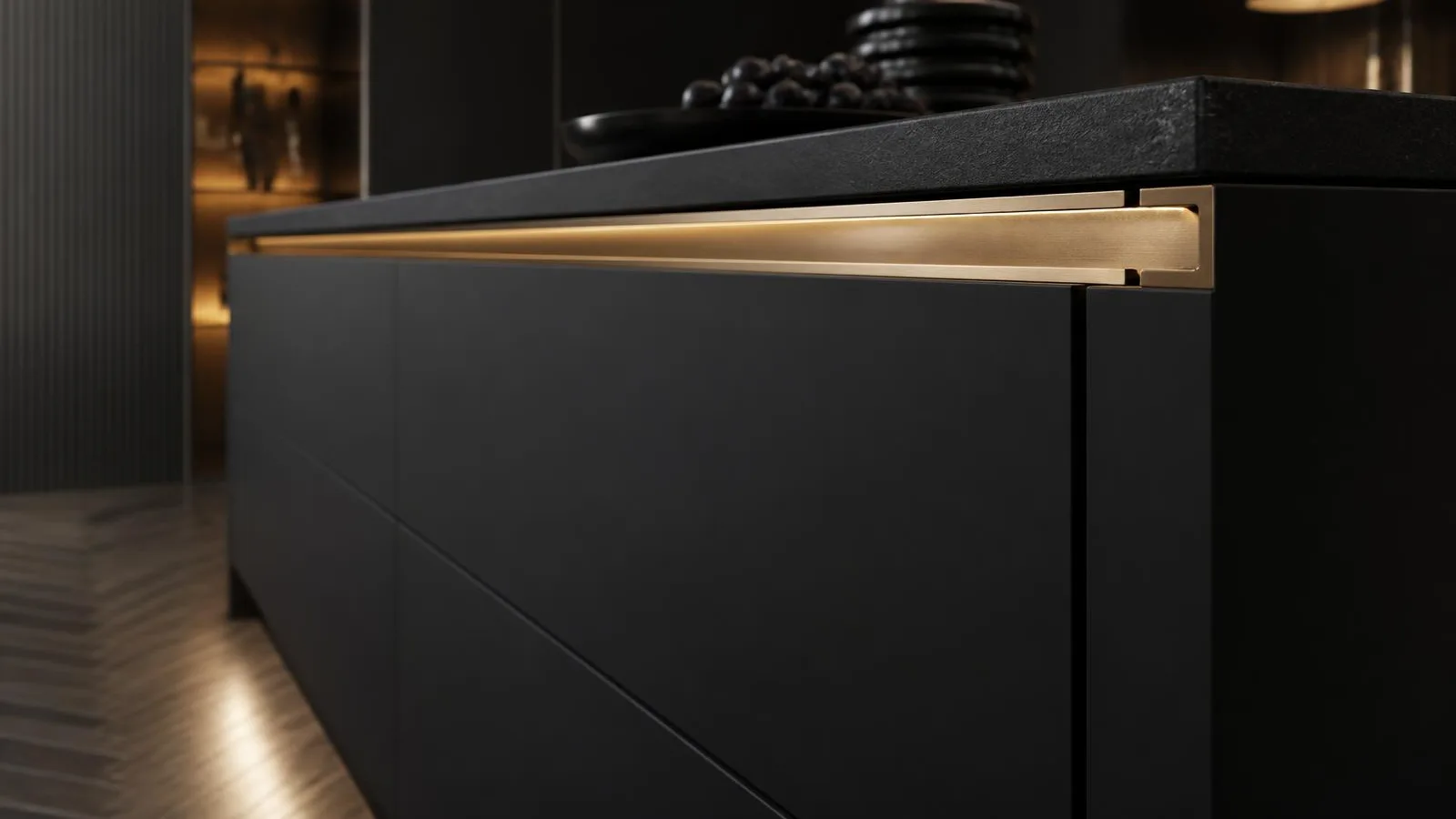
Handleless profile systems — G/C-profile, recessed gola, and glass/mirror frame profiles — are replacing screwed-on handles as the default in 2026 Indian kitchens, led by matte black and champagne gold finishes. Choose the profile type first (fixed-to-shutter vs. recessed-to-carcass), then the finish based on how much daily hand contact the zone sees, and confirm board-thickness compatibility (16–19mm standard, 25mm for heavier shutters) before finalising cut lengths.
Cabinet handles used to be an afterthought — a knob picked off a hardware shop shelf after every other decision was finalised. Not anymore. In 2026, the handle (or the deliberate absence of one) is one of the first decisions Indian kitchen designers make, because it's the detail that decides whether a kitchen reads as clean and considered, or busy and dated the moment it's installed.
This guide walks through where handle design is heading in 2026 — the shift toward handleless profiles, matte and warm-metal finishes, and how to actually specify a handle system that holds up to years of daily use, not just a showroom photo.
The basics
Why the Handle Matters More Than It Seems
A cabinet with no visible knob or bar still needs somewhere for a hand to catch — that's the entire engineering job an aluminium profile handle does. Unlike a screwed-on knob, a profile handle is a continuous extruded channel fixed along the edge of a shutter or drawer front, and because it runs the full width of the shutter, it does a second, less obvious job too: it caps and protects the raw edge of the board against years of daily opening and closing. For architects and interior designers, the profile is often the single detail that decides whether a kitchen reads as handleless-premium or simply handle-less-cheap.
Industry shift
The 2026 Shift: Handleless Is No Longer a Premium Add-On, It's the Default
Industry design coverage for 2026 consistently points to the same direction: matte finishes, drawer-heavy storage, and slimmer, quieter hardware are replacing high-gloss surfaces and visible bar handles as the dominant look in Indian kitchens. The broader shift is toward what one industry report calls “understated confidence” — hardware that works quietly rather than announcing itself, which is exactly the design brief a profile handle is built to answer.
The range
The Three Handle-less Profile Systems, Explained
1. G-Profile & C-Profile Handles
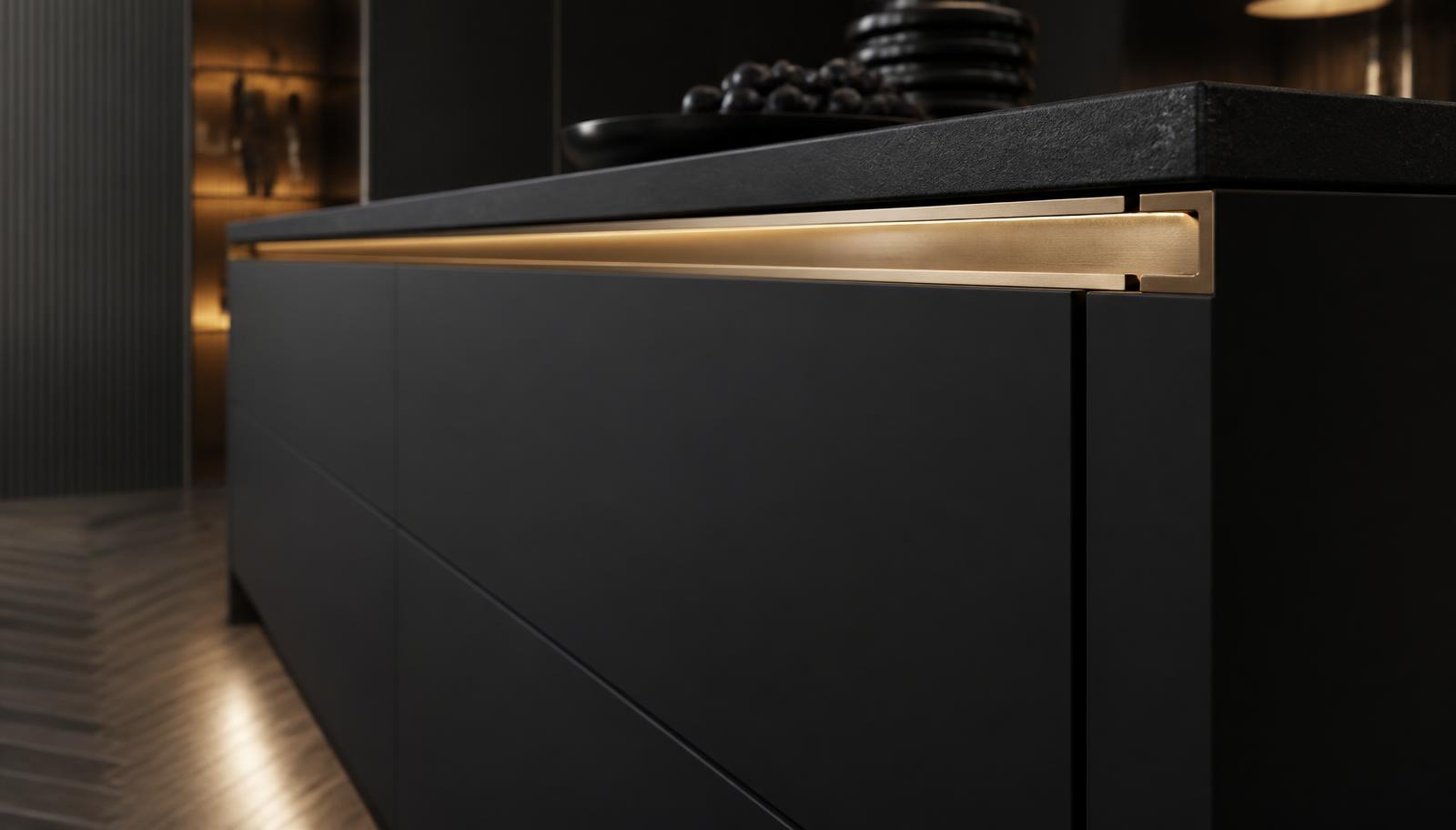
The most widely specified format, and the direct handleless replacement for a conventional cabinet handle — a G-shaped or C-shaped extrusion fixed to the top edge of a shutter or drawer front, engineered with an ergonomic curve for a comfortable grip rather than just a functional lip. It's fixed to the shutter itself (so it moves with the door), caps and protects the raw board edge, and suits base, wall and tall kitchen units alike.
2. Recessed Gola Profile Systems
A gola profile sits in a recessed channel below or beside the shutter rather than on its edge, creating a shadow-line grip that's almost invisible until the hand reaches for it. It's the format most associated with a fully handleless, minimalist kitchen face — the look most 2026 design coverage is pointing toward — but it's fixed to the carcass, not the shutter, which means it needs more precise carcass planning at the design stage. This is where getting an architect or designer involved early genuinely pays off.
3. Aluminium Profile Shutters for Glass & Mirror Doors
Here the aluminium profile frames the shutter itself rather than just providing a grip — a mitred aluminium border holding a glass or mirror panel, corner-jointed with connectors for a clean, gap-free finish. It's specified for display units, crockery cabinets and wardrobe mirror doors, available in the same finish range as the handle profiles so an entire kitchen or wardrobe run stays visually consistent.
Finishes
Finish Trends for 2026: What's Actually in Demand
Design coverage for 2026 points to a consistent palette shift: deep greens, navy, charcoal, rust red, warm wood tones and off-white stone are the dominant cabinet colours, almost universally paired with matte or low-sheen surfaces rather than high-gloss. Handle finishes are following the same direction:
Matte Black — the highest-contrast, most contemporary option, especially striking against light-coloured shutters — the anchor finish for the “understated confidence” aesthetic dominating 2026 kitchen design.
Champagne Gold — a warm premium accent that reads especially well against dark or neutral cabinetry — one of the most requested finishes for kitchens moving away from stark white-and-chrome palettes.
Brushed / Anodised Silver — the neutral, hardest-wearing everyday specification, and the safest choice where a kitchen's finish palette may evolve over time.
Rose Gold — a softer metallic finish suited to boutique and residential interiors wanting warmth without the boldness of full gold.
Anodising is generally specified over powder-coating for handle profiles that see heavy daily contact — it forms a harder, more scratch-resistant surface layer than a sprayed powder coat, at a marginally higher cost, which is worth the trade-off for a kitchen's daily-use drawers specifically.
Specification
How to Specify the Right Handle System
Beyond finish, a handful of technical factors decide whether a handle profile performs well on a real project:
Board thickness compatibility — most profile handles are engineered for 16–19mm shutter boards; heavier tall-unit or wardrobe shutters may need a 25mm-compatible profile — confirm this against your board spec before finalising cut lengths.
Profile length and joinery — profiles are supplied in standard extrusion lengths and mitre-cut to size on-site or at the OEM's factory. A clean 45° corner joint depends as much on the corner connector quality as on the profile itself.
Finish durability for the zone — a profile on a daily-use kitchen drawer sees far more hand contact than one on a display cabinet — anodised finishes are worth specifying wherever contact frequency is high.
Consistency across a batch — for OEMs and dealers ordering at project scale, extrusion-to-extrusion colour and tolerance consistency matters more than any single sample piece — request batch documentation on large orders.
Extrusion tolerance — a profile extruded to a tight tolerance sits flush and mitres cleanly at the corners; one that's slightly out of true shows as a visible gap or step once fitted — a detail that separates a premium result from a merely acceptable one.
Applications
Where Handle Profiles Are Used, Beyond the Kitchen
The same profile technology used in kitchens extends naturally into sliding wardrobe shutters and office/commercial furniture, where a slim, snag-free edge is as much a practical requirement as an aesthetic one.
At a glance
Quick Reference: Which Profile for Which Application
| Application | Typical Profile | What to Watch |
|---|---|---|
| Kitchen base & drawer fronts | G-profile / C-profile handle | Anodised finish for daily hand contact |
| Fully handleless kitchen face | Recessed gola channel | Carcass planning at design stage |
| Display & crockery cabinets | Glass shutter frame profile | Corner connector quality on mitres |
| Wardrobe & sliding shutters | Handle profile / mirror frame profile | 25mm board compatibility on heavy shutters |
| Office & commercial furniture | Edge / handle profile | Snag-free edge and batch consistency |
Comparison
Handle Profile vs. Traditional Cabinet Handle: Which to Choose?
| Factor | Traditional Screwed Handle | Aluminium Profile Handle |
|---|---|---|
| Visual continuity | Breaks up the shutter face | Keeps the shutter line unbroken |
| Board protection | None — raw edge stays exposed elsewhere | Caps and protects the shutter's raw edge |
| Installation | Simple screw-fix per handle | Requires precise cut-to-length and mitre joinery |
| Design flexibility | Wide range of standalone styles | Consistent, continuous look across a full kitchen run |
| Best for | Traditional or budget-conscious kitchens | Contemporary, handleless-premium kitchens |
Clear answers
Frequently asked questions
What is an aluminium profile handle?
It's an extruded aluminium section — typically G-shaped or C-shaped — fixed along the top edge of a cabinet shutter or drawer front, replacing a separate screwed-on knob or bar handle with a slim, continuous groove the fingers slide into.
What's the difference between a gola profile and a profile handle?
A profile handle (G/C-profile) is fixed to the shutter edge and moves with the door; a gola profile is fixed to the carcass in a recessed channel, creating a fully handleless, shadow-line grip that requires more precise planning at the design stage.
Which board thickness works with aluminium profile handles?
Most profile handles are engineered for 16–19mm shutter boards; heavier tall-unit or wardrobe shutters may need a profile rated for 25mm boards — always confirm this against your specific board spec.
What finishes are available for aluminium profile handles?
Common finishes include matte black, champagne gold, brushed/anodised silver and rose gold, with anodising or powder-coat application depending on the finish and how much daily hand contact the zone sees.
Are aluminium profile handles durable enough for daily kitchen use?
Yes, particularly when specified with an anodised finish, which forms a harder, more scratch-resistant surface layer than a sprayed powder coat — worth prioritising for daily-use kitchen drawers and cabinets.
Can aluminium profiles be used outside the kitchen?
Yes — the same profile systems extend into wardrobe shutters, sliding wardrobe doors, and office or commercial furniture like reception counters and display units, wherever a slim, continuous, snag-free edge is needed.
Is a handleless kitchen more expensive than one with traditional handles?
Cost depends more on the specific profile type and finish than on “handleless” as a category — a recessed gola system typically involves more carcass planning and fabrication precision than a simple G-profile, which can affect overall project cost.
What's trending for kitchen handle finishes in 2026?
Matte black and champagne gold are the two most requested finishes for 2026, paired with the broader shift toward matte, low-sheen cabinet surfaces and deeper, warmer colour palettes like charcoal, navy and rust red.
Do handle profiles work with glass or mirror cabinet doors?
Yes — a dedicated glass/mirror frame profile exists specifically for this, using a mitred aluminium border to hold the glass or mirror panel in place around all four edges, available in the same finish range as the standard handle profiles.
How do I get handle profile samples for a project?
Reputable B2B suppliers offer sample finishes and technical specification sheets on request — request a B2B quote with your board thickness and preferred finish to get project-specific guidance.
Continue your research
Related ranges and resources
Aluminium Profiles
Browse the full range of handle, edge and shutter-frame aluminium profiles.
Explore range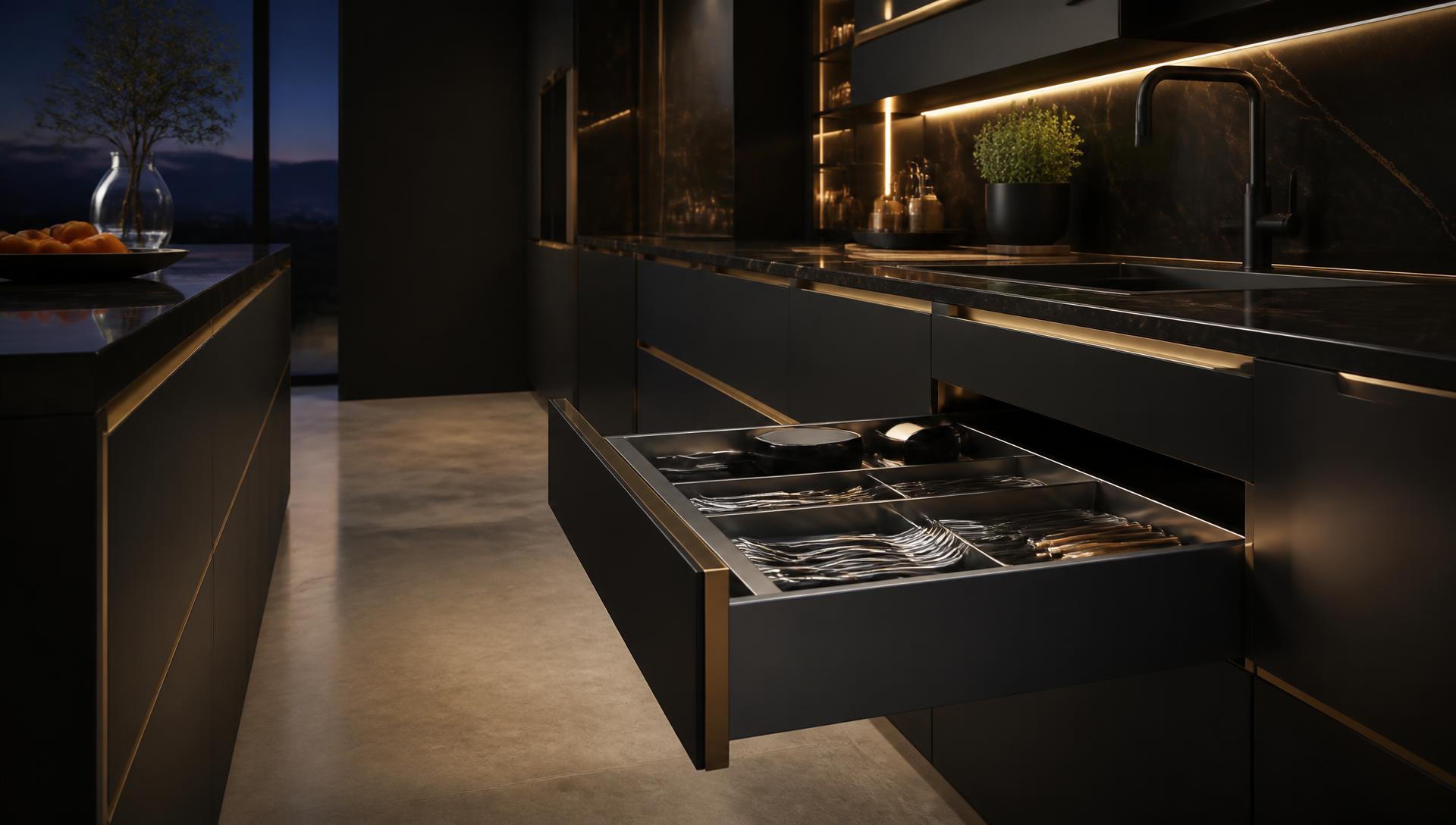
Kitchen Fittings
Coordinate handle finishes with the rest of the kitchen hardware catalogue.
Explore range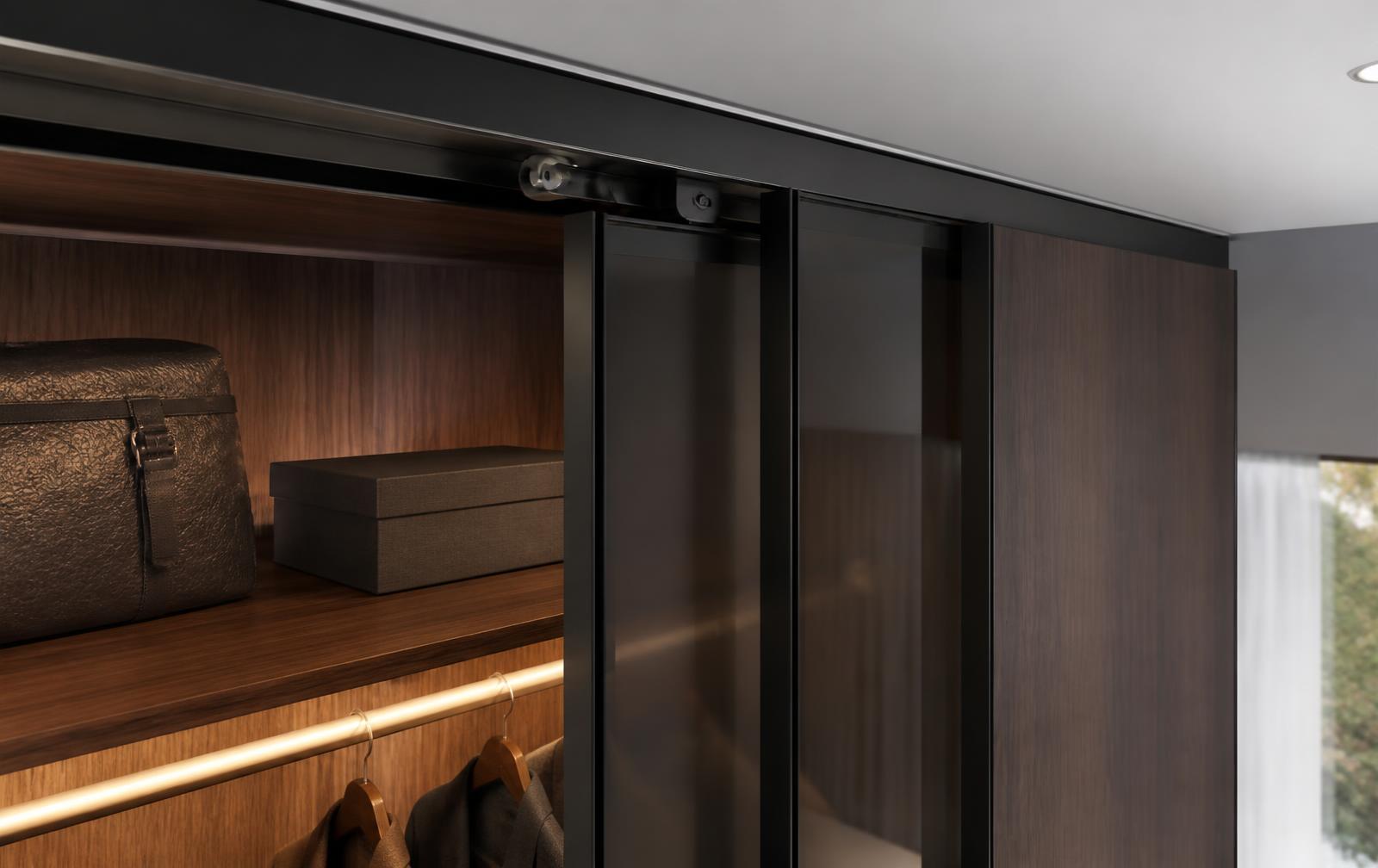
Sliding Wardrobe Systems
Carry the same profile finish through to wardrobe shutters and doors.
Explore rangeWork with a supplier you can verify
Ready to specify hardware from a supplier you can verify?
Mirano by Varun Impex has supplied premium modular kitchen, wardrobe and bed hardware to architects, interior designers, OEM manufacturers and 300+ dealers across India since 2006.