Kitchen design guide
Handleless Kitchen Options — Gola vs G Profile vs Push-to-Open (India)
How the three common handleless systems differ, and how to choose between them before the carcass is cut.
The short answer
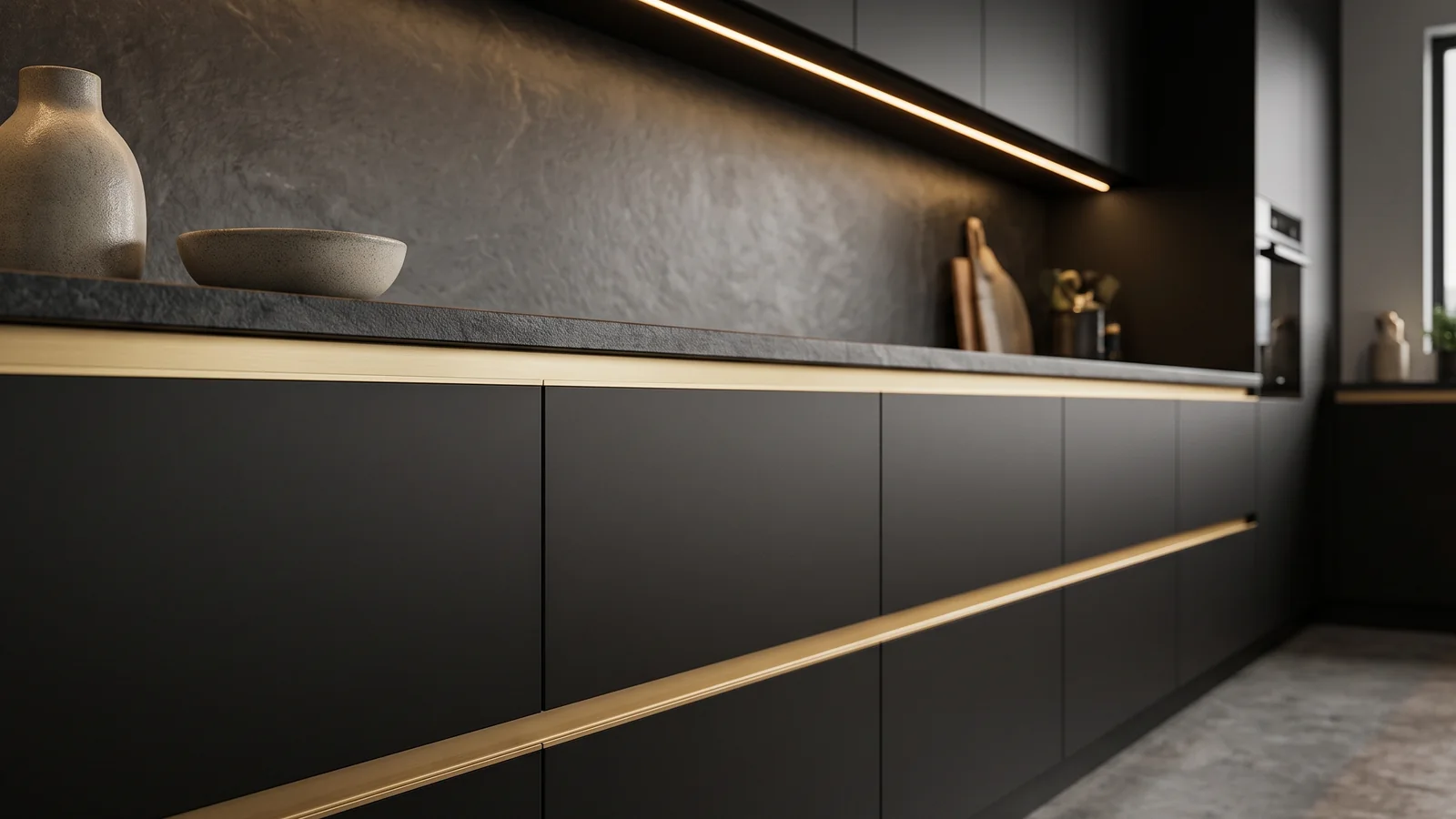
The three common handleless options are a gola profile fixed in the carcass, a G profile handle fixed on the shutter edge, and a push-to-open mechanism. Gola gives the most continuous line but must be planned at the design stage; G profiles are easier to add to a layout; push-to-open leaves the front untouched but needs a mechanism in every door or drawer.
A handleless kitchen looks clean in a render and unforgiving on site. The opening method decides the cabinet construction, the board thickness, the joins and the cost, so it has to be chosen early, before the carcass is cut.
This guide compares the three common options, gola profiles, G profile handles and push-to-open, and gives a framework for choosing between them. It is written for designers, architects and fabricators specifying modular kitchens in India.
Options
The three handleless options
Gola profile. An aluminium channel fixed in the carcass, along the top edge of a base cabinet or between drawer fronts. You open the door or drawer by hooking your fingers into the channel. See the horizontal gola profile guide for C and J types.
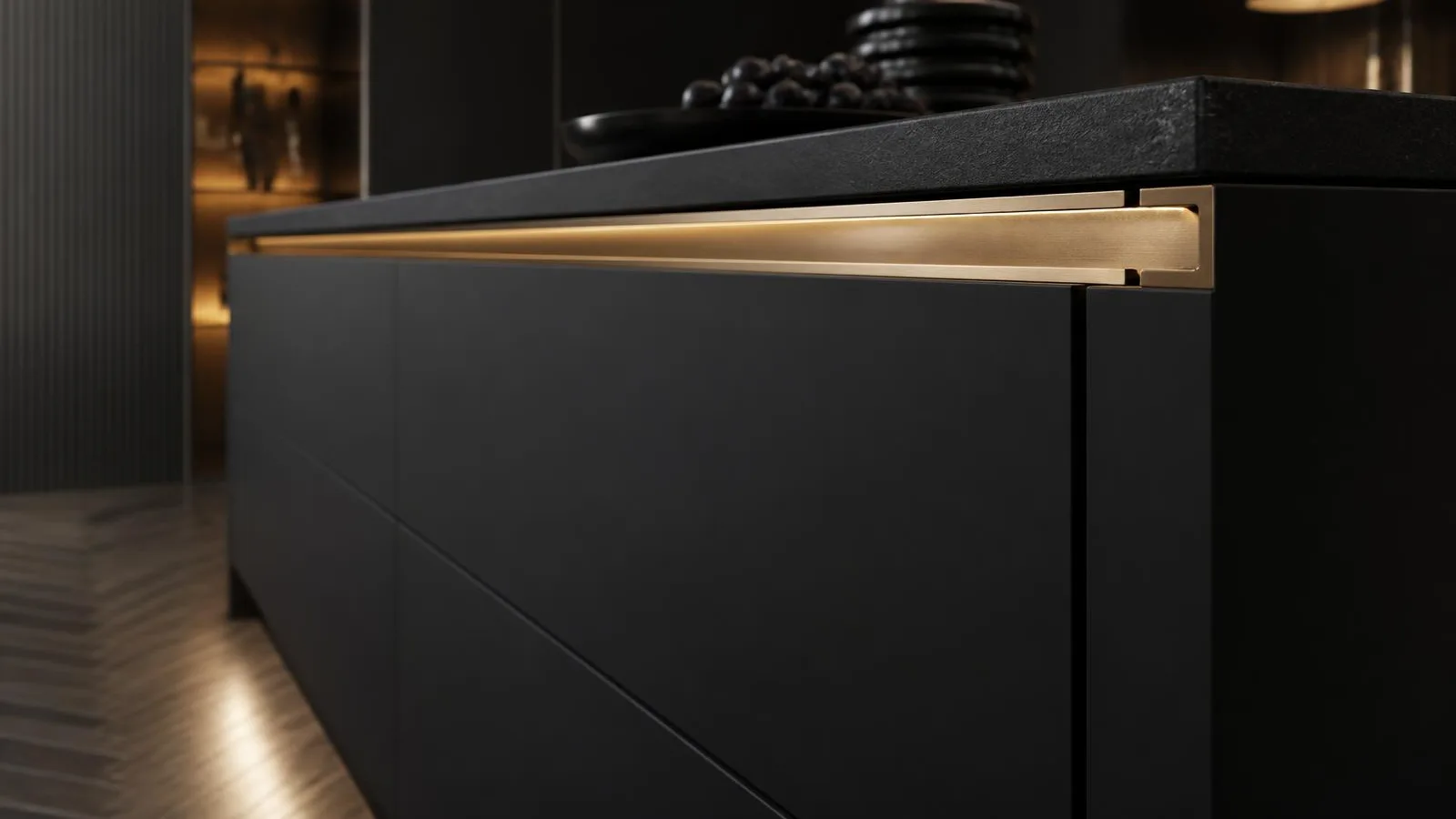
G profile handle. A profile fixed to the top edge of the shutter or drawer front, so it moves with the front. See the G profile handle page.
Push-to-open. A mechanism that releases the door or drawer when you press the front. There is no visible grip at all.
Comparison
Gola vs G profile vs push-to-open
| Factor | Gola profile | G profile handle | Push-to-open |
|---|---|---|---|
| Fixed to | Carcass | Shutter or drawer front | Mechanism behind the front |
| Look | Continuous line and shadow gap | Slim edge grip on each front | Plain front with no grip |
| Planning | Needed at design stage | Easier to add to a design | Needs mechanism space and a stable front |
| Moves with the front | No | Yes | Not applicable |
| Cost mix | Profile plus precise machining | Profile per front | Mechanism per door or drawer |
| Best for | Long base runs and a continuous line | Shutters where the grip should follow the front | Minimal fronts where the face must stay untouched |
How to choose
How to choose between them
- Look at the whole run: Gola suits long continuous runs. G profiles suit mixed layouts.
- Check the board and front thickness: Profiles and mechanisms need the right thickness and fixing.
- Plan joins and corners: Place joins at cabinet dividers and plan how the line turns corners.
- Think about daily use: Light fronts suit push-to-open. Heavy or frequent-use fronts need a firm grip.
- Choose the finish together: Decide the profile finish with the shutter finish, not afterwards.
Avoid these
Common handleless kitchen mistakes
- Choosing the profile after the carcass is cut: Gola profiles are fixed in the carcass, so the cabinet has to be planned around them.
- Mixing methods without a plan: Gola on the base and push-to-open on the tall units can work, but only if the lines are planned.
- Ignoring the lighting: Under-cabinet or profile lighting needs the right profile; check LED profiles.
- Skipping a sample: Check the finish, grip and cleaning on a physical sample.
Mirano range
Mirano's handleless range
Mirano's plinth and gola systems include horizontal and vertical gola, a Wall Gola System and 90° corners. The aluminium profiles range covers related profiles, and handles and knobs cover kitchens that keep a visible grip. For the design side, see the 2026 handles and knobs trends guide.
Clear answers
Frequently asked questions
What is a handleless kitchen?
A handleless kitchen has no handles or knobs on the fronts. Doors and drawers open through a finger channel, an edge profile or a push-to-open mechanism.
What are the main ways to make a kitchen handleless?
The three common ways are a gola profile fixed in the carcass, a G profile or J-pull fixed to the shutter edge, and push-to-open mechanisms. Each looks different and needs different planning.
What is the difference between a gola profile and a G profile handle?
A gola profile is fixed to the carcass and creates a recessed shadow line, so it has to be planned at the design stage. A G profile handle is fixed to the top edge of the shutter or drawer front and moves with it.
Is gola better than push-to-open?
They solve the same problem differently. Gola gives a continuous line and a shared channel. Push-to-open leaves the front completely untouched but needs a mechanism in every door and drawer.
Is a handleless kitchen more expensive?
The cost mix changes rather than simply rising. You spend on profiles or mechanisms and on tighter machining, and you save on handles. Get quotes for the two options on your actual layout.
Can I use gola on wall cabinets?
Yes. Mirano's range includes a Wall Gola System for upper cabinets, so wall units can match the base units.
What finishes do gola profiles come in?
Mirano's plinth and gola range comes in anodised and coated aluminium finishes, including silver, matte black, champagne PVD and custom coated options. Confirm availability for your batch.
What should I decide before ordering a handleless kitchen?
Decide the opening method for each run, the finish, the board thickness, where profile joins fall and how corners will be handled. Handleless kitchens are hard to change once the carcass is made.
Are handleless kitchens practical in Indian homes?
Yes, with planning. Profiles are easy to wipe, and the main considerations are cleaning access to the channel and choosing a finish that suits daily use. Test a sample in the finish you plan to use.
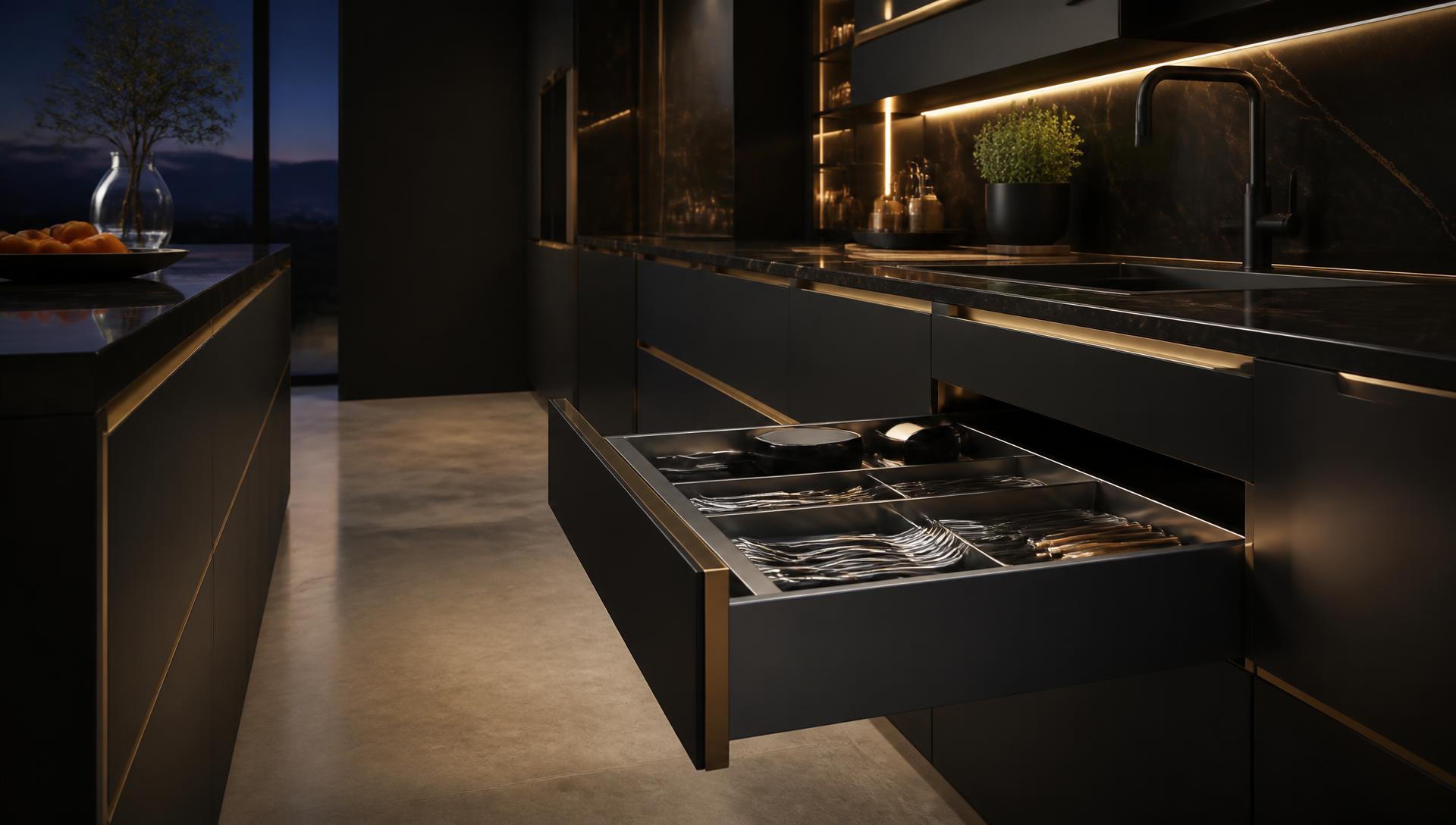
Specify with confidence
Plan a handleless kitchen with the right profiles
Share your layout and finish, and our team will help match the profile or mechanism to the job.