
Hospitality hardware guide
Hotel Furniture Hardware in India — What to Specify for Beds, Wardrobes and Hinges
How to turn duty cycles into a specification for hotel beds, wardrobes, hinges and drawers, with Mirano product options.
The short answer
Hotel furniture hardware has to be specified for duty cycles, not appearance. Mirano's guidance is 100,000 or more cycles as the commercial minimum for hospitality, which lasts about 13.7 years at 20 uses a day, while domestic-grade 20,000 to 30,000 cycles runs out in 2.7 to 4.1 years. Calculate door weight, add a 10% margin, ask for batch documentation and approve a mock-up room first.
A hotel wardrobe door is opened more times in a year than a home wardrobe door is in a decade. The same applies to the bed frame, the drawer and the hinge. Hardware that is perfectly adequate in a flat can fail inside two years in a hotel room, and by then the project is handed over and the complaints are the owner's.
This guide is for architects, interior designers, project procurement teams and contractors specifying hotel furniture hardware in India. It shows how to turn duty cycles into a specification, which Mirano products fit each part of a room and what to put in a BOQ. Product figures come from Mirano's published specifications; the cycle arithmetic is shown so you can check it.
The difference
Why hotel hardware is a different specification
A home wardrobe door is used a few times a day. A hotel wardrobe door is used by a different guest every night, often with luggage in hand and no particular care. Mirano's own sliding wardrobe guidance puts it plainly: hotel wardrobes face the most demanding duty cycles of any residential application.
That changes three things. Cycle ratings stop being a marketing number and become a lifetime calculation. Consistency across hundreds of identical rooms matters more than the quality of any one sample. And maintenance access matters, because every callout takes a room out of service.
The arithmetic
Turning cycle ratings into years of service
One open-and-close counts as one cycle. Mirano describes 100,000 cycles as the benchmark for premium European sliding hardware and the commercial minimum for hospitality fit-outs. Domestic-grade hardware, it says, is often rated for 20,000 to 30,000 cycles. The table converts those ratings into years at different usage rates. It is simple division, not a Mirano claim.
| Uses per day | 100,000 cycles lasts | 20,000 cycles lasts | 30,000 cycles lasts |
|---|---|---|---|
| 5 (typical home) | about 55 years | about 11 years | about 16 years |
| 10 | about 27 years | about 5.5 years | about 8 years |
| 20 (busy hotel room) | about 13.7 years | about 2.7 years | about 4.1 years |
| 40 (high-turnover property) | about 6.8 years | about 1.4 years | about 2 years |
The takeaway is blunt. At twenty uses a day, a domestic-grade rating runs out inside three to four years, while a 100,000 cycle rating lasts almost fourteen. Ask every supplier for the tested cycle rating, and ask how it was measured.
Room by room
A hardware map for a hotel guest room
| Part of the room | What to specify | Mirano option | Key points to check |
|---|---|---|---|
| Bed frame | Self-supporting frame, consistent across rooms | Hotel Bed Fitting | Three sizes up to 1830 × 1980mm; leg height 300mm |
| Wardrobe sliding doors | Load-rated track, soft close, anti-derail | Volpato and System Holz sliding systems | 25 to 80kg per panel; 100,000+ cycles |
| Wardrobe hinged or glass doors | Three-way adjustable hinge, soft close | Filo and Air Glass Structure 30kg | Up to 30kg per door on Air Glass; 105° opening |
| Concealed hinges | Soft-close hinge matched to door weight | Soft close hinges | Hinge count by door height; SS 304 baseline |
| Drawers | Soft-close runners rated for load | Drawer systems | Match heights to contents |
| Edges and grips | Aluminium profile or handle | Aluminium profiles and handles | Finish durability for the zone |
Link the details to the rest of the guide library: sliding vs openable wardrobe hardware, types of cabinet hinges and the kitchen drawer height guide if the same drawer system is used in a kitchenette.
Beds
The Hotel Bed Fitting: a self-supporting frame
Mirano's Hotel Bed Fitting is built for speed and consistency at scale. It is a finished, self-supporting bed frame, so there is no wardrobe cabinet, wall mounting or hydraulic lift to coordinate. Extruded aluminium corners keep the frame square and stable on its own legs.
It comes in three unit sizes, and the published specification is the same for leg height and mattress weight.
| Size | Unit size | Leg height | Mattress weight (listed) |
|---|---|---|---|
| Size 1 | 1530 × 1905mm | 300mm | 35kg |
| Size 2 | 1680 × 1980mm | 300mm | 35kg |
| Size 3 | 1830 × 1980mm | 300mm | 35kg |
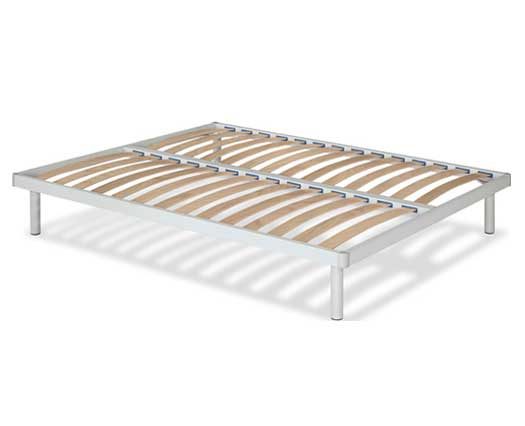
Mirano lists it for hotels, service apartments, guest houses, hostels and any hospitality project that needs durable, quick-to-install frames at scale. For hotel storage under the bed, compare it with the hydraulic bed fitting types before you finalise the design, and with the pull-out bed mechanisms for family rooms.
Wardrobes
Wardrobe doors: weight, cycles, soft close and anti-derail
Mirano's sliding systems are sourced from Volpato in Italy and System Holz in Germany. Volpato's adjustable roller carriages accommodate door weights from 25kg to 80kg per panel, with two-way soft-close dampers that engage at both the open and closed positions and anti-derail latches rated for heavy daily use. System Holz is described as suited to high-cycle environments and OEM lines that need dimensional consistency across batches.
To choose a rating, calculate the door weight first. Mirano's guidance is to multiply area by the material weight per square metre, add a 10% margin and specify a system rated above that figure.
| Door material | Planning weight (Mirano guidance) | Example: 900 × 2400mm door (2.16 m²) |
|---|---|---|
| MDF or laminate | 12 to 15kg per m² | about 26 to 32kg |
| Solid engineered wood | 18 to 22kg per m² | about 39 to 48kg |
| Glass | 20 to 25kg per m² | about 43 to 54kg |
The example column is arithmetic from the published planning weights. Mirano separately notes that a 900 × 2400mm glass door can weigh 50 to 65kg, which needs a system rated to at least 60 to 80kg per panel. When in doubt, use the higher figure and confirm with the Mirano team.
Details
Soft close, anti-derail and why they cut callouts
Soft close is a baseline expectation, not a luxury. Mirano says the damper should engage within the last 8 to 10cm of travel and bring the door to a silent stop without bounce. Anti-derail protection matters as much and is discussed far less: the latch holds the carriage on the track under lateral force or impact, which is exactly what a hotel door gets.
In a guest room, a door that bounces open at night or jumps its track is a complaint, a callout and a lost room night. These details cost little against the lifetime of the project.
Procurement
What to put in the BOQ and the supplier brief
- Rated cycles: State the minimum, for example 100,000 cycles for sliding systems, and ask for the test basis.
- Rated load: State the door weight and the rating above it, with a margin.
- Batch consistency: Ask for batch documentation so colour and tolerance stay consistent across rooms.
- Samples and mock-up room: Approve hardware in a mock-up room before bulk production.
- Stock and lead time: Mirano's sliding pages mention stocked inventory at Vasai and PAN-India dispatch. Confirm quantities and lead time for your programme.
- Spares and documentation: Agree a spares list and ask for installation documentation.
- Commercial terms: Mirano states that it offers structured pricing for bulk orders. Ask for the terms in writing.
Conditions
Humidity, coastal sites and wet zones
Hotels near the coast or in humid cities put extra stress on hardware. Mirano's material guidance is to specify SS 304 for below-counter and sink-adjacent applications, where it rates corrosion resistance as excellent and coastal suitability as high, and to treat chrome as acceptable only for dry, overhead storage. The hinge baseline in Mirano's soft close hinge range is SS 304.
Aluminium profiles and frames do not rust, but the finish matters. Mirano notes that anodised layers bond into the metal, while powder coats sit on top, which makes anodising the better choice for high-contact zones. In a hotel, that means door edges, handles and any profile within hand reach.
Maintenance
A maintenance and spares plan
| Item | What to keep | Why |
|---|---|---|
| Sliding carriages and dampers | A few spare sets per room type | Most frequent wear item in wardrobes |
| Hinges | Spare hinges and plates in the project finish | A failed hinge puts a door out of use |
| Bed frame fittings | Spare corner pieces and legs | Keeps rooms in service |
| Drawer runners | Spare pairs by drawer type | Runner replacement is routine in busy properties |
| Documentation | Installation drawings and part numbers | Speeds up repairs and re-orders |
Agree the spares list at specification stage, not after the first complaint. Mirano's team can advise on part numbers and re-order lead times for project hardware.
Supplier questions
Ten questions to ask any hardware supplier for a hotel project
- What is the tested cycle rating?: Ask for the number and the basis.
- What is the rated load per door or drawer?: Match it to your door weights.
- Is anti-derail protection standard?: It should be for sliding doors.
- Is soft close standard and how does it engage?: Ask about damping distance.
- Can you supply batch documentation?: Needed for colour and tolerance consistency.
- What is the lead time for the full quantity?: Compare it with your programme.
- Do you stock the hardware locally?: Stock shortens the programme.
- What spares and support are available?: Ask for part numbers and response times.
- Can you support a mock-up room?: Approve before bulk production.
- What documentation and drawings come with the order?: Installation guides and technical drawings help the contractor.
Common mistakes
Mistakes that show up after handover
- Specifying by finish only: A good-looking domestic rail fails fast at hotel duty.
- Ignoring door weight: The most common hardware error on residential projects, and worse at hotel scale.
- Mixing batches: Colour and tolerance drift across rooms is visible and expensive to fix.
- Skipping the mock-up: Problems found in room one are cheap; found in room two hundred they are not.
- No spares plan: A missing carriage or hinge puts a room out of service.
Property types
Specification by property type
| Property type | Typical priorities | Hardware implication |
|---|---|---|
| Luxury hotel | Silence, finish, guest experience | High-cycle soft-close sliding systems, glass or mirror doors, premium finishes |
| Business hotel | Durability, consistency, quick turnaround | Self-supporting beds, load-rated sliding doors, spares plan |
| Serviced apartments | Longer stays, kitchenette use | Hotel-grade wardrobes plus kitchen hardware such as drawers and pull-outs |
| Hostels and guest houses | Cost, robustness | Durable bed frames, simple wardrobes, strong hinges |
These are general planning priorities, not Mirano categories. Mirano lists hotels, resorts and serviced apartments among its sliding system applications, and hotels, service apartments, guest houses and hostels for the Hotel Bed Fitting.
Programme
Phasing a 100-room fit-out
A typical sequence, offered as general project guidance: finalise the specification and approve samples; build and sign off a mock-up room; place a confirmed order with batch documentation; take delivery in agreed batches so rooms are completed in sequence; and hold a small stock of spares for handover.
The most common cause of delay is a late change to door sizes or finishes after the order is placed. Freeze the specification before production, and keep a short change log so the hardware list always matches what has been built. Mirano's specification team can help review drawings and quantities before you place an order.
Decision framework
A short specification checklist
| Step | Question | Output |
|---|---|---|
| 1 | How many uses per day? | Required cycle rating |
| 2 | How heavy is each door? | Rated load with 10% margin |
| 3 | Fixed or varied room types? | Number of sizes to stock |
| 4 | Who services the rooms? | Spares, documentation and access |
| 5 | What is the programme? | Lead time, batches and delivery schedule |
Our team supports architects and project teams on specification, samples and quotes. Share the room count, room types and programme through the quote form, or ask about our dealer and OEM programme.
Clear answers
Frequently asked questions
What hardware does a hotel room need?
A typical hotel guest room needs a bed frame, wardrobe door hardware, hinges, drawer runners, handles or profiles and often accent lighting. Each has a much heavier duty cycle than in a home, so specification should start from rated cycles, not appearance.
How many cycles should hotel wardrobe hardware be rated for?
Mirano's guidance is that 100,000 or more cycles is the benchmark for premium residential and the commercial minimum for hotel and hospitality fit-outs. At twenty uses a day, 100,000 cycles is reached in under fifteen years.
What is the difference between domestic-grade and commercial sliding hardware?
Mirano describes domestic-grade hardware as typically handling 20 to 30kg per door and rated for 20,000 to 30,000 cycles. Its premium European sliding systems from Volpato and System Holz handle door weights from 25 to 80kg per panel and are rated for 100,000 or more cycles.
What is a self-supporting hotel bed frame?
A self-supporting bed frame stands on its own legs and needs no wardrobe cabinet, wall mounting or hydraulic lift. Mirano's Hotel Bed Fitting uses extruded aluminium corners to keep the frame square and stable, which makes installation fast across many rooms.
What sizes does the Mirano Hotel Bed Fitting come in?
Three unit sizes: 1530 × 1905mm, 1680 × 1980mm and 1830 × 1980mm, with a leg height of 300mm and a listed mattress weight of 35kg for each size.
Why does anti-derail protection matter in a hotel?
Hotel doors are opened and closed at high frequency and not always gently. Mirano's sliding systems include anti-derail latches that hold the carriage on the track under lateral force or impact, which reduces maintenance calls.
How do I check door weight for a hotel sliding wardrobe?
Multiply the door area by the material's weight per square metre, add a 10% margin and specify a system rated above that figure. Mirano's guidance uses 12 to 15kg per square metre for MDF with laminate, 20 to 25kg for glass and 18 to 22kg for solid engineered wood.
Should hotel projects order a single batch of hardware?
For consistency, yes where possible. Mirano notes that extrusion-to-extrusion colour and tolerance consistency matters more at project scale than any single sample, and recommends asking for batch documentation on large orders.
Does Mirano supply hospitality projects?
Mirano lists hotels, resorts and serviced apartments among the applications for its sliding systems and the Hotel Bed Fitting for hotels, service apartments, guest houses and hostels. Quantities, lead times and pricing are shared through the quote form.
Can I get samples before a bulk order?
Mirano encourages early contact with its specification team for project and bulk orders. Request samples and a lead-time estimate through the quote form before you finalise the BOQ.
Specify with confidence
Specify hospitality hardware with confidence
Share the room count, room types and programme, and our team will help with specification, samples and quotes.