
Hinge guide
Types of Cabinet Hinges — Overlay, Inset and Soft-Close Explained
How full overlay, half overlay, inset and wide-angle hinges differ, and how to pick and count them.
The short answer
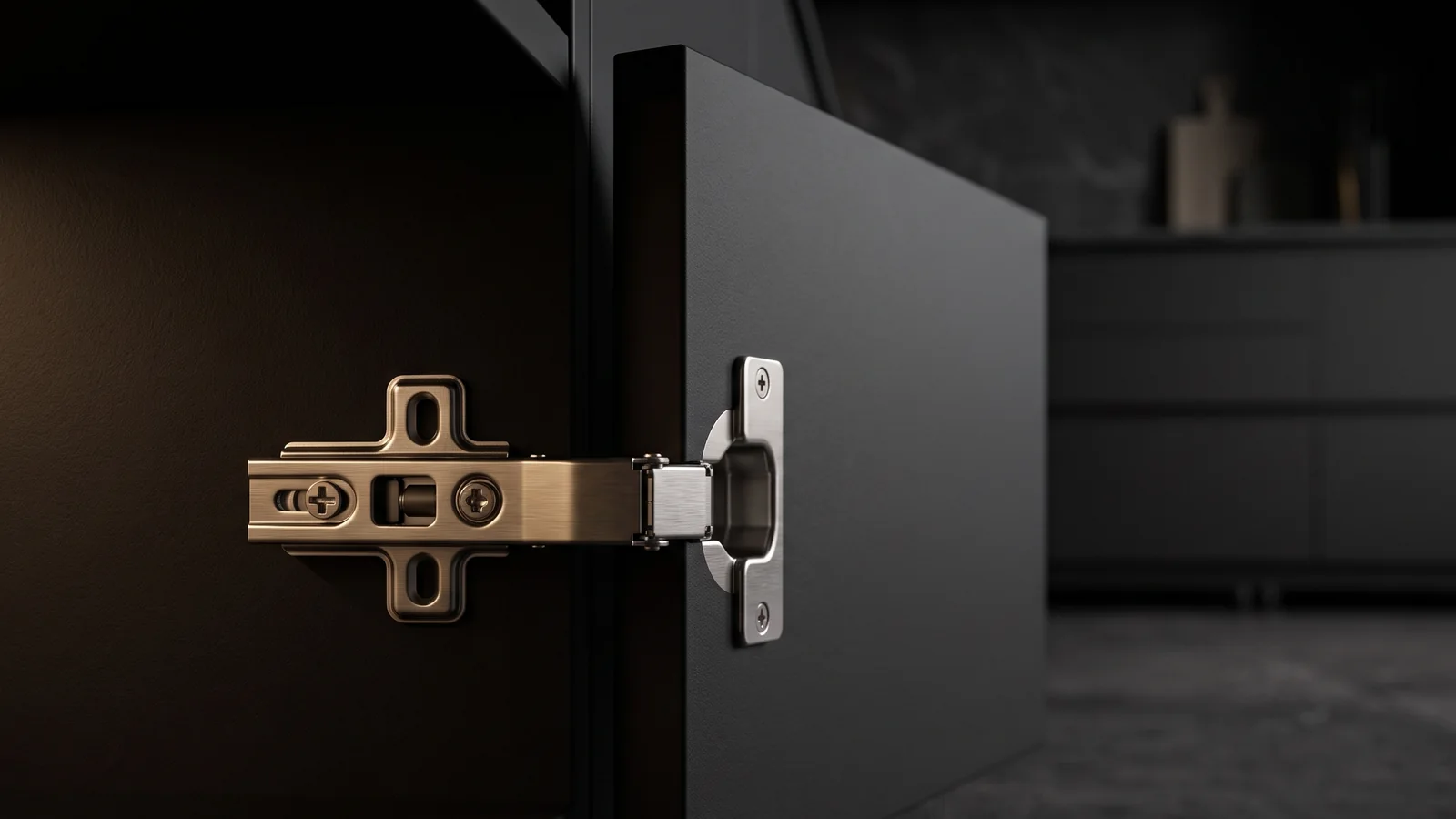
The main types of cabinet hinges for modular furniture are concealed hinges chosen by door position: full overlay (0 crank), half overlay (8 crank) and inset (16 crank), plus a 165° wide-angle option for tall and corner units. Soft-close versions add a damper so the door closes quietly.
The hinge is the part of a cabinet door that works hardest and gets the least thought. A wrong hinge type shows up as a door that does not sit flush, a gap that will not even out, or a door that hits the next one.
This guide explains the common cabinet hinge types, how to pick between overlay and inset, what soft close adds, and how many hinges a door needs. It uses the specifications on Mirano's soft close hinges range.
Types
The main types of cabinet hinges
| Hinge | Crank | Door position | Typical use |
|---|---|---|---|
| Full overlay | 0 | Door covers the full side panel | End cabinets and standalone units |
| Half overlay | 8 | Two doors share one partition | Inner pairs in a run of doors |
| Inset | 16 | Door sits inside the opening, flush with the frame | Flush-fronted and framed designs |
| Wide angle | 165° opening | Door opens almost flat | Tall units, larders and corner cabinets |
Crank values are as listed in Mirano's range. Confirm exact dimensions on the datasheet for the model you order.
Soft close
What soft close adds
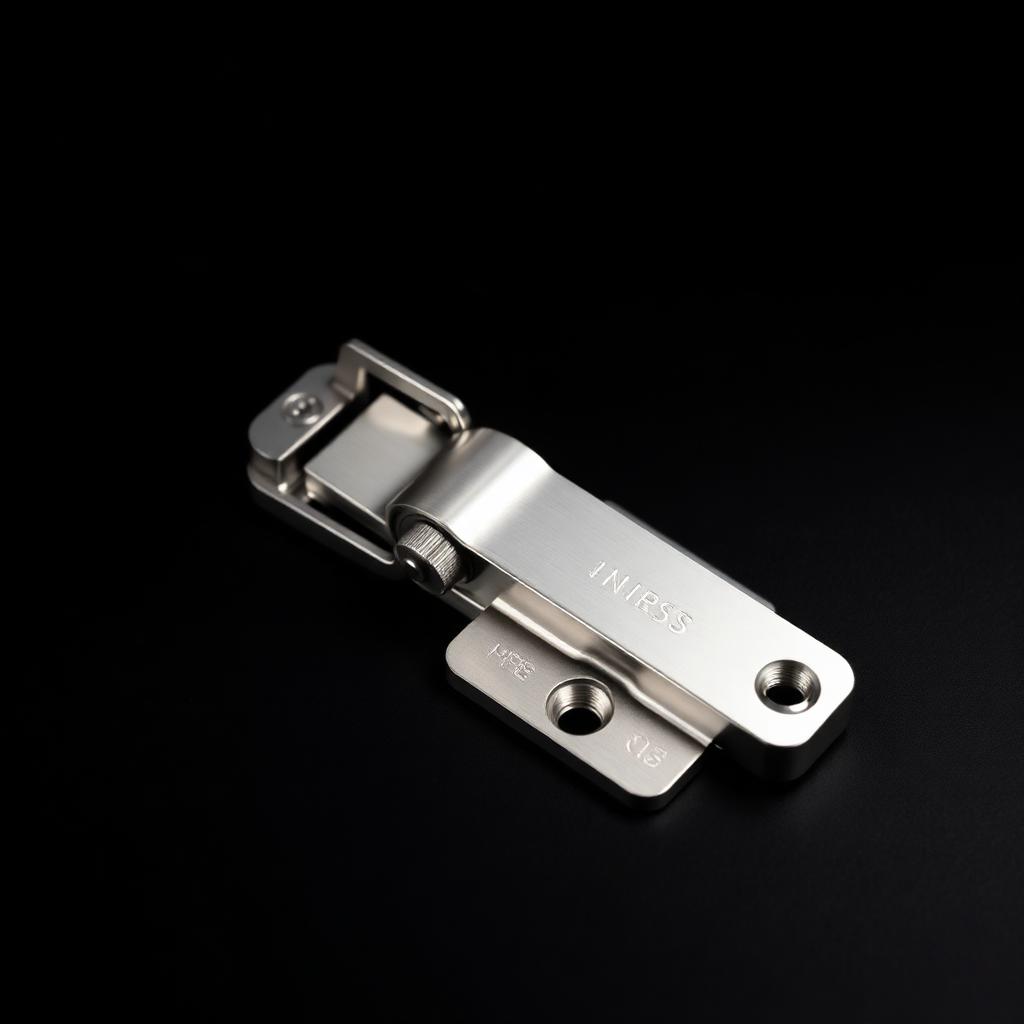
A soft-close hinge pairs a spring that pulls the door shut with a damper that resists the motion near the end of travel. The door glides the last few degrees at a controlled speed, whether you push it hard or nudge it.
Most models are concealed hinges with a clip-on mounting plate and three-way adjustment, so the door can be removed and refitted without unscrewing the hinge and fine-tuned after installation.
Quantity
How many hinges per door?
| Door height | Hinges | Note |
|---|---|---|
| Up to 1,000 mm | 2 | Standard base and short wall doors |
| 1,000 to 1,500 mm | 3 | Better support and even damping |
| Above 1,500 mm | 4 | Tall units and larders |
Solid-wood, thick framed or heavily finished doors can need extra hinges at any height. Check the load rating of the model.
How to choose
How to choose the right hinge in four steps
- Find the door position: Full overlay, half overlay or inset decides the crank.
- Check the angle: Standard cabinets suit 90° to 110°; tall and corner units may need 165°.
- Match the door thickness: Mirano lists door panel thickness of 14 to 22 mm; confirm for your model.
- Choose the material: Stainless steel resists steam and humid air; Mirano lists SS 304 as its baseline.
See the full soft close hinges range for Mirano's configurations, and kitchen fittings for the rest of the hardware.
Clear answers
Frequently asked questions
What are the main types of cabinet hinges?
For modular furniture, concealed hinges are the standard. They are chosen by where the door sits: full overlay, half overlay or inset, with a wide-angle option for tall and corner units.
What is the difference between full overlay, half overlay and inset hinges?
Full overlay (0 crank) is for a door that covers the side panel. Half overlay (8 crank) is for two doors sharing one partition. Inset (16 crank) is for a door that sits flush inside the cabinet opening.
What is a crank on a hinge?
The crank is the offset of the hinge arm, and it sets how far the door sits over the cabinet edge. Mirano lists 0, 8 and 16 crank, for full overlay, half overlay and inset.
What is a soft-close hinge?
A soft-close hinge has a built-in damper that slows the door over the last stretch of its travel, so it closes quietly instead of slamming.
Can I add soft close to an ordinary hinge?
Some systems use add-on dampers, but a hinge with the damper built in is simpler and more consistent. For a new modular kitchen, specify soft-close hinges from the start.
How many hinges does a door need?
As a simple rule, two hinges up to 1,000 mm door height, three between 1,000 and 1,500 mm, and four above 1,500 mm. Heavy solid-wood or thickly finished doors may need an extra hinge, so check the load rating.
What is a 165° hinge for?
A 165° wide-angle hinge lets a door open almost flat. It is used on tall units, larders and corner cabinets, and needs the right plate and enough side clearance.
Which hinge material is best for Indian kitchens?
Stainless steel resists steam, cleaning chemicals and humid air. Mirano lists SS 304 as the baseline material for its soft-close hinges.
Can I remove a door fitted with concealed hinges?
Yes. Most concealed hinges use a clip-on mounting plate, so the door comes off and goes back on without unscrewing the hinge, and can be adjusted up and down, side to side and in and out.
Specify with confidence
Specify the right hinge
Share your door sizes and layout, and our team will help match hinges, counts and plates.