
Lighting guide
LED Profile for Kitchen and Wardrobe — Silicone vs PC vs PMMA
How the three diffuser materials differ, when to recess or surface-mount, and how to match a profile to the application.
The short answer
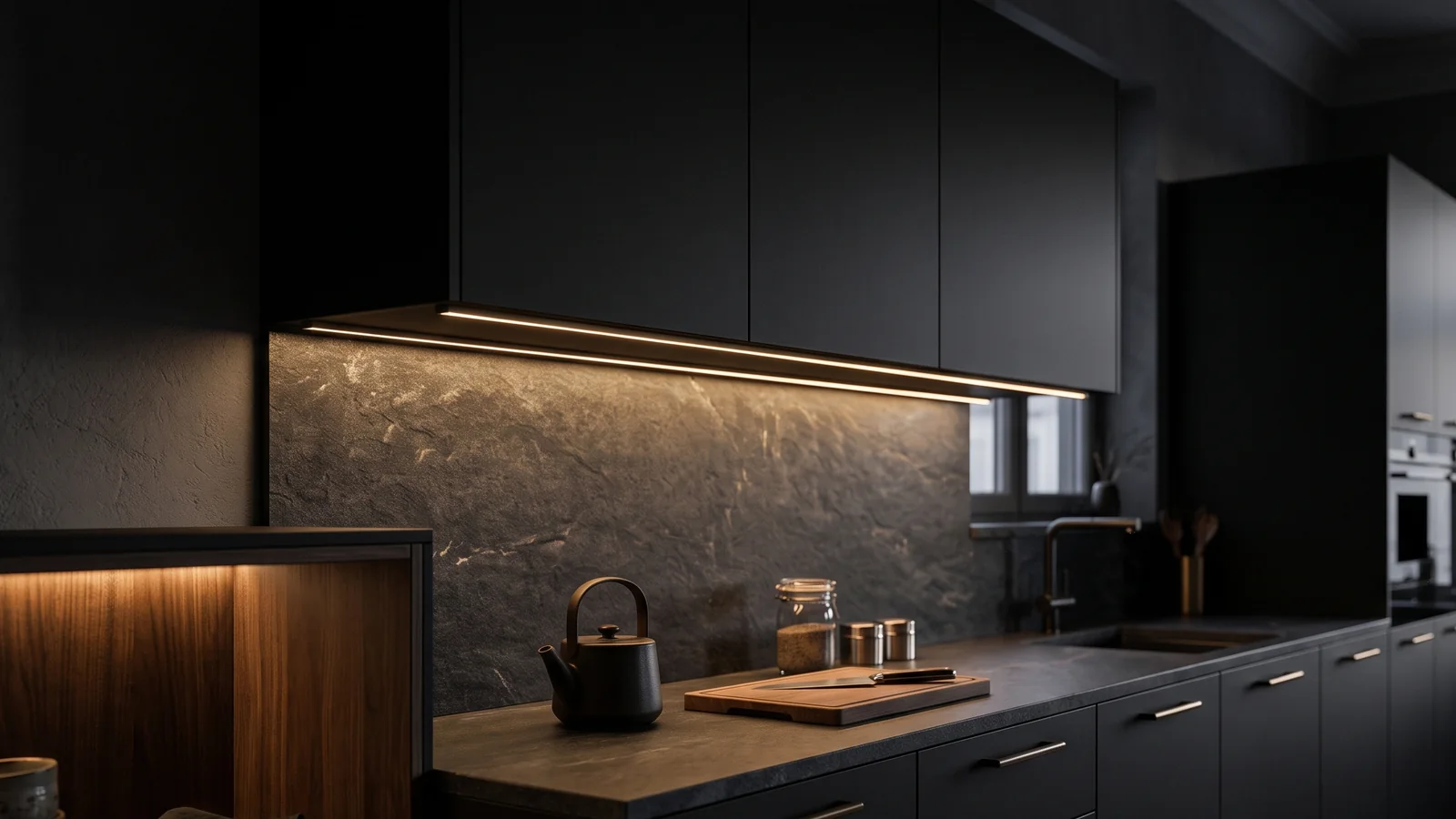
An LED profile is an aluminium channel that holds an LED strip and a diffuser. Silicone gives the softest glow and bends around corners, PC gives a brighter defined line with the widest mounting choice, and PMMA gives the clearest premium light for cove and display work. Recessed profiles give a built-in look; surface profiles install faster.
A bare LED strip stuck under a cabinet shows every dot, runs hot and lifts at the edges within a year. A profile fixes all three, but the choice of diffuser and mounting style decides how the light actually looks once the kitchen or wardrobe is built.
This guide compares silicone, PC and PMMA LED profiles, explains recessed and surface mounting and 12V and 24V options, and gives a way to choose by application. It uses the specifications published for Mirano's LED profile range.
Basics
What is an LED profile, and why use one?
An LED profile is an aluminium channel that holds an LED strip. The body manages heat, which helps the strip last longer, and a diffuser fitted over the strip spreads the light and hides the individual LED dots.
Choosing the right profile changes three things: how long the lighting lasts, how even and glare-free it looks, and how easily it fits the furniture detail, whether that is a routed shelf groove, a corner or a skirting board.
Diffuser material
Silicone vs PC vs PMMA: how they differ
| Factor | Silicone | PC (polycarbonate) | PMMA (acrylic) |
|---|---|---|---|
| Light quality | Softest, most even glow | Brighter, more defined line | Clearest, premium transmission |
| Diffuser listed | 4 mm silicone | 6.5, 9.5 and 18 mm PC | 15.5 mm PMMA / PC |
| Voltage | 12VDC | 12VDC and 12/24VDC | 12/24VDC |
| Colour temperature | 3000K and 4000K | 3000K, 4000K and tuneable options | Single and tuneable CCT |
| Mounting | Recessed and surface; corner-friendly | Widest range: surface, recessed, up/down | Cabinet, cove and shelf profiles |
| Longest length noted | Cut to order | Up to 3 m on select profiles | Cut to order |
| Best for | Shelf edges, corners, skirting, wardrobe interiors | Cabinets, kitchens, larger runs | Cove, display and showcase work |
All series use Bridgelux LEDs with CRI above 80 and about 100 lm/W efficacy, as published by Mirano. Confirm the figures for the exact model on its datasheet.
Mounting
Recessed vs surface-mounted profiles
Recessed profiles sit flush inside a routed groove. They give a hidden, built-in look and suit wardrobe shelves, skirting and drawer interiors, but the groove has to be planned and routed before assembly.
Surface-mounted profiles fix directly on the furniture face. They install faster and suit corner lighting and retrofits, but they stay visible as a design element.
- Plan the groove early: Recessed profiles need a routed channel, so decide before the panels are cut.
- Mind the corners: Mitred or corner profiles keep the line continuous at a turn.
- Order the accessories: End caps, mounting clips, connectors and extension wire are part of a clean install.
Application
Which profile goes where
| Location | Suggested profile | Why |
|---|---|---|
| Under wall cabinets (kitchen) | PC or silicone, surface or recessed, sensor-ready | Even light on the worktop, durable for daily use |
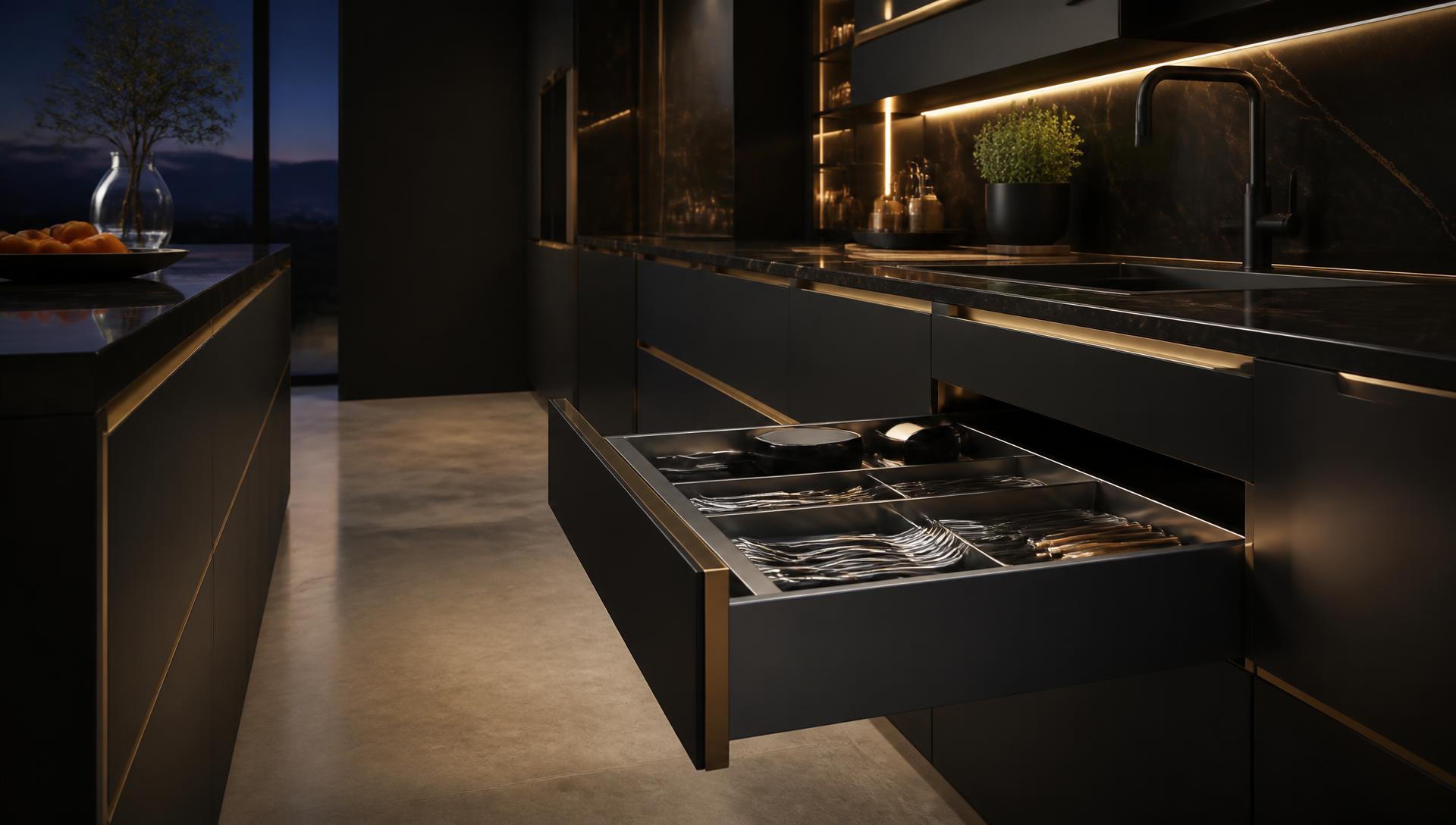
| Drawer interiors | Recessed silicone or PC with a drawer sensor | Light only when the drawer opens |
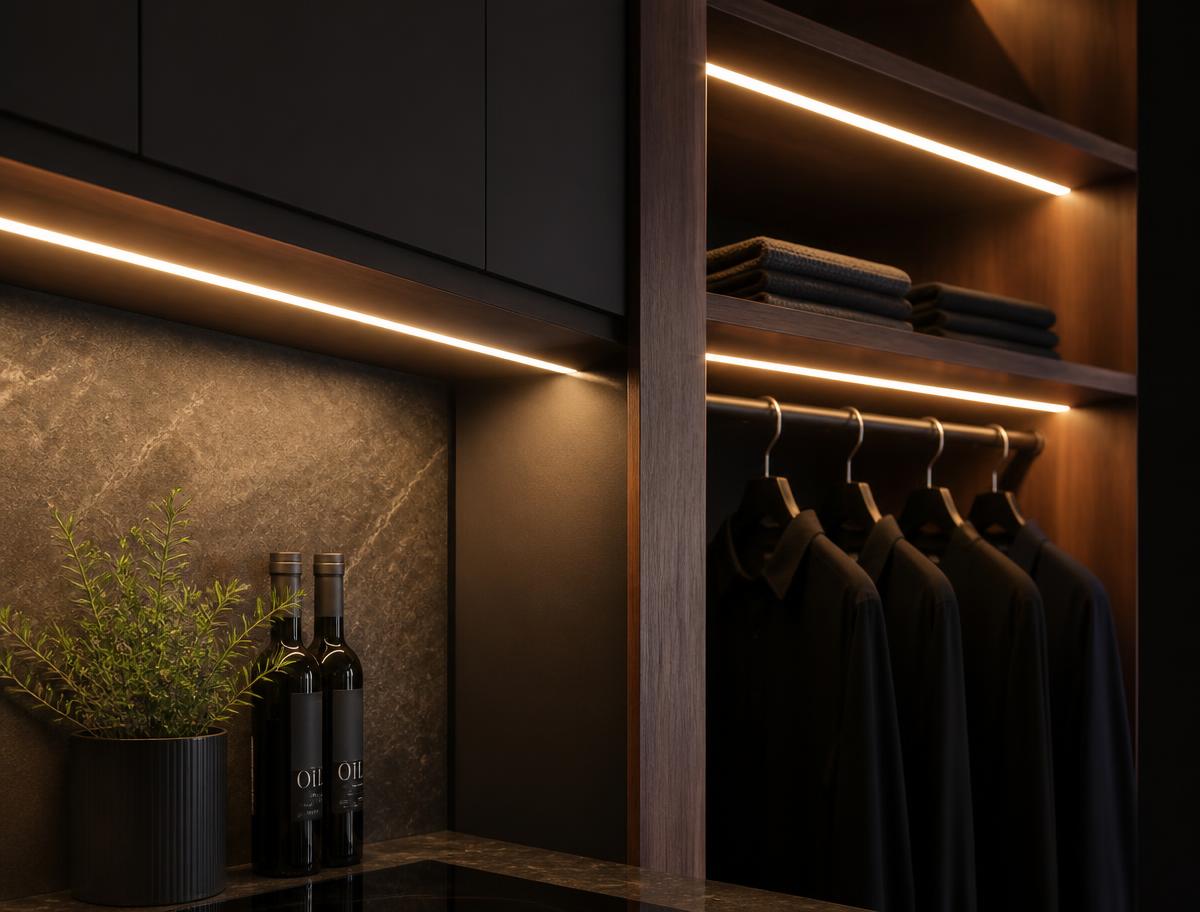
| Wardrobe hanging area and shelves | Recessed silicone or PC, 12VDC | Hidden source, switches with the door |
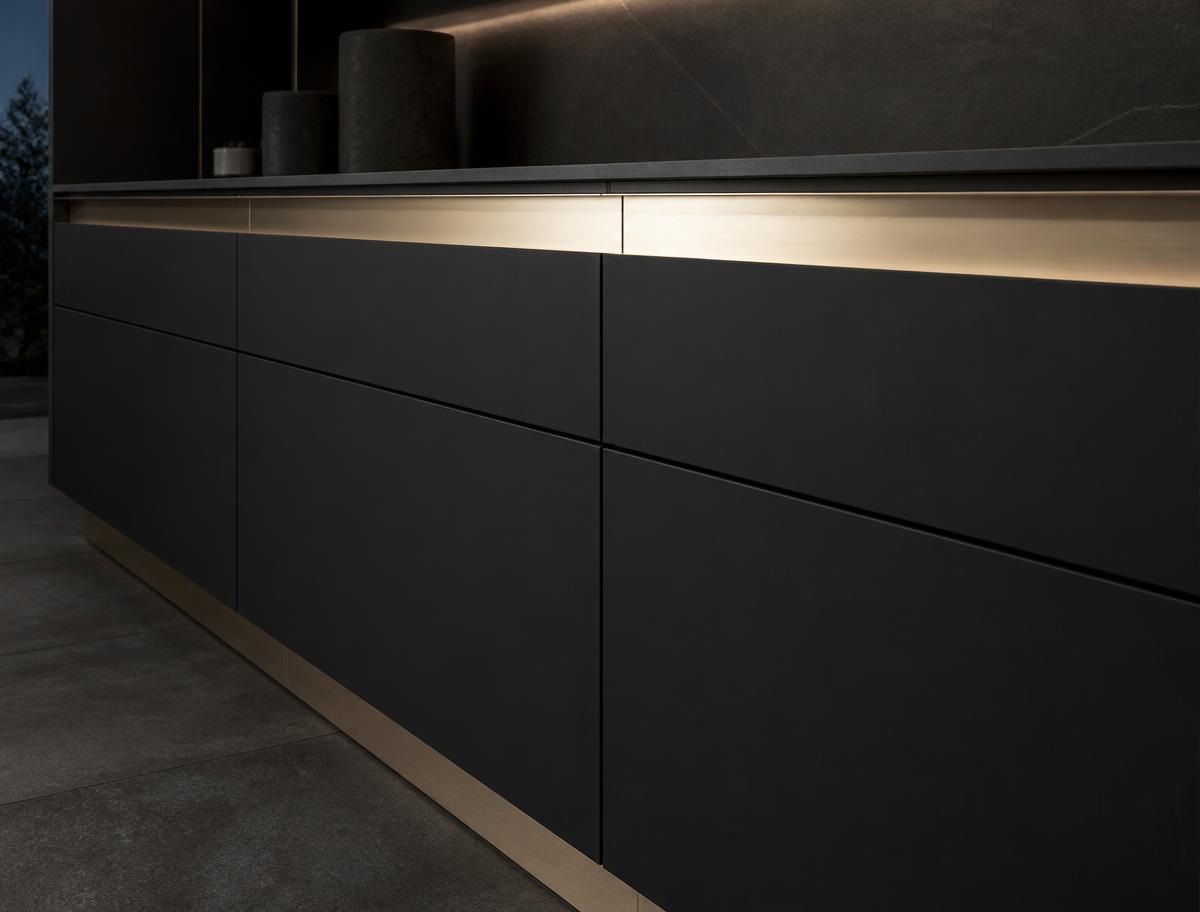
| Skirting or plinth line | Slim recessed profile | Floating effect without glare |
| Cove and display cabinets | PMMA | Highest clarity for showcase lighting |
For the wider handleless look, LED profiles coordinate with plinth and gola systems and aluminium profiles; the handleless kitchen options guide shows how lighting fits a gola layout.
How to choose
How to choose an LED profile in five steps
- Pick the diffuser first: Soft glow, defined line or premium clarity decides silicone, PC or PMMA.
- Pick the mounting style: Recessed for built-in, surface for speed and corners.
- Check voltage and run length: 12VDC for most shelf and cabinet runs; 12/24VDC where a higher-output profile is needed.
- Decide on sensors: Door and drawer sensors turn the light on only when needed.
- Match the finish: Dark Bronze, Matt Black or Silver Anodize to the handles and profiles around it.
Clear answers
Frequently asked questions
What is an LED profile?
An LED profile is an aluminium channel that holds an LED strip and carries a diffuser over it. The aluminium helps manage heat so the strip lasts longer, and the diffuser spreads the light evenly and hides the individual LED dots a bare strip would show.
What is the difference between silicone, PC and PMMA LED profiles?
Silicone diffusers give the softest, most even glow and flex around corners. PC (polycarbonate) diffusers give a brighter, more defined line of light and are available in the widest range of mounting profiles. PMMA (acrylic) diffusers give the clearest light transmission and suit premium display or cove work.
Which LED profile is best for a modular kitchen?
For under-cabinet and drawer lighting, a profile built for daily use with sensor-based switching is the practical choice. Pick the diffuser for the look you want, then the mounting style for the cabinet detail. Mirano's range has dedicated kitchen and cabinet profiles.
Which LED profile is best for a wardrobe?
For shelves and hanging areas, a recessed silicone or PC profile with sensor-friendly switching is typically the best fit. It hides the light source, switches on with the door and suits standard 12VDC wardrobe wiring.
Should I choose a recessed or a surface-mounted profile?
Recessed profiles sit flush in a routed groove and give a built-in look, best for wardrobe shelves, skirting and drawer interiors. Surface profiles fix to the furniture face, install faster and suit corners and retrofits.
Should I use 12V or 24V LED profiles?
12VDC is the standard for most shelf, wardrobe and cabinet runs. Mirano's PC and PMMA ranges also include 12/24VDC options for higher-output applications. Match the profile, the strip and the driver, and check the length of each run.
What colour temperature should I choose?
Mirano's silicone series is listed in 3000K and 4000K, and the PC and PMMA series in single and tuneable options. Warm light suits living and wardrobe spaces; neutral light suits work surfaces. Test the sample in the actual finish.
Do LED profiles work with door or drawer sensors?
Every silicone and most PC profiles in Mirano's range pair with door or drawer motion sensors for automatic on and off. Confirm sensor compatibility for the exact model you specify.
What lengths are available?
Most Mirano profiles are cut to order, and select PC series profiles are available up to 3 metres per length. Plan joins at cabinet dividers and order end caps and connectors with the profile.
What finishes do Mirano LED profiles come in?
Dark Bronze, Matt Black and Silver Anodize. These are chosen to coordinate with Mirano handles, drawer systems and gola profiles.
Specify with confidence
Specify the right LED profile
Share the application, run lengths and finish, and our team will recommend a profile and accessories.