
Kitchen hardware guide
Kitchen Plinth System — Adjustable Legs, Clip-On Plinth and What to Specify
What a plinth system is made of, why adjustable legs and a clip-on plinth matter, and what to specify.
The short answer
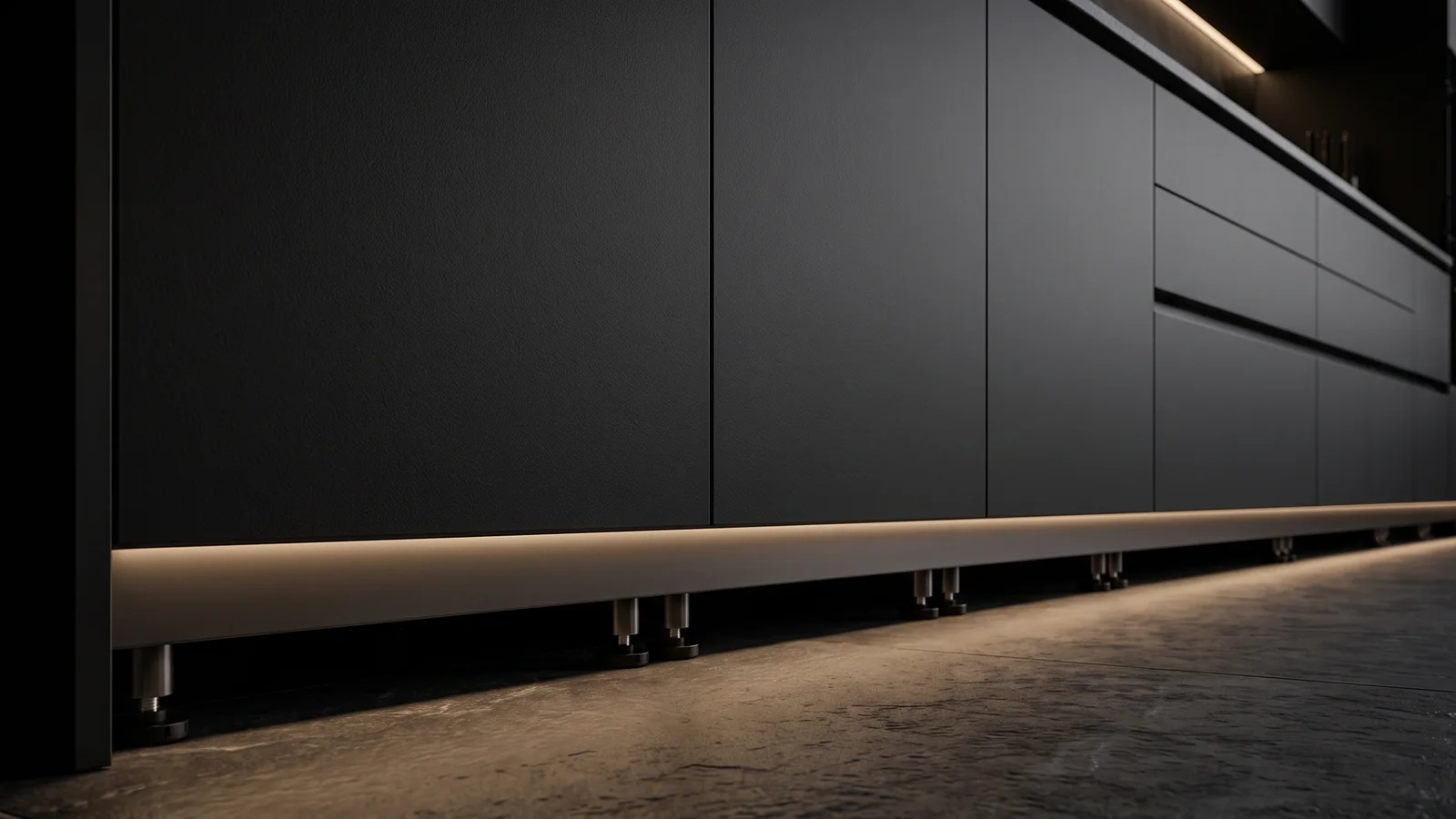
A kitchen plinth system is the recessed base of a cabinet run, plus the parts that make it work: an aluminium plinth profile, a clip fixing such as Clap 'N' Fit, caps and corners, and height-adjustable legs that level cabinets on uneven floors. Aluminium resists moisture and impact better than plastic or laminate.
The plinth is the least discussed part of a kitchen and one of the first to fail. It sits at floor level, gets wet when the floor is mopped, takes knocks from feet and vacuum cleaners, and has to stay straight across an uneven floor.
This guide explains what a plinth system is made of, why adjustable legs and a clip-on plinth matter, and what to specify so the base of the kitchen looks right and lasts. It draws on Mirano's plinth and gola range.
Basics
What is a kitchen plinth system?
A plinth is the recessed base of a kitchen cabinet run. It hides the legs, protects the cabinet from moisture and impact, and gives the kitchen a grounded, finished base.
A plinth system adds the supporting parts: a plinth profile or panel, a clip fixing, caps and corners for the ends and turns, and adjustable legs behind it.
Parts
The parts that matter
| Part | What it does |
|---|---|
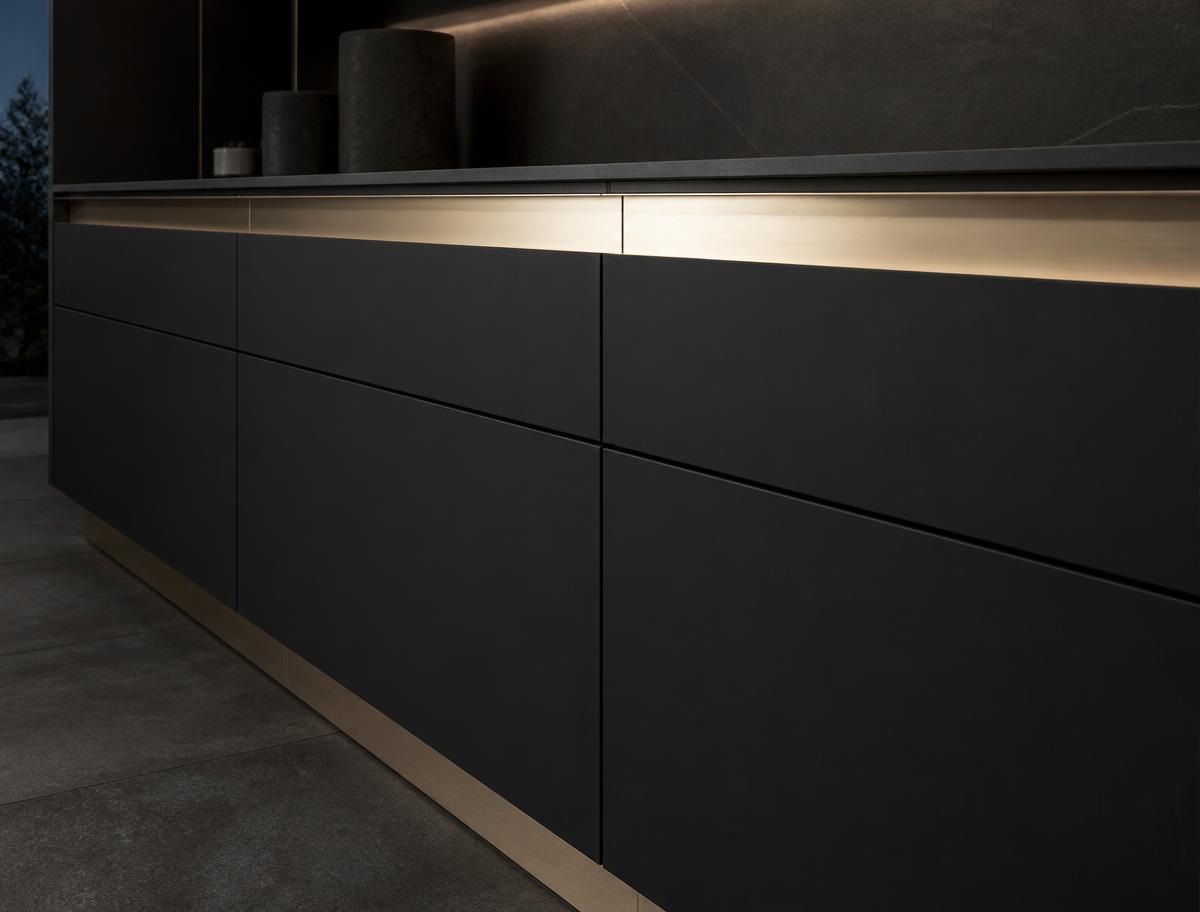
| Plinth profile | Forms the visible toe-kick line, in aluminium |
| Clap 'N' Fit | Quick-fit clip: the plinth snaps in with no visible fixings |
| PVC adjustable legs and clip | Level the cabinets on uneven floors; sit behind the plinth |
| Caps and corners | Close the ends and turn corners so the line looks continuous |
| 90° aluminium corners | Carry the profile line around internal and external corners |
Legs and levelling
Why adjustable legs and a clip-on plinth
Floors are rarely level. Height-adjustable legs let the installer set every cabinet to the same line, so the worktop is level and the plinth looks straight over the whole run.
A clip-on plinth such as Clap 'N' Fit makes installation faster, and because the panel snaps on without visible fixings it also comes off cleanly when the floor needs cleaning or a leg needs adjusting.
- Level before you fix: Set the legs to the highest point on the floor, then bring the rest to that line.
- Leave a service gap: Keep the plinth removable where services run behind it.
- Check the leg range: The adjustable range is model-specific; confirm it on the datasheet.
Specification
What to specify for the plinth
- Material: Aluminium for moisture and impact resistance.
- Finish: Match or contrast with the shutters: anodised silver, matte black, champagne, PVD metallic or custom coated.
- Height: Set by the leg height; confirm with the fabricator and datasheet.
- Ends and corners: Order caps and 90° corners with the profile.
- Compatibility: Match the plinth, the gola and the handles so the kitchen reads as one system.
For the full range see plinth and gola systems, and the horizontal gola profile guide for the handleless line above it.
Clear answers
Frequently asked questions
What is a plinth in a kitchen?
The plinth, also called the toe-kick, is the recessed base along the floor of a kitchen cabinet run. It hides the cabinet legs, protects the cabinet from moisture and impact, and gives the kitchen a finished base.
What is a plinth system?
A plinth system is the set of parts that form that base: the plinth panel or profile, the clips that hold it, caps and corners to close the ends, and the adjustable legs behind it.
Why use adjustable legs?
Floors in Indian homes are rarely perfectly level. Height-adjustable legs let installers level the cabinets precisely while keeping the visible plinth line straight.
What is Clap 'N' Fit?
Clap 'N' Fit is Mirano's quick-fit plinth clipping mechanism. The plinth panel snaps into place without visible fixings, which speeds up installation and gives a cleaner finish.
Why choose an aluminium plinth over board or plastic?
Aluminium resists the moisture, impact and daily wear that a toe-kick is exposed to, and it holds its finish and shape longer than plastic or laminate alternatives, according to Mirano's range information.
What is the standard plinth height?
There is no single standard. Many modular kitchens in India use a plinth of roughly 100 to 150 mm, set by the leg height, but this is a general guide and not a Mirano specification. Confirm the leg range and plinth height with your fabricator and the datasheet.
Can the plinth match the gola profile?
Yes. Mirano's plinth and gola range is finished to match, with caps and 90° corners so the line looks continuous from plinth to worktop.
What finishes are available?
The range includes anodised silver, matte black, champagne, PVD metallic and custom coated finishes. Confirm availability for your batch.
Do I need caps and corners?
Yes for a clean finish. Caps close open ends, and corner pieces carry the line around a turn, so the plinth looks factory finished at every junction.
Specify with confidence
Specify the plinth and gola system
Share your kitchen layout and finish, and our team will recommend profiles, legs and corners.