
Drawer hardware guide
Tandem Box vs Telescopic Channel — Which Is Better for a Modular Kitchen?
A clear comparison of the two drawer systems, with advice on where each belongs in a modular kitchen.
The short answer
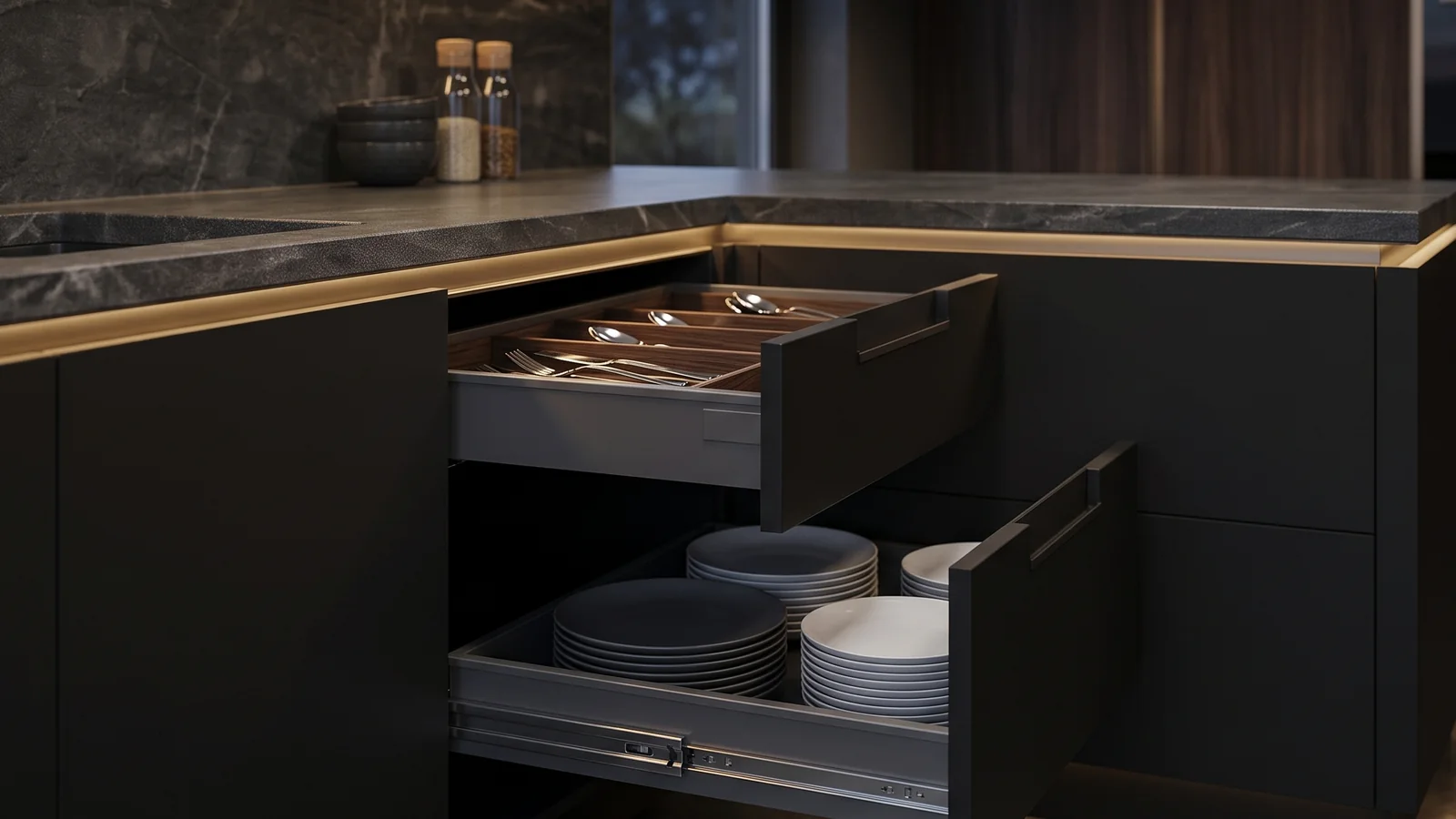
A tandem box is a complete drawer with a concealed runner, usually soft-close and adjustable, and suits daily-use kitchen drawers and handleless fronts. A telescopic channel is a pair of side-mounted slides that costs less and suits secondary drawers, wardrobes and budget jobs. Use tandem for pots, pans and cutlery; use channels where the load and use are light.
Ask three kitchen fitters whether to use a tandem box or a telescopic channel and you will hear three different answers, mostly based on price. The real difference is how the drawer is built and how it feels after five years of daily use.
This guide compares the two on mounting, movement, load, noise, cost and fit, then shows where each belongs in a modular kitchen. It is written for architects, interior designers, OEMs and fabricators who have to write the drawer line in the BOQ.
Definitions
What is a telescopic channel, and what is a tandem box?
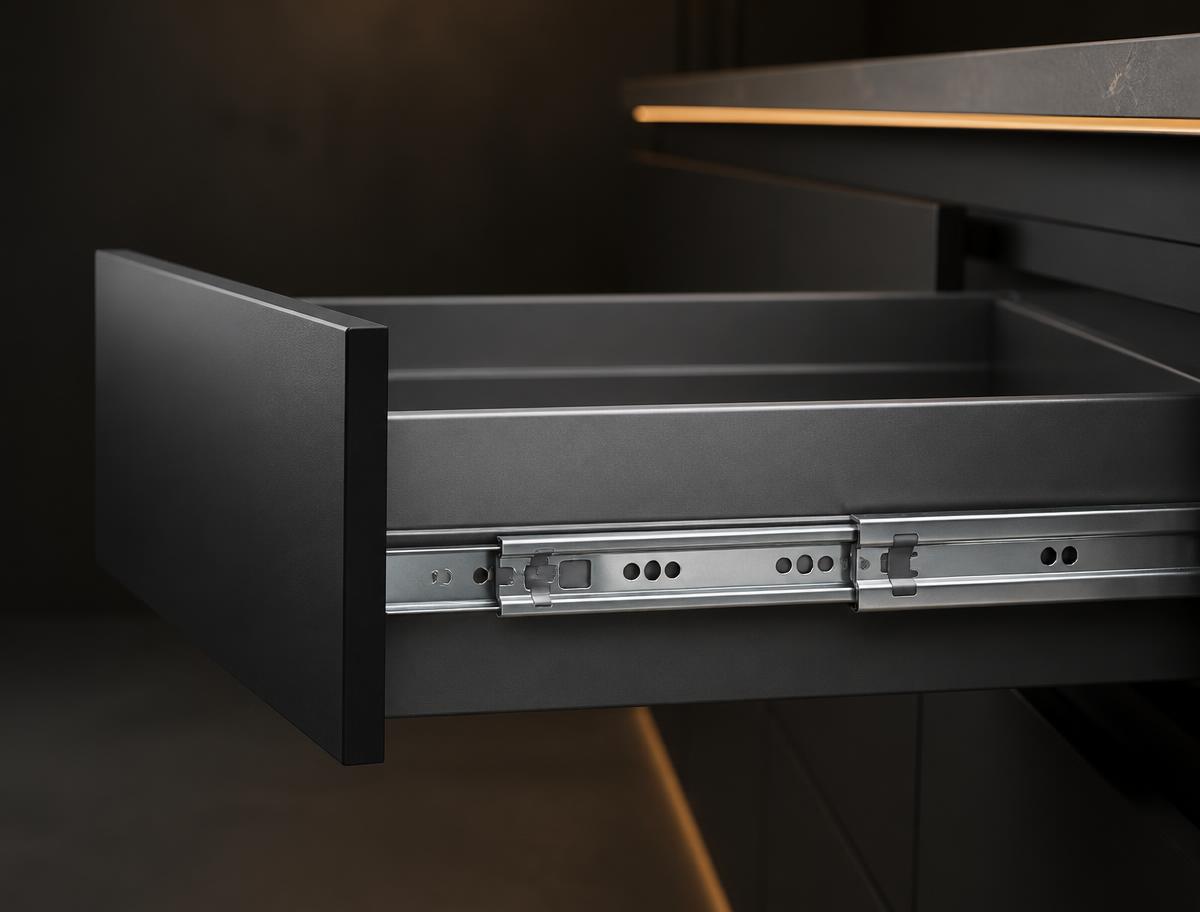
A telescopic channel is a pair of metal slides, usually ball-bearing, fixed to the sides of a drawer and the cabinet. The drawer box itself is built separately, in ply or board. Channels are sold by length in inches; the listings checked ran from about 10 to 24 inches.
A tandem box is a complete drawer system. It combines metal side panels, a back and a concealed runner mounted under the drawer, so no slide is visible from the front or the sides. The runner usually includes soft close and a front fixing that can be adjusted.
Comparison
Tandem box vs telescopic channel: side-by-side
| Factor | Telescopic channel | Tandem box |
|---|---|---|
| Mounting | Slides on both sides of the drawer box | Concealed runner under the drawer |
| Visibility | Slides can be seen in the side gap when the drawer is open | Runner is hidden |
| Drawer box | Built from board by the fabricator | Metal sides supplied as part of the system |
| Extension | Full-extension models available; basic ones may not extend fully | Full extension is normal |
| Soft close | Available on some models, not all | Usually built in |
| Front adjustment | Limited | 3D adjustment on many systems |
| Cost | Lower | Higher, priced per drawer |
| Best for | Secondary drawers, wardrobes, budget jobs | Daily-use kitchen drawers, handleless and premium jobs |
Cost
What do they cost in India?
Telescopic channels are the cheaper line. In listings checked on Google India on 6 October 2026, prices ran from about ₹150 to about ₹2,100 per pair, with the spread coming from length, load rating, soft close and brand. Prices move often, so use the figure as a snapshot and not as a quote.
Tandem systems are priced per drawer, because the box and the runner come together. They cost more, and for projects they are quoted on quantity. Request a quote with your drawer heights and counts instead of working from retail listings.
Application
Which one goes where in a modular kitchen?
| Drawer | Better choice | Reason |
|---|---|---|
| Pots and pans base drawer | Tandem box | Heavy, daily use, wide front that must stay aligned |
| Cutlery and utensil drawer | Tandem box | Smooth, quiet movement used many times a day |
| Pull-out basket or trolley | Either; check load | Telescopic suits light baskets; use a rated system for heavy ones |
| Wardrobe drawers | Telescopic channel | Lighter use and a cost-sensitive part of the job |
| Handleless kitchen fronts | Tandem box | Adjustable fronts and push-to-open compatible options |
Mirano range
Mirano's drawer systems
Mirano's drawer systems are built on Grass Dynapro concealed slides from Austria. The range covers standard and inset drawers in H90, H122 and H186 heights, plus the glass-sided Crystal Plus H186. All are soft-close and full-extension, with 3D front adjustment (height, side and tilt).
For the rest of a kitchen, see kitchen fittings and pull-out systems.
How to choose
How to choose in five steps
- Rank the drawers by use: Mark which drawers are opened many times a day and which are not.
- Check the load: List the heaviest content for each drawer and match it to the rated load.
- Decide the front style: Handleless and flush fronts need adjustable fronts and push-to-open options.
- Fix the system before the carcass: Clearances and drawer-box heights differ, so choose before cutting.
- Ask for the datasheet: Request dimensions, load rating and installation clearances in writing.
Fitting
Installation and care tips
- Level the carcass first: Out-of-square cabinets make any drawer run badly.
- Keep slide pairs identical: Use matching slides on both sides and check they are parallel.
- Adjust the front last: Fine-tune alignment once the drawer is fully loaded and moving smoothly.
- Keep runners clean: Wipe away dust and spills. Avoid oil-based lubricants unless the maker says to use them.
Clear answers
Frequently asked questions
What is the difference between a tandem box and a telescopic channel?
A telescopic channel is a pair of ball-bearing slides fixed to the sides of a drawer box. A tandem box is a complete drawer system: metal side panels plus a concealed runner under the drawer. Tandem boxes look cleaner and usually come with soft close and adjustable fronts. Telescopic channels cost less and are simpler to fit.
Which is better for a modular kitchen, tandem box or telescopic channel?
For a premium or daily-use kitchen, a tandem box is the better choice for pot and pan drawers and for handleless fronts. Telescopic channels are fine for secondary drawers, wardrobes and budget projects. Many kitchens use tandem boxes for the main base drawers and channels elsewhere.
Is a tandem box worth the extra cost?
It is when the drawer is used every day and carries weight, because the movement, soft close and front adjustment are built in. For rarely used or light drawers, the extra cost buys little.
Which telescopic channel is best for a modular kitchen?
Pick by length, load rating and whether you need soft close, not by brand alone. Match the channel length to the drawer depth, check the rated load per pair, and choose a soft-close model for kitchen drawers. Ask for the datasheet before you order.
What is the price of a telescopic channel?
In listings checked on Google India on 6 October 2026, telescopic channels ranged from about ₹150 to about ₹2,100 per pair, depending on length, load rating, soft close and brand. Prices change often, so treat this as a snapshot. Tandem systems are priced per drawer and cost more.
Do tandem boxes need more cabinet space than telescopic channels?
Their side clearance and drawer-box height are different, so the cabinet has to be planned for the system you pick. Check the required internal width and clearance in the datasheet. Do not swap one for the other after the carcass is cut.
Can I replace telescopic channels with a tandem system later?
Usually not as a simple swap. The drawer box, the clearances and often the front fixing change, so it means rebuilding the drawer. Decide at the design stage.
Are tandem boxes good for handleless kitchens?
Yes. Their adjustable fronts and push-to-open compatible variants suit handleless layouts. Mirano's inset drawer range is built for flush, handleless elevations.
What drawer systems does Mirano offer?
Mirano's drawer range is built on Grass Dynapro concealed slides: standard and inset drawers in H90, H122 and H186 heights, plus a glass-sided Crystal Plus H186. All are soft-close and full-extension, with 3D front adjustment.
Specify with confidence
Specify the right drawer system for your project
Send your drawer heights, loads and quantities, and our team will help match the system to the job.