
Kitchen hardware guide
Modular Kitchen Pull-Out Systems — Types, Uses & Price Guide (India)
Compare base pull-outs, larder units, waste-sorting systems and specialty formats to specify the right hardware for every cabinet — with indicative India pricing.
The short answer
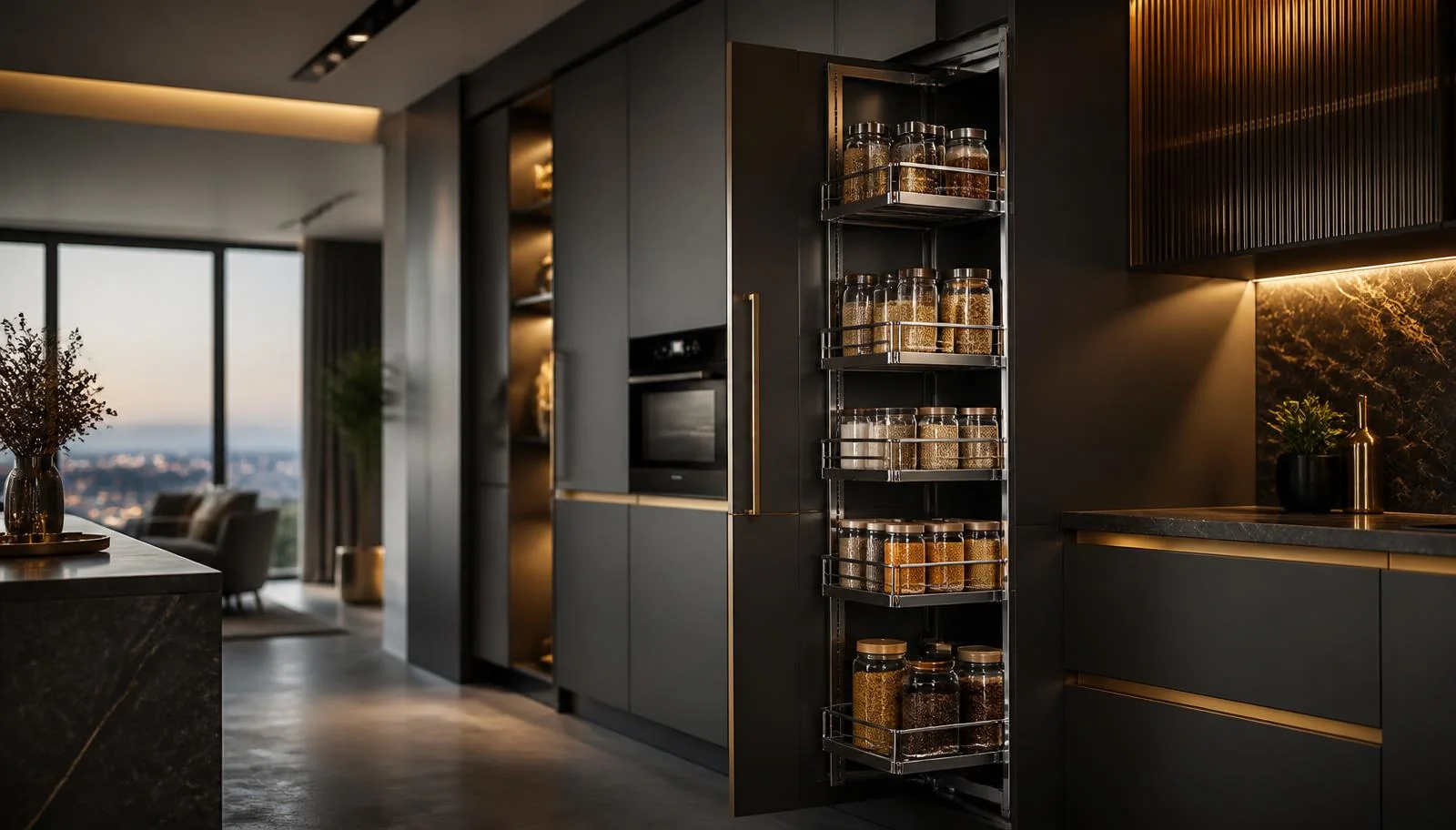
Base and larder pull-outs cover everyday groceries and pantry storage in standard cabinets. Waste-sorting and specialty formats — like Globe 2 bins or the Jino trolley — solve specific problems fixed shelves can't. Match the system to your exact cabinet width first; everything else follows from that.
Open any well-organised modular kitchen and pull out a base cabinet drawer, and you'll notice something: nothing is hidden. Every jar, every spice bottle, every stack of tiffin boxes slides fully into view instead of disappearing into the dark, hard-to-reach back of a cupboard. That's the entire point of a pull-out system — and it's arguably the single upgrade that changes how a kitchen feels to use, more than any countertop or shutter finish ever will.
Yet most homeowners walk into a modular kitchen project without knowing the difference between a base pull-out and a larder pull-out, or why a 150mm filler cabinet needs a completely different mechanism than a 600mm pantry unit. This guide breaks down every major type of pull-out system used in Indian modular kitchens today — what each one does, which cabinet it belongs in, realistic price ranges, and how to choose between them — so you (or your architect, designer, or carpenter) can specify exactly what your kitchen actually needs.
Definition
What is a kitchen pull-out system?
A pull-out system is a cabinet-mounted storage mechanism — a basket, drawer, tray or bin carrier — that slides fully out of a base or tall unit on telescopic, full-extension runners, giving complete front-to-back access to everything stored inside. Unlike a fixed shelf, which only lets you reach the front row of items while everything behind it disappears into “dead space,” a pull-out brings the entire contents forward to you in one smooth motion.
In a modular kitchen, pull-out systems are installed in four distinct locations, each with different mechanical requirements:
- Base cabinets
- Under the counter — for everyday groceries, cookware, spices and bottles.
- Tall larder units
- Floor-to-ceiling pantry cabinets — for bulk dry goods and packaged stock.
- Sink units
- For waste segregation and utility storage beneath the sink.
- Wall units
- For concealed draining racks mounted above the sink.
The overlooked upgrade
Why pull-out systems matter more than people expect
The honest case for pull-out hardware isn't about looking impressive in a kitchen tour — it's about a measurable difference in daily usability. A well-engineered pull-out range delivers 30–40% more usable storage in the same cabinet footprint, simply by eliminating the dead zone at the back of a deep cabinet that a fixed shelf can never reach.
There's also a durability dimension people rarely think about upfront: a pull-out basket loaded with groceries or cookware gets opened and closed dozens of times a week, for years. Hardware built on genuine soft-close, full-extension runners — sourced from established European component makers like Grass (Austria) and Vibo (Italy) — is engineered specifically to withstand that cycle count without sagging, jamming, or the rail-side wobble that develops quickly in unbranded, budget hardware.
Product taxonomy
The four families of pull-out systems
Kitchen pull-out systems in the Indian market generally fall into four functional families. Understanding which family solves which problem is the fastest way to specify correctly.
1. Base & larder pull-outs
These are the most common pull-out systems in any modular kitchen — vertical basket columns installed inside base cabinets (under-counter) or tall larder units (floor-to-ceiling pantry cabinets).
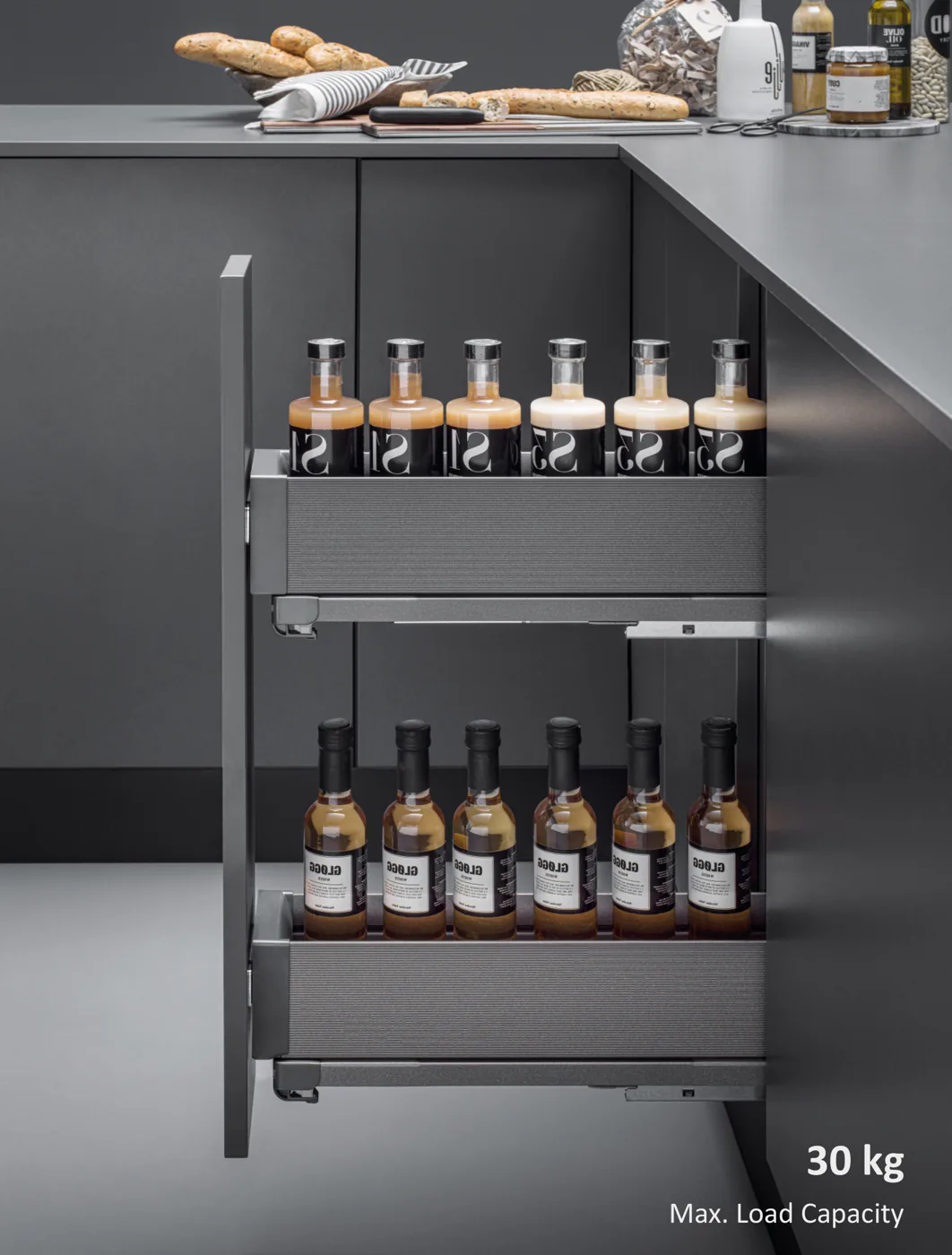
Base pull-out
Built for the gaps other kitchens waste
A slim 150mm column purpose-built for narrow filler cabinets beside a hob or tall unit.
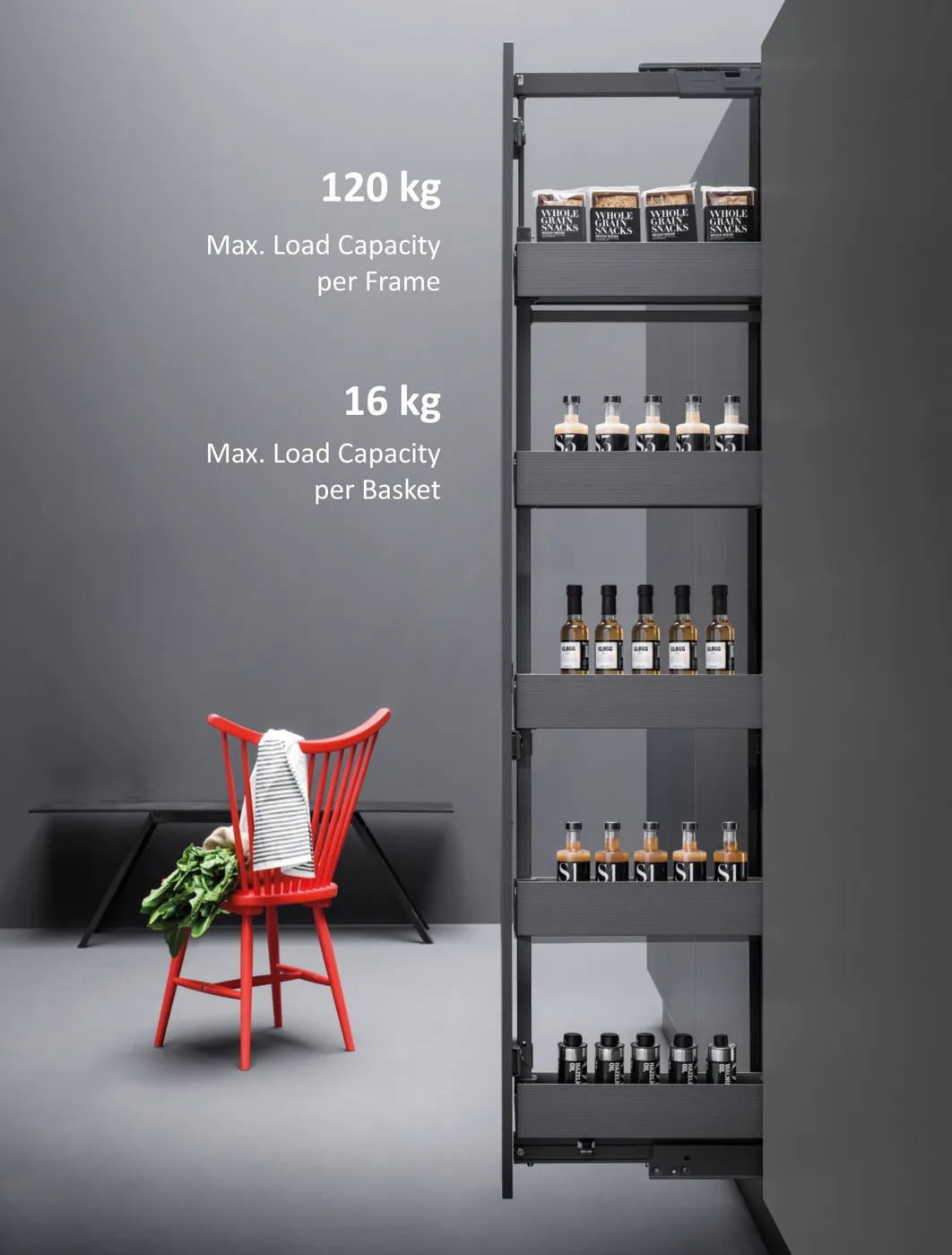
Larder pull-out
A full pantry column, brought forward in one motion
Five baskets, floor-to-ceiling — accessible from both sides once fully extended.
2. Pantry & drawer systems
This family covers tall-unit and base-cabinet solutions built around a specific storage style rather than raw volume — enclosed drawers, tiered daily-use layouts, and swing-and-pull mechanisms for deep pantries.
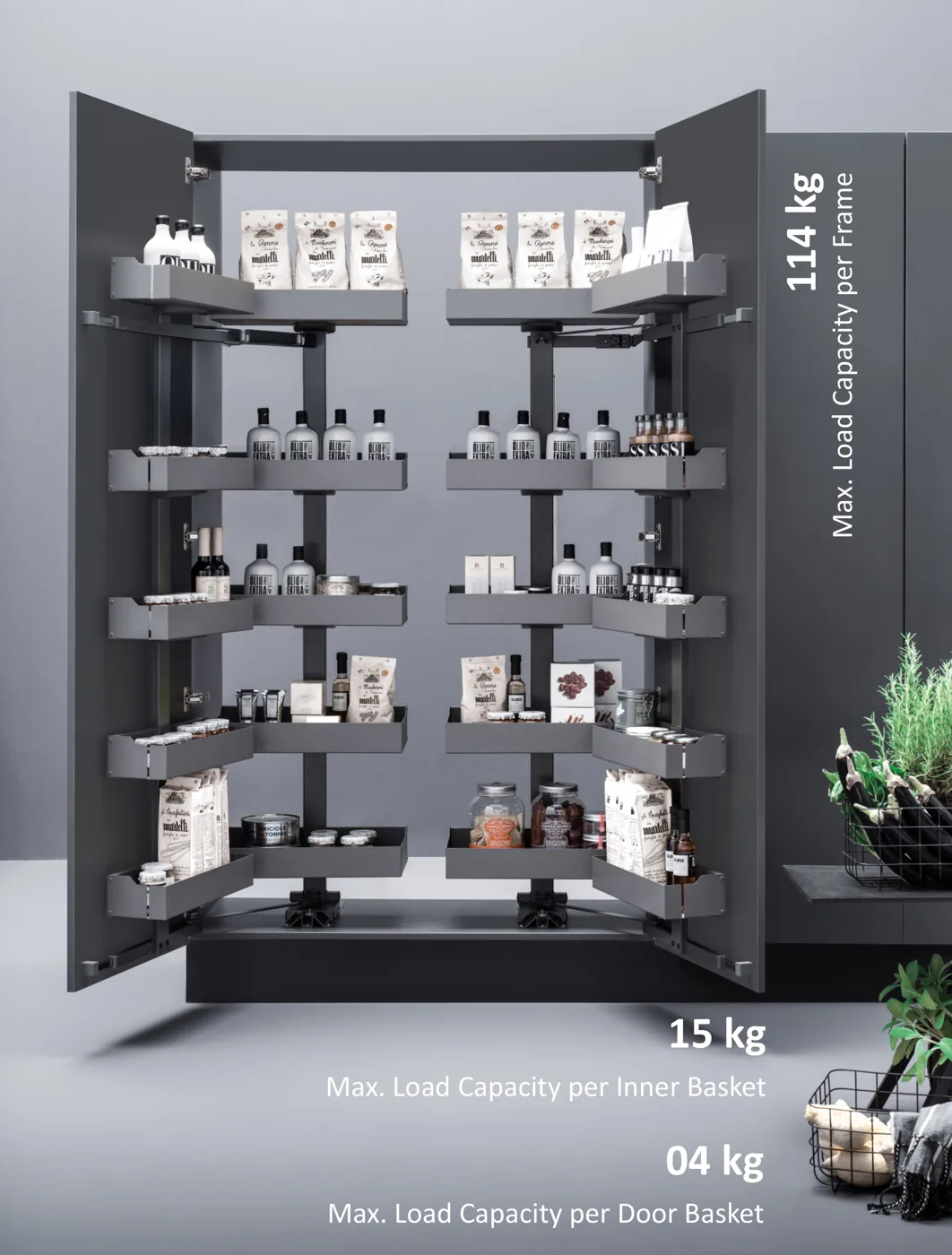
Swing-out pantry
Two storage layers, open together
Door-mounted and interior baskets swing out as one, solving the classic reach problem in deep tall units.
3. Waste & utility systems
Waste segregation is one of the most under-specified parts of an Indian modular kitchen — most homes still use a loose bin on the cabinet floor. A proper pull-out waste system changes that entirely.
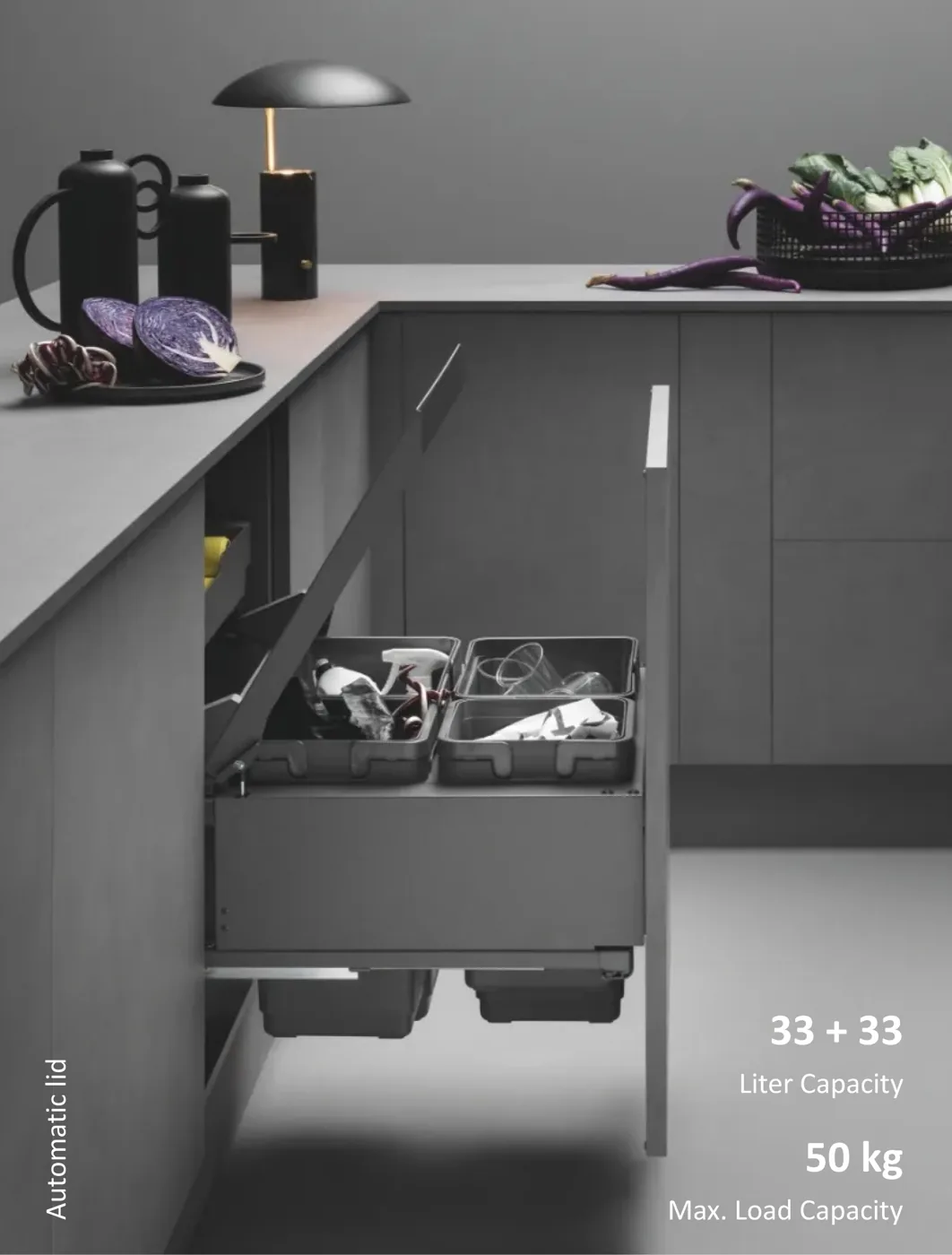
Waste sorting
Wet-and-dry segregation, out of sight
A twin-bin system with an automatic lid that lifts as the drawer opens — rated to a 50 kg maximum load.
4. Specialty formats
These are pull-out systems designed around a specific use case or design language, rather than raw storage volume.
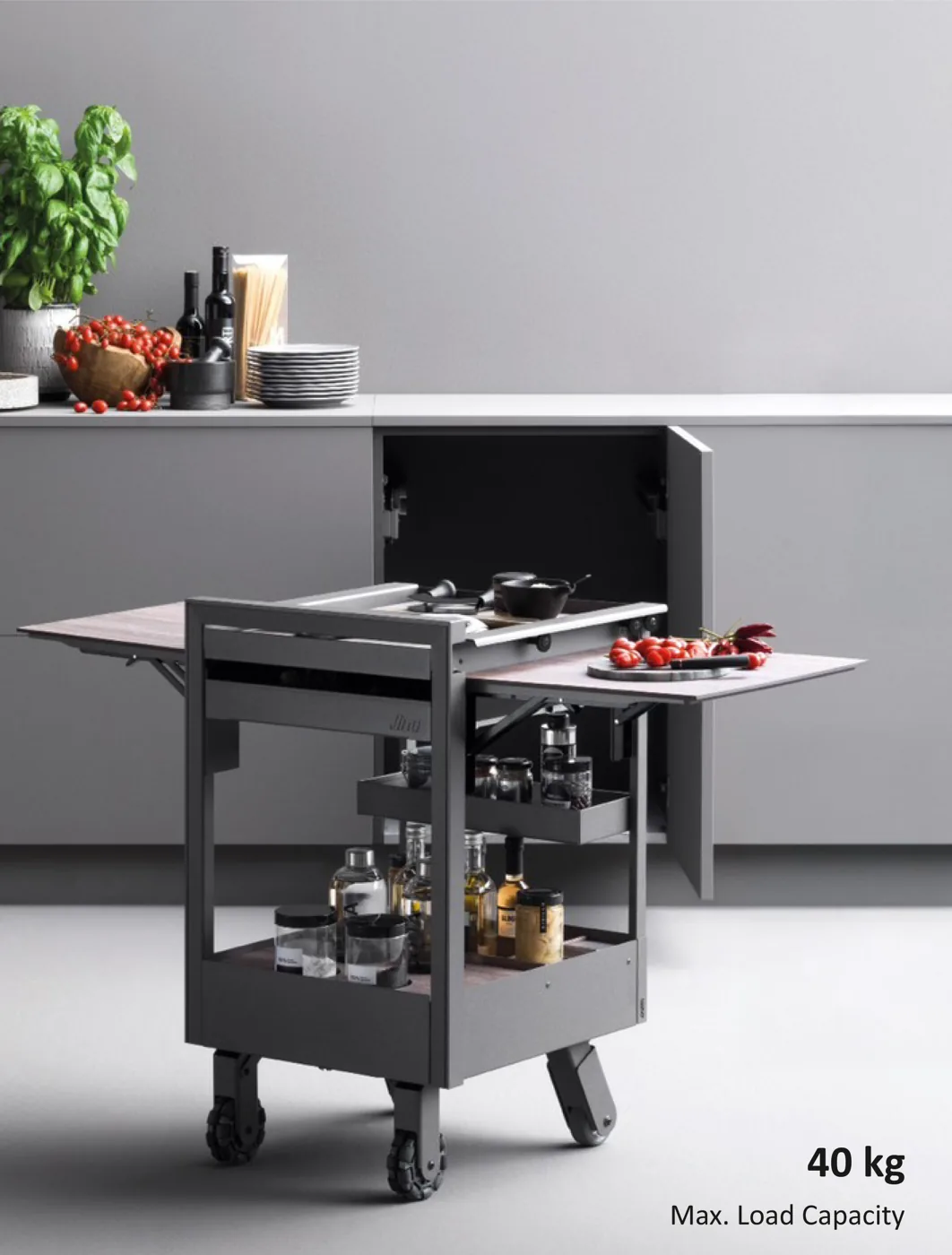
Specialty format
A mobile prep island that lives in a base cabinet
Castor-mounted and fold-out, the Jino trolley rolls out only when you need the extra worktop.
Quick reference
Which pull-out system fits your cabinet width?
| Cabinet width | Recommended systems | Typical use |
|---|---|---|
| 150mm | Base Pull Out – 150mm, Fly Box | Oils, sauces, spice jars in narrow filler gaps |
| 300 / 450mm | Base Pull Out – 300mm, Larder Pull Out, Kubico | Groceries, cookware, structured bottle/jar storage |
| 600mm | Maxi Pull Out, Swing Out Pantry, Four Side Drawer, Karlo | Bulk pantry, cutlery, everyday cookware at volume |
| Sink & wall units | Globe 2, Globe 2.0, Movebin, Domino Draining Rack | Waste segregation, concealed crockery drying |
| Any (specialty) | Jino Trolley, Fly Moon | Mobile prep space, design-led display storage |
Budgeting reference
Modular kitchen pull-out system price guide (India, indicative)
Pricing for pull-out hardware in India varies significantly by brand, load rating, wire gauge, finish and city — and premium suppliers like Mirano work on a project-specific quotation basis rather than a fixed retail price list, since cabinet dimensions and specification details affect the final cost. That said, based on current market research across leading brands, here are indicative price ranges to help you budget before requesting a formal quote:
| Pull-out type | Indicative price range (₹, per unit) | What affects the price |
|---|---|---|
| Narrow base pull-out (150mm, spice/bottle) | ₹2,500 – ₹6,000 | Wire gauge, finish, runner brand |
| Standard base pull-out (300mm) | ₹4,000 – ₹9,000 | Basket tiers, load rating, runner quality |
| Larder / tall pantry pull-out (5-basket, 300–450mm) | ₹12,000 – ₹28,000 | Number of baskets, frame reinforcement, runner brand |
| Maxi larder pull-out (600mm) | ₹18,000 – ₹35,000 | Width, load capacity, finish |
| Swing-out pantry unit | ₹15,000 – ₹32,000 | Mechanism complexity, basket count |
| Corner / magic-corner pull-out | ₹8,000 – ₹22,000 | Mechanism type, swing radius |
| Waste sorting pull-out (twin/triple bin) | ₹6,000 – ₹18,000 | Bin capacity, automatic lid, runner quality |
| Prep trolley (Jino-type) | ₹15,000 – ₹30,000 | Worktop material, castor quality, load rating |
Important note on pricing: these ranges reflect the broader Indian hardware market across multiple brands and are meant purely as a budgeting reference — they are not Mirano's official price list. Because Mirano's pull-out range is engineered with components from Grass (Austria) and Vibo (Italy) and sized for exact carcass dimensions, the most accurate figure for your specific kitchen comes from a B2B quote request based on your cabinet widths and chosen finish.
Decision framework
How to choose the right pull-out system, step by step
Why upgrade
Pull-out systems vs. fixed shelves: why the upgrade is worth it
| Factor | Fixed shelf | Pull-out system |
|---|---|---|
| Cabinet access | Front third only — the back becomes dead space | 100% front-to-back access |
| Organisation | Items stack and hide behind each other | Each item has a visible, defined slot |
| Movement | None — you reach in and dig manually | Soft-close, full-extension glide |
| Waste handling | A loose bin sitting on the cabinet floor | Concealed segregation, up to 66 litres |
| Best for | Low-use storage, static or rarely accessed items | Daily-use cookware, pantry goods, spices, waste |
| Long-term durability | No moving parts to maintain, but permanently limited access | Runners rated for years of daily open-close cycles |
Buyer's checklist
Materials and build quality: what to check before buying
Not all pull-out baskets are built the same, even when they look similar in a showroom. A few build-quality details worth checking before you commit to a supplier:
- Wire/frame material: SS304-grade stainless steel wire and coated steel frames resist the oil, steam and humidity exposure typical of Indian kitchens far better than lower-grade alloys.
- Runner brand and rating: Ask specifically whether the runners are soft-close and full-extension as standard, not as a premium add-on.
- Basket base stability: Anti-slip basket bases prevent bottles and jars from sliding during the pull-out motion.
- Load rating documentation: A reputable supplier states load capacity explicitly — for instance, 40 kg on a prep trolley or 50 kg on a waste sorting system — rather than vague marketing language.
Practical notes
Installation and retrofitting: what to know
Pull-out systems are typically sized for standard Indian modular kitchen carcass widths — 150mm, 300mm, 450mm, 600mm and 900mm — and are compatible with both new-build cabinetry and retrofits into existing kitchens. Installation is normally carried out by your modular kitchen fabricator or an authorised dealer network using standard fixing points, and standard carcass sizes typically require no custom carpentry.
For older or non-standard cabinets, always have your fabricator confirm the internal width, depth and shutter thickness before ordering — retrofitting a pull-out into an irregular or older carcass is one of the few situations where custom adjustment may be needed.
Clear answers
Frequently asked questions
What is the difference between a base pull-out and a larder pull-out?
A base pull-out fits inside a standard under-counter base cabinet and typically holds one to three tiers, while a larder pull-out is designed for a tall, floor-to-ceiling pantry cabinet and usually carries five tiers for full-height storage.
Are all modular kitchen pull-out systems soft-close?
Premium ranges use soft-close, full-extension runners as a standard feature across the entire product line, not as a paid upgrade — but this varies by brand, so it's worth confirming explicitly rather than assuming.
How much weight can a kitchen pull-out basket hold?
This varies significantly by product — narrow spice pull-outs are rated for lighter loads, while larder units and waste sorting systems can be rated up to 50 kg or more. Always check the specific rating for the product you're specifying against your intended contents.
Which pull-out system is best for a narrow kitchen cabinet?
For narrow gaps in the 150–300mm range, a slim base pull-out or an enclosed box-format pull-out is the right fit — both are engineered specifically for narrow widths without sacrificing usable capacity.
Can pull-out systems be retrofitted into an existing kitchen?
Yes, in most cases, provided the cabinet matches a standard carcass width. For older or non-standard cabinets, have a fabricator measure the internal width and depth before ordering.
What is a magic corner or swing-out pantry mechanism?
It's a system where door-mounted baskets swing outward as the interior baskets pull forward together, giving simultaneous access to both storage layers in tall or corner cabinets that would otherwise waste significant depth.
Do pull-out systems come with a warranty in India?
Reputable manufacturers back their pull-out systems with warranty coverage against functional and finish defects — always confirm the exact terms with your dealer or supplier at the time of purchase.
How do I know if a pull-out system uses genuine imported runners?
Ask the supplier directly which manufacturer's runner mechanism is used (for example, Grass or Vibo) and request documentation — a credible B2B supplier will readily confirm this rather than giving a vague answer.
Continue your research
Related kitchen hardware ranges
Pull Out Systems
Browse the complete 15-system pull-out range, from 150mm base units to the Jino trolley.
Explore range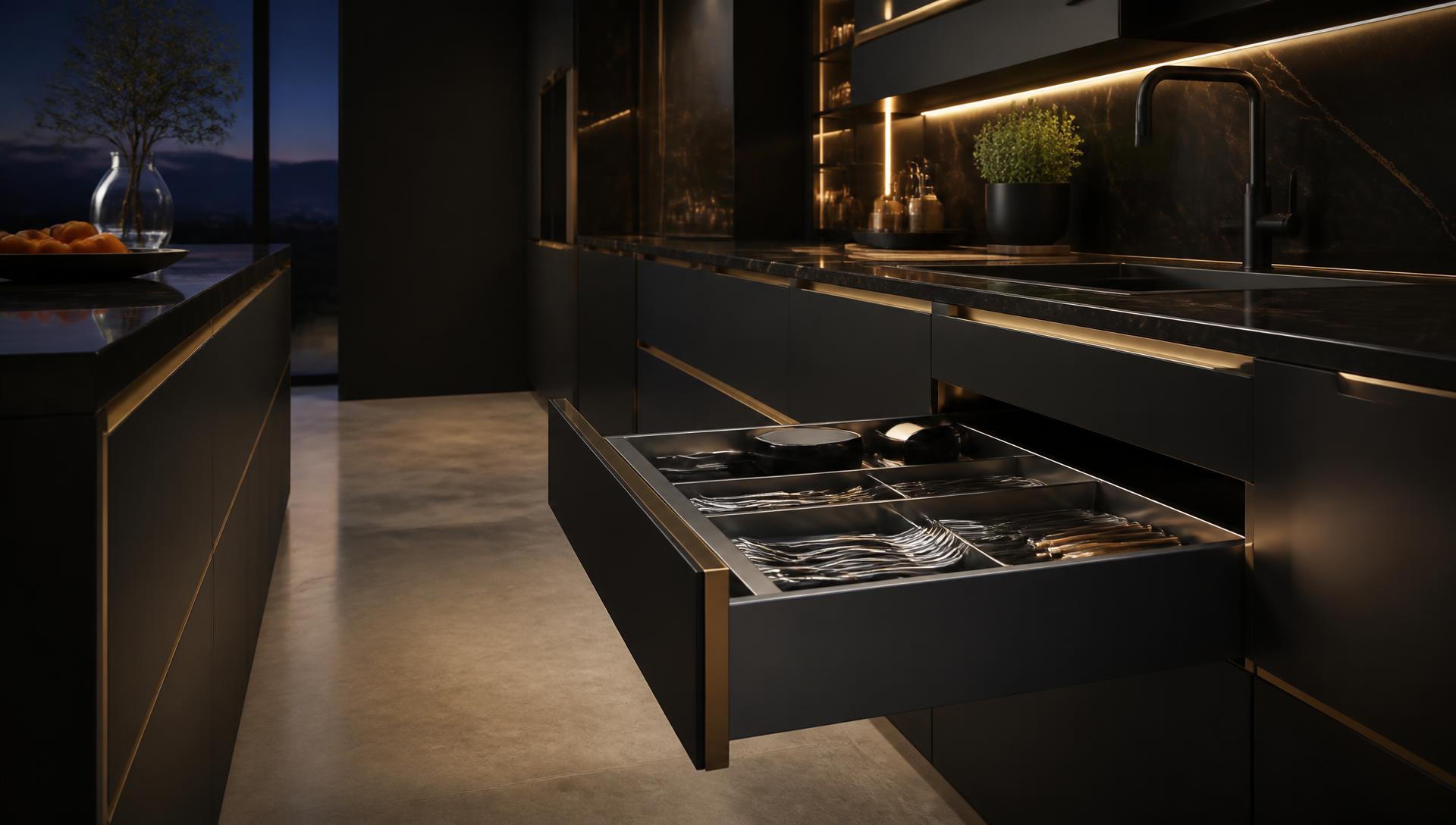
Kitchen Fittings
Explore the full kitchen hardware catalogue — pull-outs, drawers, waste bins and accessories.
Explore range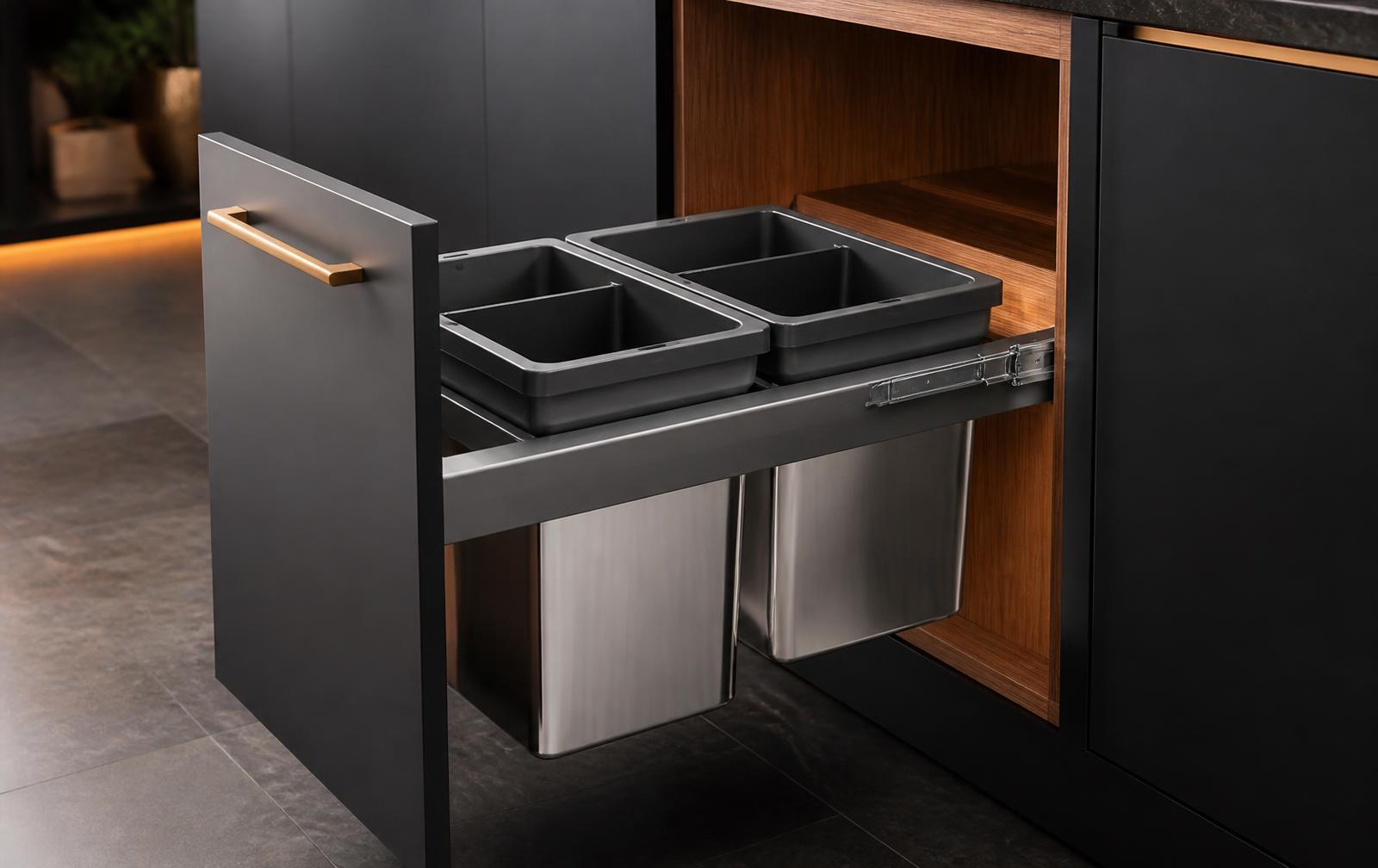
Waste Bins
Compare Globe, Globe 2.0 and Movebin waste-sorting systems for modern kitchens.
Explore rangeProject specification support
Specify the right pull-out system for your kitchen.
Share your cabinet widths and finish preference. Mirano's technical team can help confirm the correct system for residential or B2B projects.