
Planning checklist
Modular Kitchen Hardware Checklist — 15 Fittings You Shouldn't Skip
The 15 fittings a well-planned modular kitchen should include, organised by function — so nothing gets missed before your BOQ is finalised.
The short answer
A well-planned modular kitchen needs 15 core fittings covering storage (pull-outs, tandem boxes, pantry units), motion (soft-close hinges, lift-ups, corner solutions), and finishing details (handles, LED profiles, waste bins). Specify SS304 for every wet-zone and below-counter fitting, confirm rated load capacity against actual use, and work through the checklist at the planning stage — before cabinets are built, not after.
Hardware is the difference between a kitchen that looks good in a render and one that actually works, every single day, for the next 15–20 years. The pull of a drawer, the soft landing of a cabinet door, the ease of reaching the back of a corner unit — these aren't small details. They're the daily experience of every kitchen ever specified.
Yet it's remarkably easy, in the rush of finalising a modular kitchen, to focus entirely on countertop material and shutter colour while the hardware — the part that actually gets touched dozens of times a day — gets specified as an afterthought. This checklist walks through the 15 fittings a well-planned modular kitchen should include, organised by function, so you (or your architect or fabricator) can work through it systematically before finalising your BOQ.
Why it matters
Why This Checklist Matters
The Indian modular kitchen market is projected to reach $13.57 billion by 2029, growing at a CAGR of over 24% — and hardware quality is increasingly the primary differentiator in premium project specifications, not just the visible finish. Kitchen accessories perform three functions at once: maximising storage space, improving ease of access, and extending the service life of the cabinetry itself. Skipping or under-specifying any one of the fittings below tends to show up as a callback or a complaint within the first two years of daily use.
The checklist
The Complete 15-Point Checklist
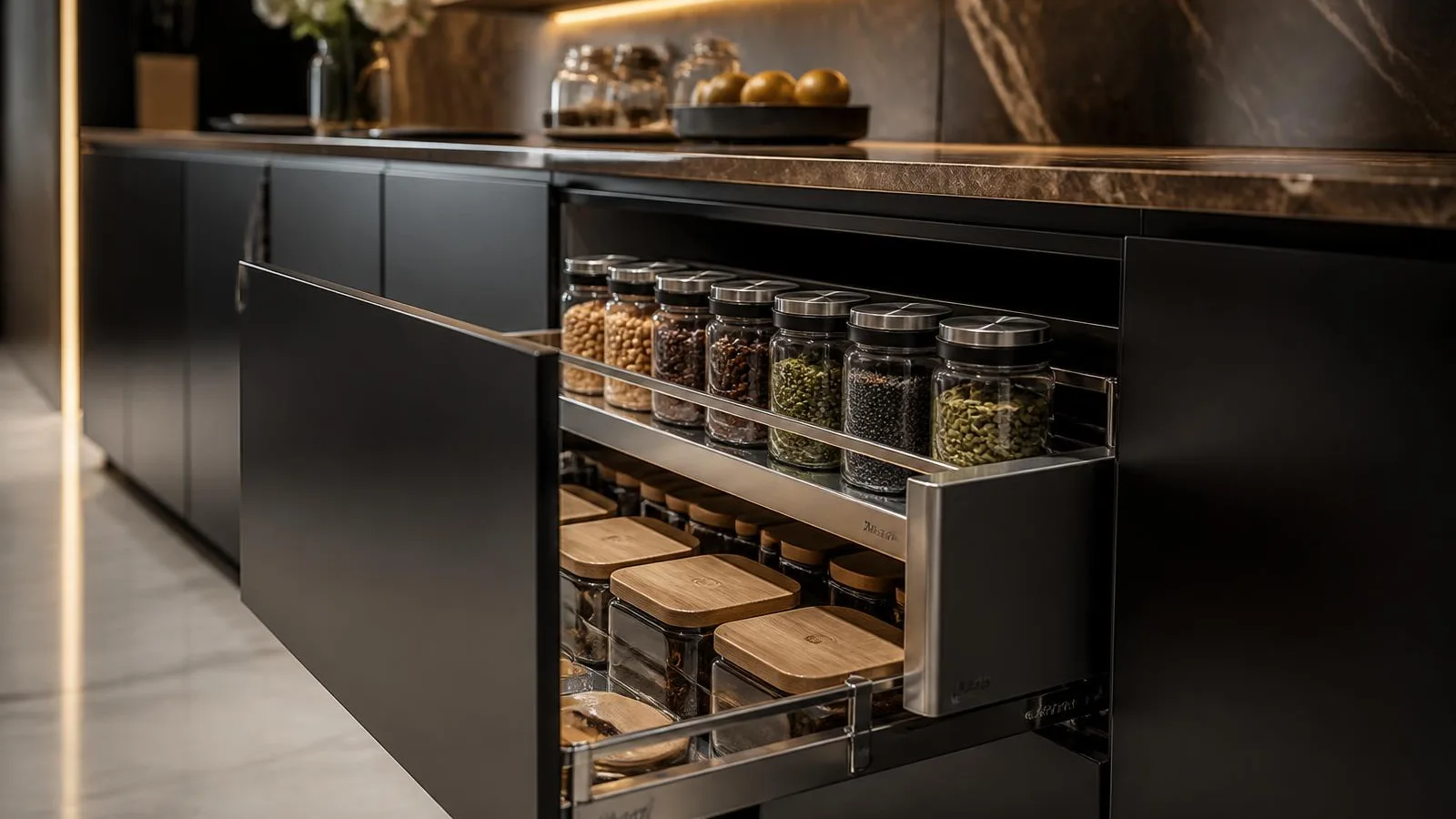
- 1. Full-Extension Pull-Out Baskets: Mounted on telescopic channels for full access to cabinet depth. Specify SS304 for wet zones (under-sink, near cooktop) and full-extension channels with soft-close dampers for premium projects. Standard widths run 300mm, 400mm, 450mm, 500mm and 600mm.
- 2. Soft-Close Tandem Box Drawers: A full-extension, side-panel-integrated drawer with a concealed soft-close mechanism — cleaner and quieter than a conventional box drawer. Load capacity typically runs 40–70kg depending on grade, with depths from 300mm to 600mm.
- 3. Concealed Soft-Close Hinges: The most frequently specified kitchen fitting, determining door opening angle, overlay type and long-term door alignment stability. Specify 3D adjustable hinges where post-installation adjustment is needed, and clip-on hinges rated for actual glass panel weight on glazed doors.
- 4. Magic Corner or Lazy Susan Unit: Corner cabinets are the most commonly wasted space in any kitchen layout. A magic corner (two-shelf system extending outward as the door opens) suits L-shaped and U-shaped kitchens; a lazy susan suits blind-corner and full-round corner cabinets specifically.
- 5. Tall Pantry Pull-Out (Larder Unit): Maximises vertical storage in floor-to-ceiling pantry cabinets with multi-tier basket configurations on telescopic channels. Specify full-extension for cabinets deeper than 500mm.
- 6. Narrow Bottle Pull-Out (150mm): A slim vertical slide-out unit for oils, sauces and condiments, converting the wasted 100–200mm gap between a base cabinet and an appliance into genuinely useful storage.
- 7. Cutlery Tray / Drawer Organiser: Segments cutlery, cooking utensils and small tools into dedicated compartments, preventing drawer clutter — particularly valuable in open-plan kitchens where drawer interiors are visible. Specify height-adjustable dividers for varying sizes.
- 8. Lift-Up System for Overhead Units: Uses hydraulic or spring-loaded mechanisms to let overhead shutters open upward rather than swinging out — the correct specification above appliances or work surfaces, where a swinging door becomes a hazard. Match the spring/hydraulic force rating to the actual door weight.
- 9. Built-in Waste Bin System: A concealed, pull-out or swing-out waste bin, ideally with dual-compartment segregation for wet and dry waste — increasingly a municipal requirement across Indian cities, and a significant hygiene upgrade over a freestanding bin.
- 10. Handle / Gola Profile System: Either a G/C-profile handle fixed to the shutter edge, or a recessed gola channel fixed to the carcass for a fully handleless face — the detail that decides whether a kitchen reads as considered or generic.
- 11. Plinth & Gola Skirting Profile: The often-overlooked base of the kitchen — the plinth profile closes the gap beneath base cabinets, while gola skirting systems can double as the recessed handle detail for a fully handleless kitchen face.
- 12. LED Profile Lighting (Under-Cabinet): Under-cabinet and drawer LED profiles improve both task visibility and the overall finished look of the kitchen. Specify CRI>80 for accurate colour rendering and sensor-friendly switching for hands-free operation.
- 13. Corner Solution Matched to Layout: Beyond a single magic corner, confirm the full corner strategy for L-shaped and U-shaped kitchens specifically — these layouts often need two corner solutions, and dimensional mismatches at corners are among the most common installation errors.
- 14. Glass/Mirror Shutter Profile (Display Units): For crockery cabinets or display units, a mitred aluminium frame profile holds glass or mirror panels cleanly at all four edges — specify the same finish family as the rest of the kitchen's handle profiles for visual consistency.
- 15. Load Rating & Material Check on Every Fitting: The final, cross-cutting check: confirm SS304 (not SS202 or generic chrome) for all wet-zone and below-counter applications, and verify the rated load capacity of every basket, drawer and hinge against its actual intended use.
Reference
Load Capacity Reference Table
| Accessory Type | Minimum Recommended Load Capacity |
|---|---|
| Pull-out basket (base cabinet) | 25–40 kg per basket |
| Pantry tall unit | 15 kg per shelf tier |
| Tandem box drawer | 40–70 kg per drawer |
| Drawer slide (telescopic) | 25–45 kg per pair |
| Soft-close hinge | Matched to door weight (specify per kg) |
| Magic corner unit | 30 kg total |
| Waste bin pull-out | 15 kg per unit |
Material
Material Guide: SS304 vs. SS202 vs. Chrome
The material specification of kitchen accessories directly affects longevity, especially in the Indian climate where coastal humidity, high ambient temperatures and cooking steam accelerate corrosion in lower-grade materials.
| Property | SS304 | SS202 | Chrome-Plated |
|---|---|---|---|
| Corrosion resistance | Excellent | Good | Moderate |
| Coastal suitability | High | Moderate | Low |
| Load capacity | High | Medium-high | Medium |
| Price point | Premium | Mid-range | Economy |
| Specify for | Wet zones, coastal, premium projects | Dry zones, mid-range | Overhead, dry-zone storage only |
Rule of thumb: specify SS304 for all below-counter and sink-adjacent applications; chrome or SS202 is acceptable for overhead and dry-zone storage only.
By layout
Matching the Checklist to Your Kitchen Layout
| Kitchen Layout | Key Accessories to Prioritise |
|---|---|
| Straight (I-shape) | Pull-out baskets, drawer systems, pantry tall unit, waste bin |
| L-shape | Magic corner unit, pull-out baskets, drawer slides, bottle pull-outs |
| U-shape | Two magic corners, pantry pull-out, lazy susan, full drawer suite |
| Parallel | Pull-out baskets both sides, soft-close hinges, tandem boxes |
| Island kitchen | Drawer systems, cutlery trays, integrated waste bin, lift-ups for overhead units |
Clear answers
Frequently asked questions
What are the most important fittings to prioritise on a tight budget?
Soft-close hinges, at least one full-extension pull-out basket per base cabinet, and a built-in waste bin deliver the largest day-to-day usability improvement relative to their cost — prioritise these before display-oriented fittings like glass shutter profiles.
Which material is best for kitchen pull-out baskets in India?
SS304-grade stainless steel is recommended for all wet-zone and below-counter applications, given the corrosion pressure from coastal humidity and daily cooking steam typical of Indian kitchens; SS202 or chrome is acceptable only for dry, overhead storage.
What is the difference between a tandem box and a regular drawer system?
A tandem box is a full-extension, side-panel-integrated drawer with a concealed soft-close mechanism, giving a cleaner look and quieter operation than a conventional drawer box mounted on visible telescopic slides.
How do I choose the right hardware for an L-shaped kitchen specifically?
Prioritise a magic corner unit for the blind corner, pull-out baskets along both runs, drawer slides for the base cabinets, and bottle pull-outs for any narrow gaps beside the hob or a tall unit.
What is a magic corner kitchen unit?
A two-shelf mechanism that extends outward as the corner cabinet door opens, bringing stored items forward instead of leaving them buried at the back of an inaccessible blind corner.
What lift-up system should I specify for overhead kitchen cabinets?
A single-door lift suits cabinet widths up to 600mm; a parallel (bi-fold) lift is better for wider cabinets. In both cases, match the spring or hydraulic force rating precisely to the actual door weight to avoid the door dropping or failing to stay open.
Can I source this checklist's fittings in bulk for OEM manufacturing?
Yes — established suppliers offer the full range on B2B trade terms for architects, OEMs, and dealers, with consistent lead times and documented specifications for production teams.
What is the difference between SS304 and SS202 for kitchen baskets?
SS304 offers excellent corrosion resistance and is suitable for coastal and premium residential projects; SS202 is a mid-range, good-but-not-excellent alternative more appropriate for dry-zone, non-premium applications.
Are these fittings compatible with all cabinet brands and carcass systems?
Most fittings in this checklist follow standard modular carcass dimensions (widths at 100mm increments from 300mm to 900mm), making them broadly compatible — always confirm exact internal cabinet dimensions against the specific product's datasheet before ordering.
How much of a modular kitchen's total cost does hardware typically represent?
This varies significantly by project, but hardware quality is increasingly cited as a primary differentiator in premium kitchen specifications — under-investing here is one of the most common sources of two-to-five-year callbacks and client dissatisfaction.
Continue your research
Related ranges and resources
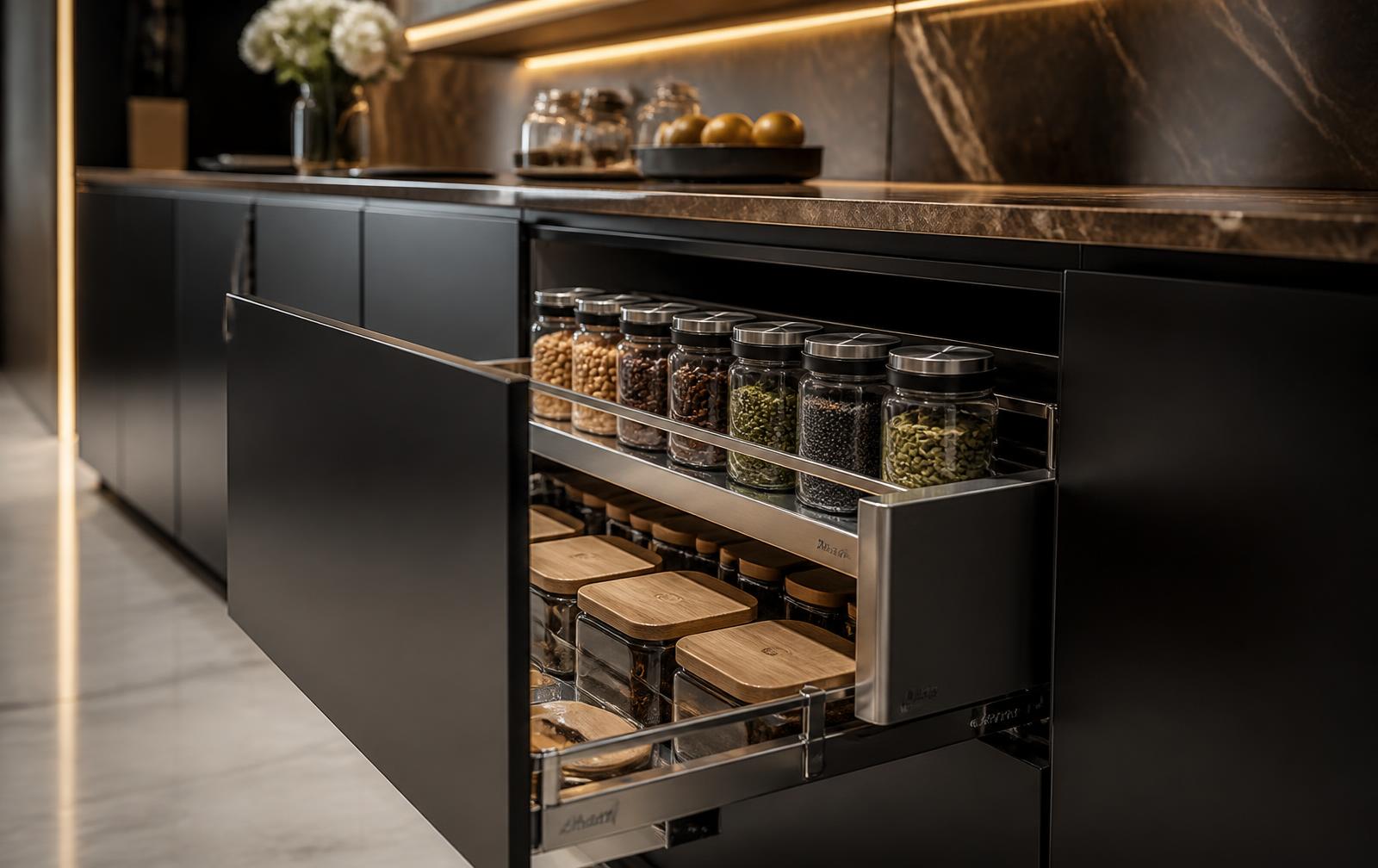
Modular Kitchen Accessories
Browse the complete accessories range referenced throughout this checklist.
Explore range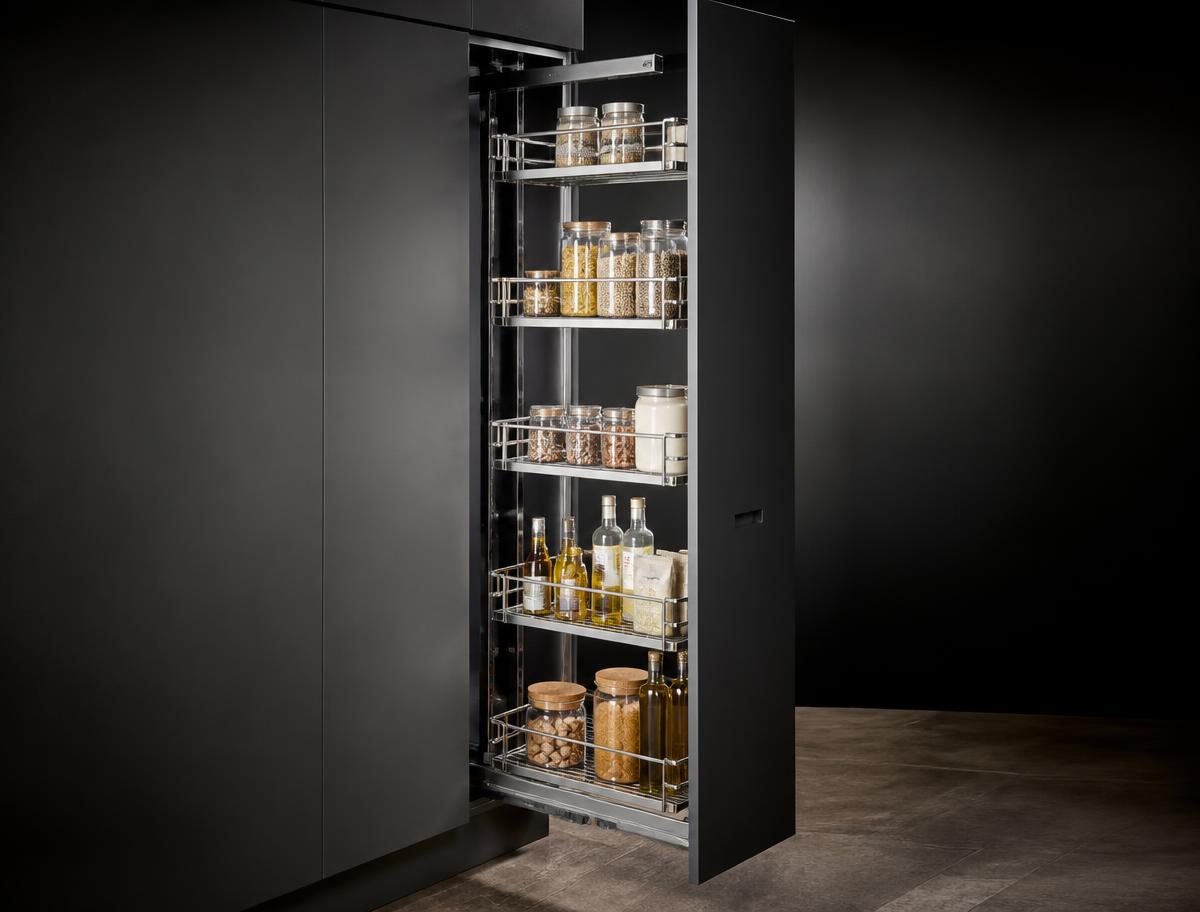
Pull Out Systems
Baskets, larder units and bottle pull-outs across standard widths.
Explore range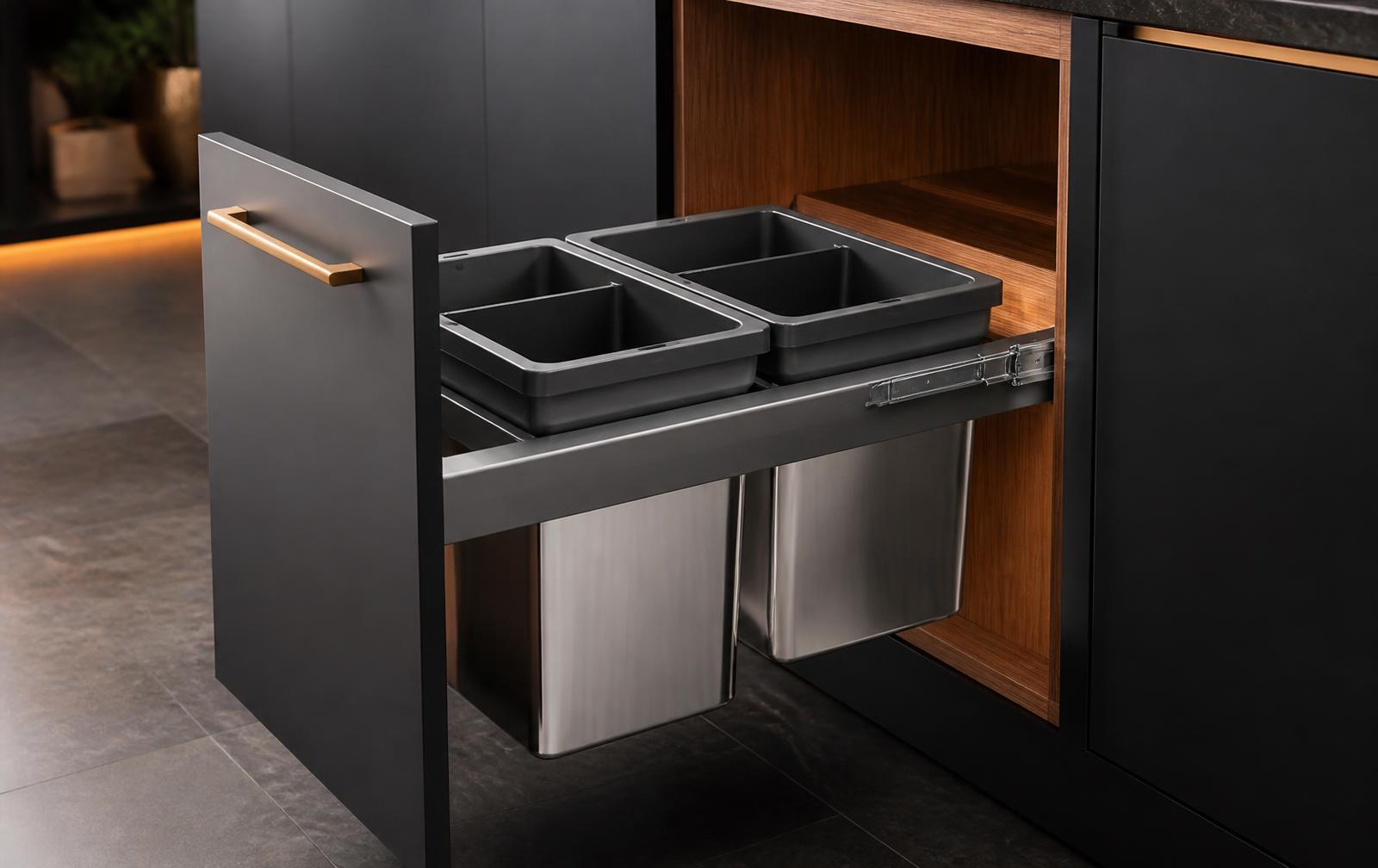
Waste Bins
Concealed and dual-compartment waste bin systems for kitchen cabinets.
Explore rangeWork with a supplier you can verify
Ready to specify hardware from a supplier you can verify?
Mirano by Varun Impex has supplied premium modular kitchen, wardrobe and bed hardware to architects, interior designers, OEM manufacturers and 300+ dealers across India since 2006.