
Sourcing guide
Imported vs Local Furniture Hardware — What's the Real Difference? (India)
A practical, India-focused comparison of imported and local kitchen and wardrobe hardware — what genuinely differs, and how to verify what you're buying.

The short answer
"Imported" hardware isn't automatically better, and "local" isn't automatically worse — what genuinely matters is whether the hardware carries a traceable manufacturer, published load ratings and cycle-life testing, and a servicing relationship years later. A hybrid model — European engineering partnerships with local stocking and dispatch — often delivers the same quality standard at a lower landed cost and faster turnaround than a fully imported product.
"Is imported hardware really worth the extra money?" is one of the most common questions architects, interior designers and homeowners ask when a modular kitchen or wardrobe quote comes back with two very different price points for what looks, on paper, like the same hinge or drawer channel. The honest answer isn't a simple yes or no — it depends on what "imported" actually means in a given quote, and what you're optimising for: lowest upfront cost, or lowest cost over the 15–40 years the hardware will actually be used.
This guide breaks down what genuinely differs between imported and local furniture hardware, how to tell a real European-engineered product from a marketing claim, and when each option makes practical sense.
Definitions
What “Imported Hardware” Actually Means
“Imported” is used loosely in the Indian furniture hardware market, and it covers at least three very different situations:
Fully manufactured abroad, imported as a finished product — the hardware is made in Europe or elsewhere and shipped to India as-is, with the highest cost but the most consistent factory-line tolerance.
Engineered by an international brand, manufactured under partnership in India — the design, tooling and quality standards come from an established European manufacturer, but production happens locally under their specification, which can offer comparable quality at a lower landed cost.
A vague “European-style” or “imported design” claim with no real manufacturer behind it — the riskiest category, where the country-of-origin language is marketing rather than a verifiable fact.
Understanding which of these three situations you're actually buying into matters far more than the word “imported” printed on a box.
The real differences
What Genuinely Differs Between Imported and Local Hardware
1. Cycle-Life Testing and Published Load Ratings
Established European hardware manufacturers publish specific, testable figures — for example, a sliding wardrobe track rated for 100,000+ open-close cycles, or a hinge rated for a specific kg load. Generic or unbranded hardware rarely publishes verifiable testing data of this kind, which makes it difficult to compare products on anything other than price and appearance.
2. Manufacturing Tolerance and Consistency
A hinge or track extruded to a tight manufacturing tolerance sits flush and operates smoothly across an entire production batch. Lower-cost, opportunistically-sourced hardware often varies noticeably from batch to batch, because it isn't tied to a single, consistent manufacturing line — a problem that only becomes visible once a project is partway installed and a second batch doesn't quite match the first.
3. Material Grade and Climate Suitability
Anodised aluminium tracks and SS304-grade stainless steel components resist the humidity, dust and daily wear typical of Indian conditions significantly better than mild steel or lower-grade alloys often used in budget hardware — a difference that shows up as rust, sag or stiffness within two to three years rather than decades.
4. Spare Parts and Long-Term Servicing
Hardware sourced through a distributor with a direct manufacturing relationship can usually be serviced or have individual components replaced years later. Hardware bought opportunistically, with no traceable manufacturer relationship, often can't be matched or repaired once the original batch is gone — forcing a full replacement instead of a simple part swap.
5. Design and Engineering Detail
Small engineering details — a two-way soft-close damper on a sliding track, a three-way adjustable hinge, precise mitred corner joints on an aluminium profile — are the product of years of design refinement by an established manufacturer. These details are genuinely harder to replicate cheaply, and they're usually what a homeowner notices as “quality” without being able to name exactly why.
The hybrid model
Where Local Manufacturing Genuinely Adds Value
It's worth being clear that “local” isn't automatically the lower-quality option, and “imported” isn't automatically the safer one. The most reliable hardware suppliers in India often combine both: European engineering and manufacturing partnerships, paired with local manufacturing or assembly designed specifically for Indian conditions and standard carcass dimensions — rather than a product simply designed for a European market and shipped in unchanged. This hybrid model has real practical advantages:
Faster, more predictable dispatch than waiting on international shipping and customs clearance for every order.
Products sized to Indian standard cabinet widths rather than European or other international sizing conventions.
Local technical support that understands Indian site conditions, installation practices and common carpentry tolerances.
Often a lower landed cost than a fully imported finished product carrying the same engineering standard.
Mirano's own positioning illustrates this well: its hardware is engineered through partnerships with established European and Italian manufacturers — including Grass (Austria), Eureka, Volpato and System Holz — while being stocked and dispatched from India, specifically sized and specified for Indian modular furniture conventions.
Due diligence
How to Verify Genuine Imported or European-Engineered Hardware
Ask for the specific manufacturer's name, not just a country-of-origin claim. “European-engineered” without a named manufacturer is a marketing phrase, not a verifiable fact.
Request the manufacturer's own technical documentation or catalogue, not just the supplier's reprinted specification sheet.
Check for published, specific load ratings and cycle-life figures — a credible supplier can state these precisely, on request.
Ask how the supplier's relationship with the manufacturer works — a direct partnership or licensed manufacturing agreement is a meaningfully different (and more accountable) relationship than opportunistic resale.
Decision guide
When to Choose Imported/European-Engineered Hardware
High-traffic, daily-use fittings — kitchen drawers, wardrobe sliding tracks, hinges on heavy glass doors — where cycle life and load rating directly affect how long the piece lasts under real use.
Premium or luxury residential and hospitality projects, where finish consistency and long-term reliability matter to the client relationship and project reputation.
Coastal or high-humidity locations, where material grade has an outsized effect on how quickly hardware degrades.
Any project where callbacks and warranty claims are costly — a marginally higher hardware cost upfront is often smaller than the cost of a site revisit two years later.
Decision guide
When Local/Generic Hardware Can Be a Reasonable Choice
Low-traffic or infrequently-used cabinetry, such as a rarely-opened storage unit, where cycle life matters less.
Strictly budget-constrained projects where the trade-off is understood and accepted upfront, rather than discovered later.
Temporary or short-lifespan installations, such as a rental property renovation with a known, limited holding period.
Clear answers
Frequently asked questions
Is imported furniture hardware always better than local hardware?
Not automatically — what matters is whether the hardware (imported or locally made) comes with verifiable load ratings, cycle-life testing, and a traceable manufacturer relationship. A well-engineered, India-manufactured product built to European design standards can outperform a genuinely imported but unverified or low-grade product.
How much more expensive is genuinely imported hardware?
This varies significantly by product category and specific manufacturer, but the price premium generally reflects published testing standards, tighter manufacturing tolerance, and material grade — a B2B quote against your specific project is the most reliable way to compare actual costs.
How can I tell if hardware marketed as “European” is genuine?
Ask the supplier for the specific manufacturer's name and request their own technical documentation, not just a reprinted specification sheet — a credible supplier will readily provide this.
Does imported hardware last longer than local hardware in Indian conditions?
Hardware built to a documented cycle-life standard (for example, 100,000+ cycles) and made from climate-appropriate materials like anodised aluminium or SS304 stainless steel generally outlasts unbranded or unverified hardware, regardless of whether “imported” or “local manufacturing” is the more accurate label for it.
Is it possible to get European engineering quality without paying full import costs?
Yes — this is exactly what a hybrid model offers: hardware engineered through established European manufacturing partnerships, but stocked and dispatched locally, sized specifically for Indian modular furniture standards.
What load rating and cycle-life figures should I ask for?
For sliding wardrobe tracks, ask for the rated cycle life (100,000+ cycles is a strong European benchmark) and maximum door panel load in kg; for hinges, ask for the rated weight capacity matched to your door material and thickness.
Can local Indian manufacturers match European hardware quality?
When manufacturing happens under a direct partnership with, or licence from, an established European manufacturer — using the same tooling standards and material specifications — the resulting product can genuinely match the engineering quality of a fully imported equivalent.
What's the biggest risk with cheap, unverified “imported-style” hardware?
The biggest risk is a lack of traceability: no verifiable manufacturer, no published testing data, and no reliable path to spare parts or servicing once the original batch is sold — meaning a failure often requires a full replacement rather than a simple repair.
Does hardware source affect warranty claims?
Yes — hardware sourced through a supplier with a direct, traceable manufacturer relationship can usually process warranty claims and replacements far more reliably than hardware bought from an untraceable or opportunistic source.
Where can I verify a supplier's genuine brand partnerships in India?
Reputable suppliers publish the specific brands they represent, often with dedicated pages — for example, Mirano's brand partnerships — rather than a vague “imported hardware” claim with no named manufacturer.
Continue your research
Related ranges and resources
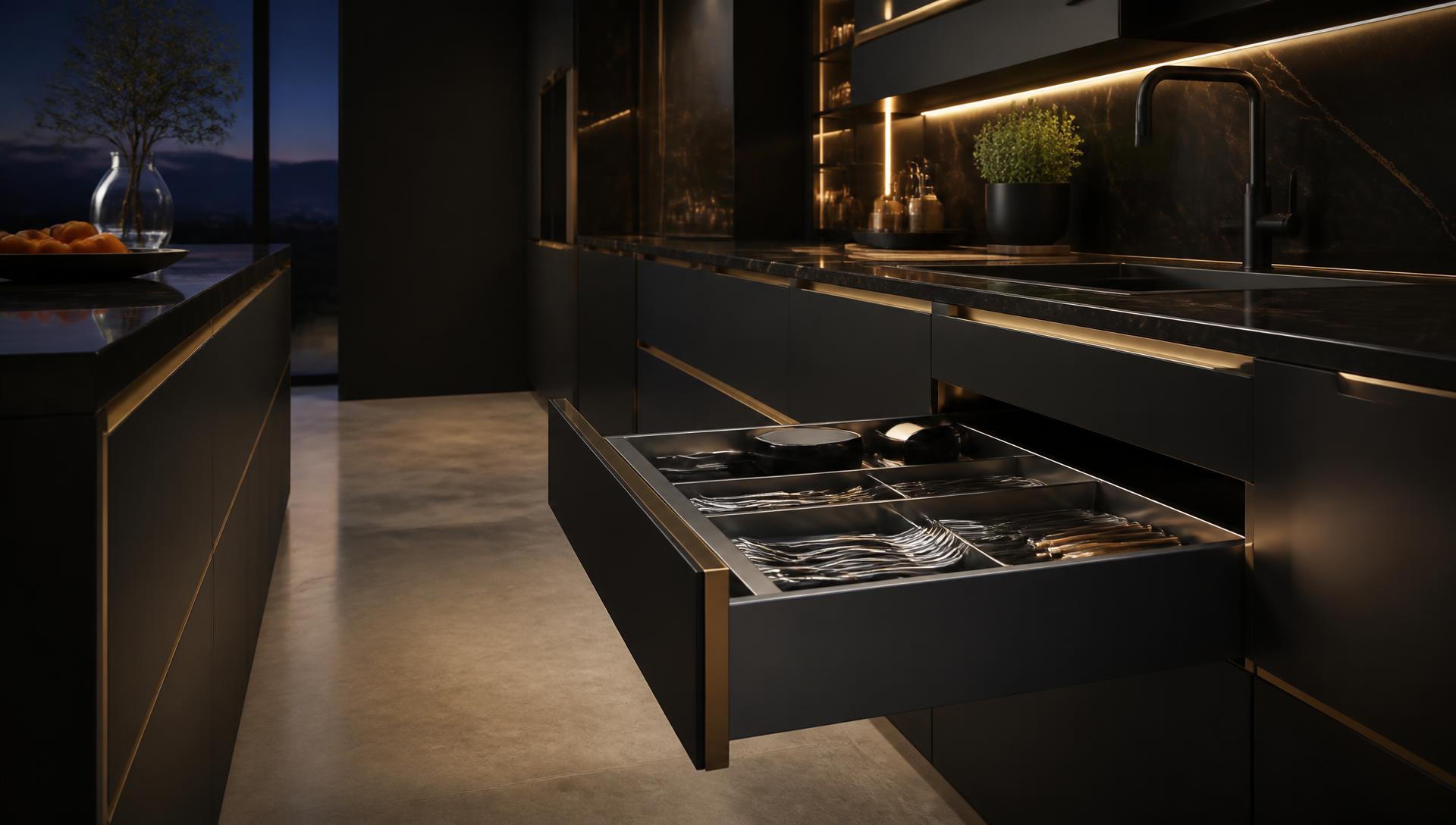
Kitchen Fittings
Explore the kitchen hardware catalogue built on verifiable European engineering.
Explore range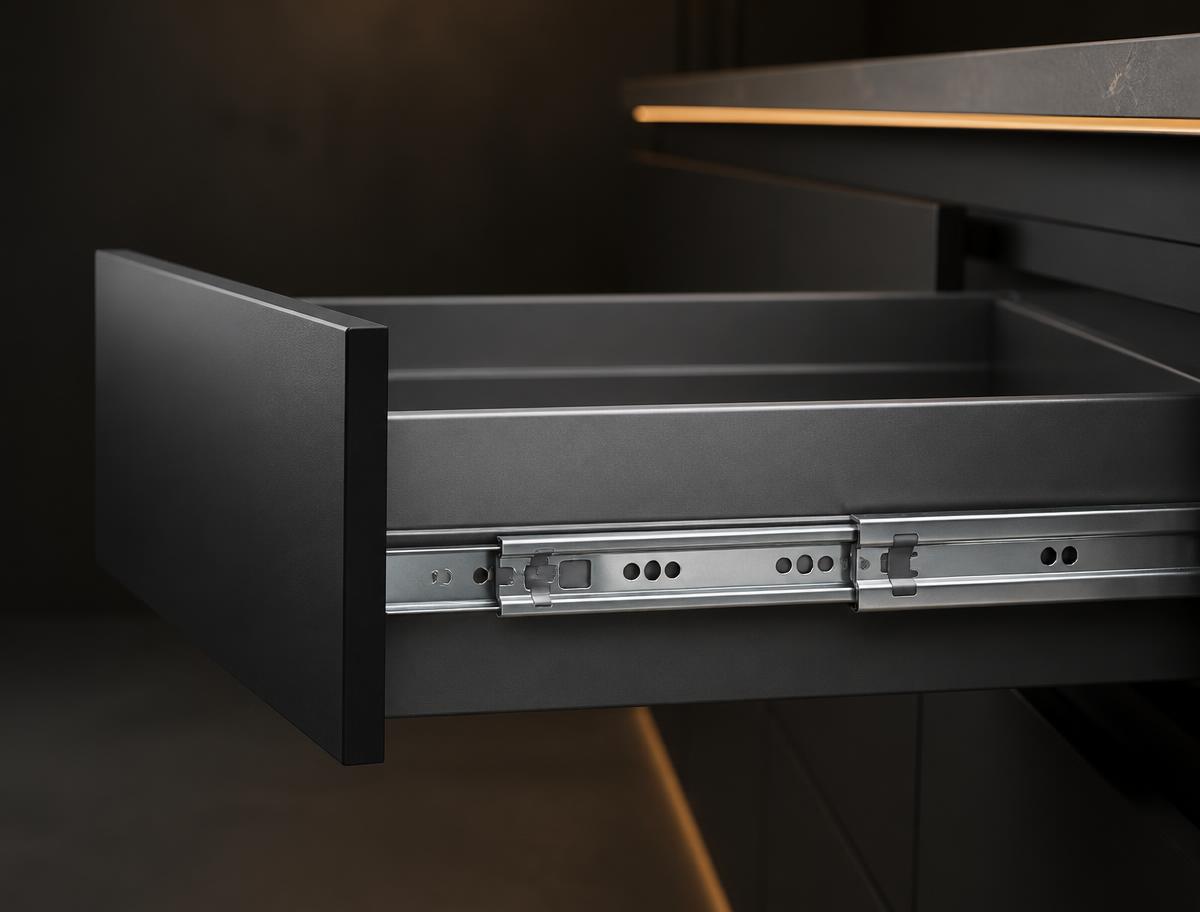
Drawer Systems
Soft-close drawer runners with published load ratings and cycle-life testing.
Explore range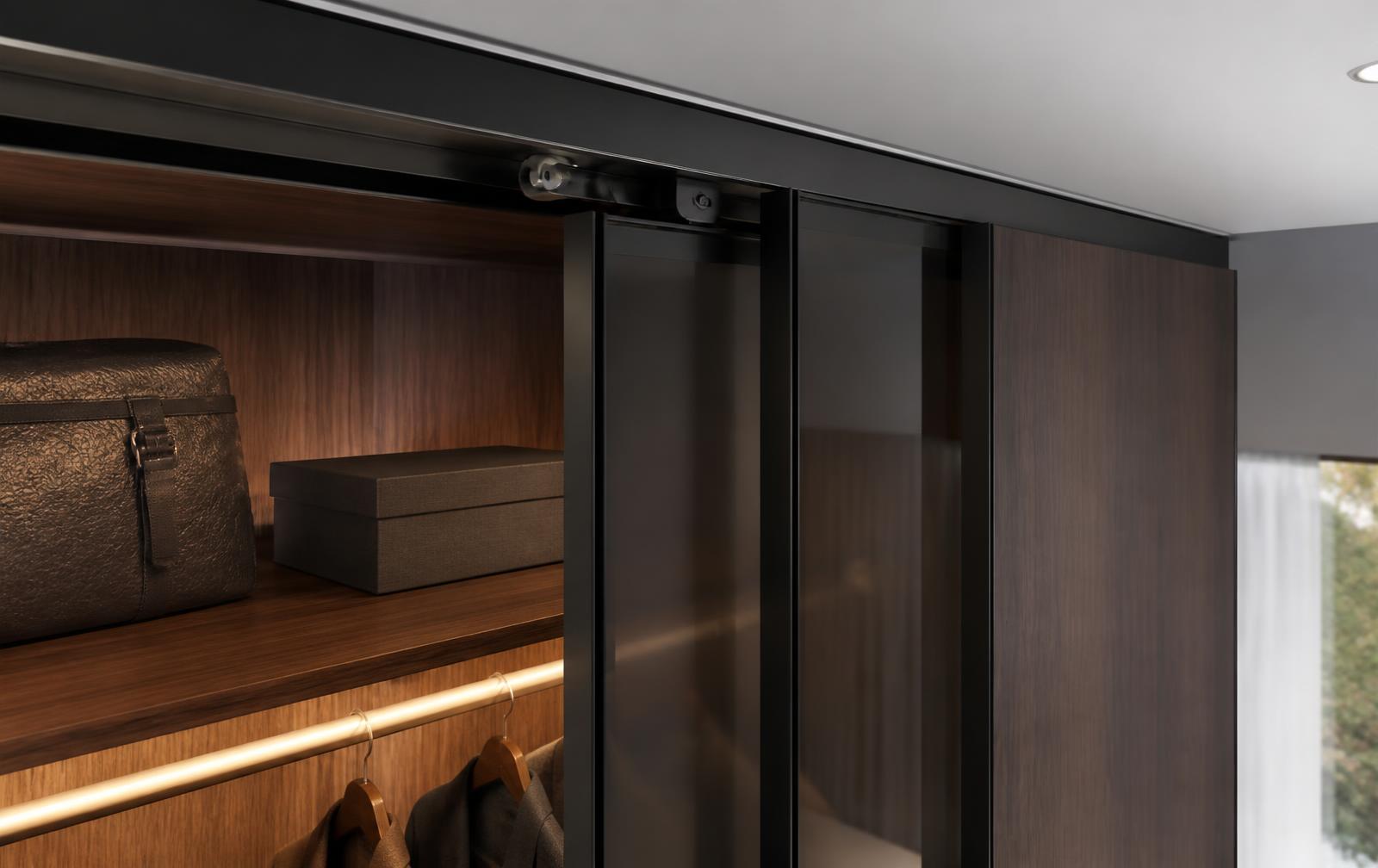
Sliding Wardrobe Systems
Tracks and hinges engineered for high-cycle, daily wardrobe use.
Explore rangeWork with a supplier you can verify
Ready to specify hardware from a supplier you can verify?
Mirano by Varun Impex has supplied premium modular kitchen, wardrobe and bed hardware to architects, interior designers, OEM manufacturers and 300+ dealers across India since 2006.