
Cost guide
Modular Kitchen & Wardrobe Hardware Cost — Complete Budget Guide (India)
What share of your project cost hardware should take, category-wise indicative price ranges, and how to prioritise when the budget is tight.
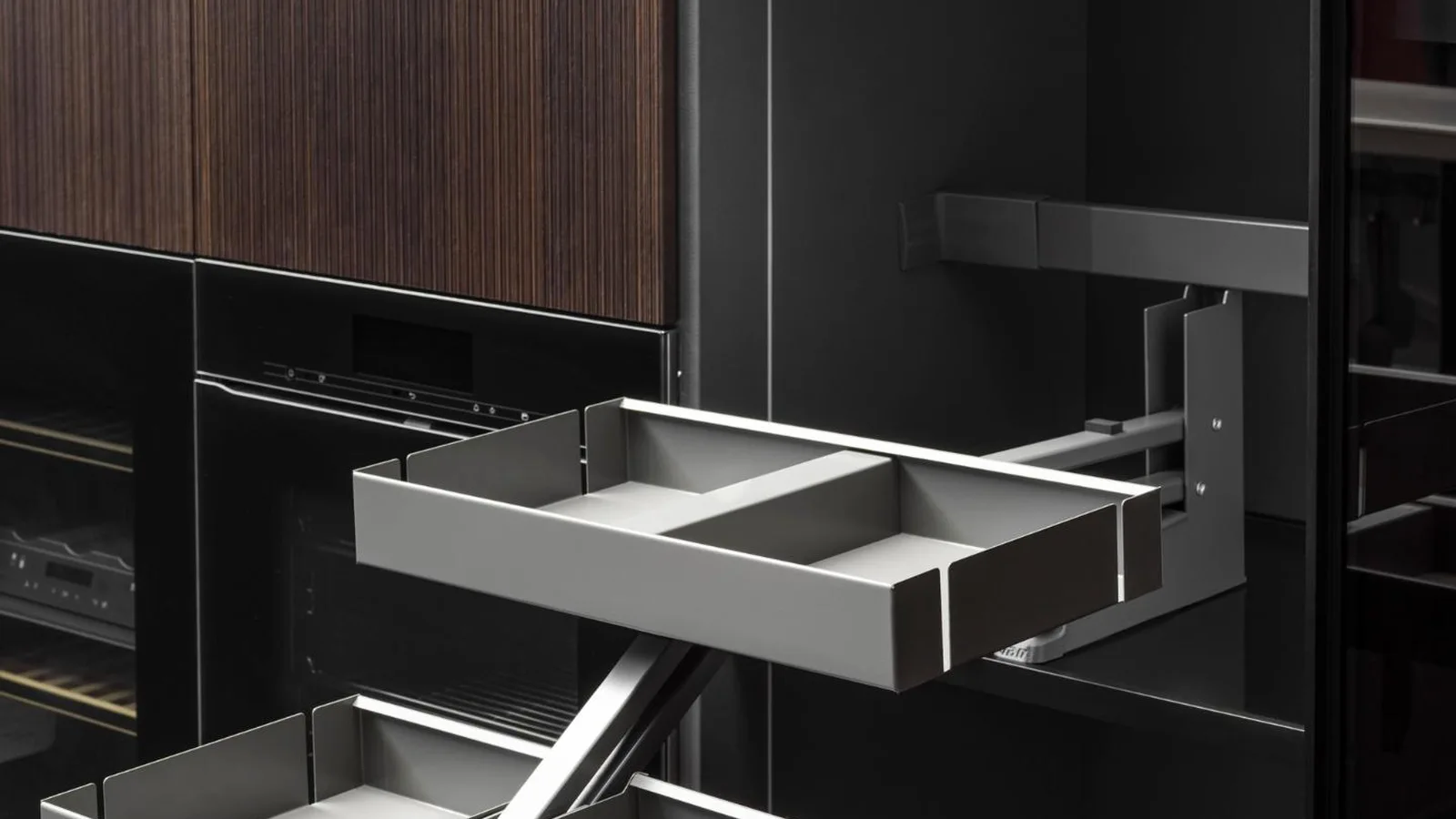
The short answer
Hardware typically represents 15–25% of a total modular kitchen or wardrobe project cost in India, with premium European-engineered hardware sitting toward the higher end. When budgets are tight, prioritise soft-close hinges and drawer slides, at least one full-extension pull-out basket per cabinet, and a built-in waste bin first — these affect daily usability the most relative to their cost — and treat handles and LED lighting as the most deferrable line items.
Hardware is the line item most homeowners underestimate when planning a modular kitchen or wardrobe budget — and the one they most regret cutting corners on two or three years later. Unlike a countertop or a laminate finish, hardware gets touched physically, dozens of times a day, for the life of the piece. A well-budgeted hardware allocation is what separates a kitchen or wardrobe that still feels new after a decade from one that starts rattling, sagging or sticking within two years.
This guide walks through how to actually budget for modular kitchen and wardrobe hardware in India — what share of your total project cost hardware should realistically occupy, category-wise indicative price ranges, and how to prioritise spending when the budget is genuinely tight.
Indicative pricing
Category-Wise Indicative Price Guide
Because pricing varies by brand, load rating, finish and project scale, the ranges below are indicative market figures meant purely for budgeting purposes — not a fixed price list from any single supplier. Premium suppliers typically quote against your exact project dimensions rather than a flat retail rate.
Kitchen Drawer Systems & Hinges
| Fitting | Indicative Price Range (₹) |
|---|---|
| Standard telescopic drawer slide (pair) | ₹800 – ₹2,500 |
| Soft-close tandem box drawer | ₹3,000 – ₹8,000 per drawer |
| Concealed soft-close hinge (per piece) | ₹150 – ₹450 |
| 3D adjustable hinge for heavier doors | ₹300 – ₹700 |
Pull-Out & Storage Systems
| Fitting | Indicative Price Range (₹) |
|---|---|
| Narrow base pull-out (150mm) | ₹2,500 – ₹6,000 |
| Standard base pull-out (300mm) | ₹4,000 – ₹9,000 |
| Larder/tall pantry pull-out (5-basket) | ₹12,000 – ₹28,000 |
| Maxi larder pull-out (600mm) | ₹18,000 – ₹35,000 |
Wardrobe Sliding & Openable Hardware
| Fitting | Indicative Price Range (₹) |
|---|---|
| Sliding wardrobe track system (per running metre, complete) | ₹2,500 – ₹6,000 |
| Openable wardrobe hinge system (per door) | ₹800 – ₹2,000 |
| Glass door hinge system (rated for heavier panels) | ₹1,500 – ₹3,500 |
Handles, Profiles & Gola Systems
| Fitting | Indicative Price Range (₹) |
|---|---|
| Standard G/C-profile handle (per metre) | ₹600 – ₹1,800 |
| Recessed gola profile channel (per metre) | ₹900 – ₹2,500 |
| Glass/mirror shutter frame profile (per door) | ₹1,200 – ₹3,000 |
Waste Bins & Utility Systems
| Fitting | Indicative Price Range (₹) |
|---|---|
| Compact single-bin pull-out | ₹3,000 – ₹6,000 |
| Dual-compartment segregation system | ₹6,000 – ₹18,000 |
| Rotating corner waste bin | ₹8,000 – ₹15,000 |
LED Profile Lighting
| Fitting | Indicative Price Range (₹) |
|---|---|
| Silicone Series profile (per metre, incl. strip) | ₹400 – ₹900 |
| PC Series profile (per metre) | ₹500 – ₹1,200 |
| PMMA Series profile (per metre, premium) | ₹700 – ₹1,800 |
Bed Fittings (If Applicable)
| Fitting | Indicative Price Range (₹) |
|---|---|
| Manual wall bed mechanism (single) | ₹15,000 – ₹28,000 |
| Manual wall bed mechanism (double) | ₹22,000 – ₹40,000 |
| Motorized wall bed mechanism | ₹45,000 – ₹80,000+ |
| Gas-spring storage bed mechanism | ₹8,000 – ₹18,000 |
| Pull-out trundle bed mechanism | ₹6,000 – ₹14,000 |
Important note on pricing: these are broad Indian market reference ranges, not a specific supplier's price list. Hardware from established European-engineered ranges is specified and priced against your exact project — request a B2B quote for accurate, project-specific figures.
Prioritisation
How to Prioritise When the Budget Is Tight
If the full hardware wish list doesn't fit the available budget, prioritise in this order — the fittings that affect daily usability the most, first:
- Soft-close hinges and drawer slides: The single highest-frequency-use hardware in any kitchen or wardrobe; the difference between a soft-close and a basic hinge is felt every single time a door or drawer is used.
- At least one full-extension pull-out basket per base cabinet: Dramatically improves everyday access compared to a fixed shelf, for a relatively modest incremental cost.
- A built-in waste bin system: A significant daily hygiene and convenience upgrade over a freestanding bin, at a cost that's usually a small fraction of the total kitchen budget.
- Wardrobe track or hinge system: This is the mechanical backbone of the entire wardrobe; underspending here is the most common source of two-to-three-year wardrobe complaints.
- Handle/profile system: Visually significant, but generally the most deferrable line item if budget genuinely runs short, since a basic handle can always be upgraded later without touching the carcass.
- LED profile lighting: High value-for-money on perceived quality, but the most reasonable category to phase in later if the initial budget is constrained.
Sample framework
A Sample Budget Allocation Framework
For a mid-to-premium modular kitchen project, a reasonable hardware allocation might look like this, as a share of the total hardware budget (not total project cost):
| Category | Indicative Share of Hardware Budget |
|---|---|
| Drawer systems & hinges | ~28% |
| Pull-out & storage systems | ~24% |
| Wardrobe sliding/openable hardware | ~20% |
| Handles, profiles & gola systems | ~10% |
| Waste bins & utility systems | ~7% |
| LED profile lighting | ~6% |
| Bed fittings (if applicable) | ~5% |
This allocation will shift depending on your specific project — a kitchen-only project redistributes the wardrobe and bed shares elsewhere, for instance — but it's a useful starting framework for a conversation with your architect, designer or fabricator.
Clear answers
Frequently asked questions
What percentage of a modular kitchen budget should go to hardware?
As a general guideline, hardware typically represents 15–25% of total project cost, with premium European-engineered hardware sitting toward the higher end of that range.
Is it worth paying more for premium hardware on a tight budget?
For high-frequency-use fittings like hinges, drawer slides and wardrobe tracks, yes — the lifetime cost of ownership (accounting for replacements and callbacks) is often lower with premium hardware, even though the upfront cost is higher.
What's the cheapest way to upgrade a kitchen's hardware without a full renovation?
Soft-close hinges and a single full-extension pull-out basket per cabinet typically deliver the largest usability improvement relative to cost, and can often be retrofitted without touching the existing carcass.
How much does a complete wardrobe hardware set cost in India?
This varies significantly by wardrobe size, door count and whether sliding or openable hardware is specified — a full B2B quote against your exact wardrobe dimensions is the most accurate way to budget.
Are bed fittings a significant cost in a modular furniture budget?
For projects including a wall bed, storage bed, or pull-out bed mechanism, bed fittings typically represent a meaningful but bounded share of the total hardware budget, varying significantly between manual and motorized mechanisms.
What hardware category should be prioritised first on a limited budget?
Soft-close hinges and drawer slides, followed by at least one full-extension pull-out basket per base cabinet — these affect daily usability the most for the smallest incremental cost.
Does LED profile lighting significantly increase the hardware budget?
Not typically — LED profile lighting usually represents a smaller share of the total hardware budget relative to structural hardware like drawer systems and pull-outs, while offering a high perceived-quality improvement.
How do I get an accurate, project-specific hardware quote?
Provide your exact cabinet dimensions, door counts, and material preferences to a B2B supplier for a specification-matched quote — generic online price ranges are useful for initial budgeting only, not final costing.
Is it cheaper to buy hardware separately or as part of a full modular kitchen package?
This varies by supplier and project scale — bulk or full-project sourcing from a single supplier often secures better B2B pricing than piecemeal purchasing, in addition to ensuring consistent quality and finish across the project.
What's the real cost difference between premium and budget hardware over time?
While upfront cost can differ meaningfully, the total cost of ownership gap often narrows or reverses over 10–15 years once replacement parts, service callouts and early failures on budget hardware are factored in.
Continue your research
Related ranges and resources
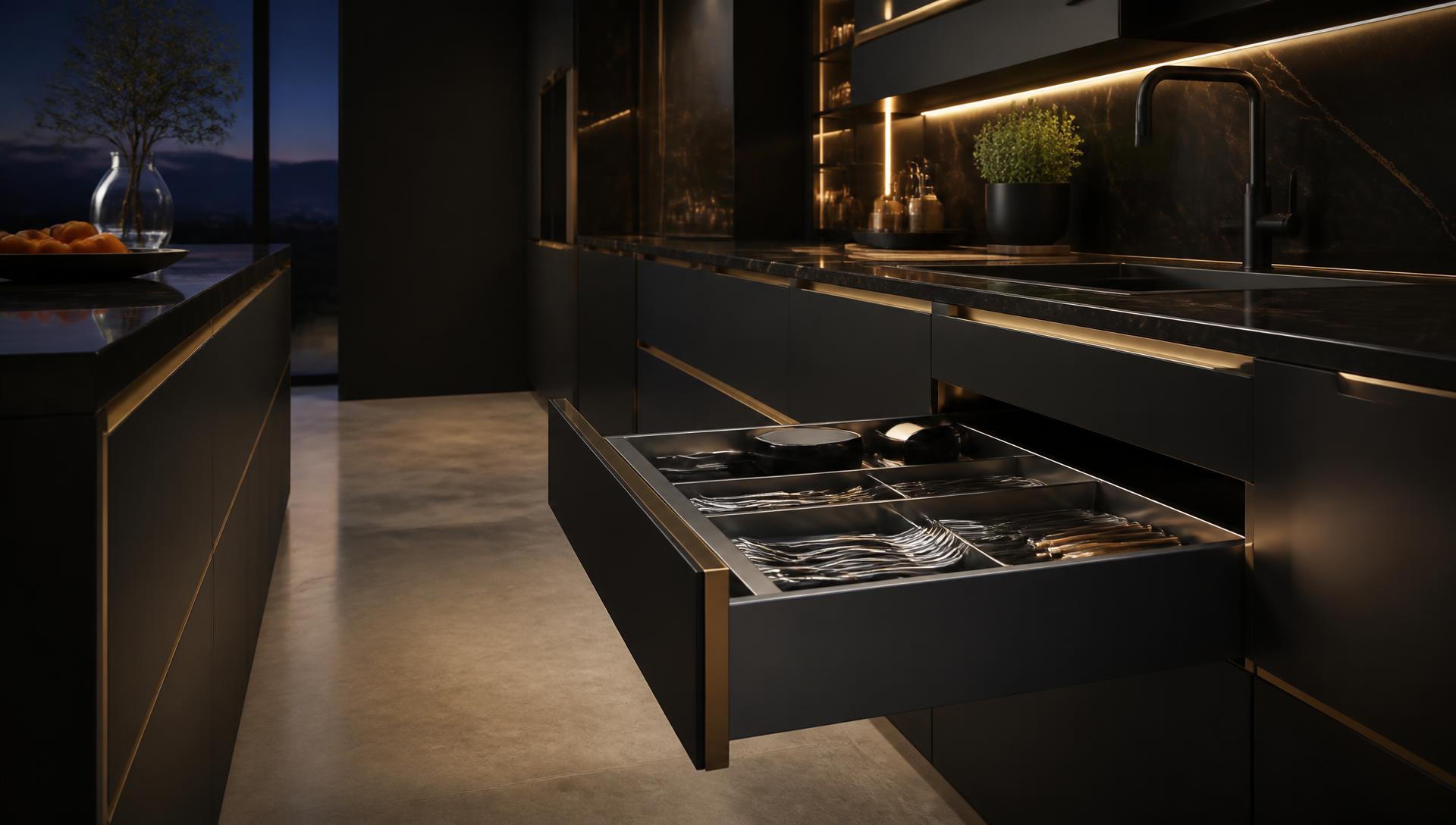
Kitchen Fittings
Browse the kitchen hardware categories referenced in this budget guide.
Explore range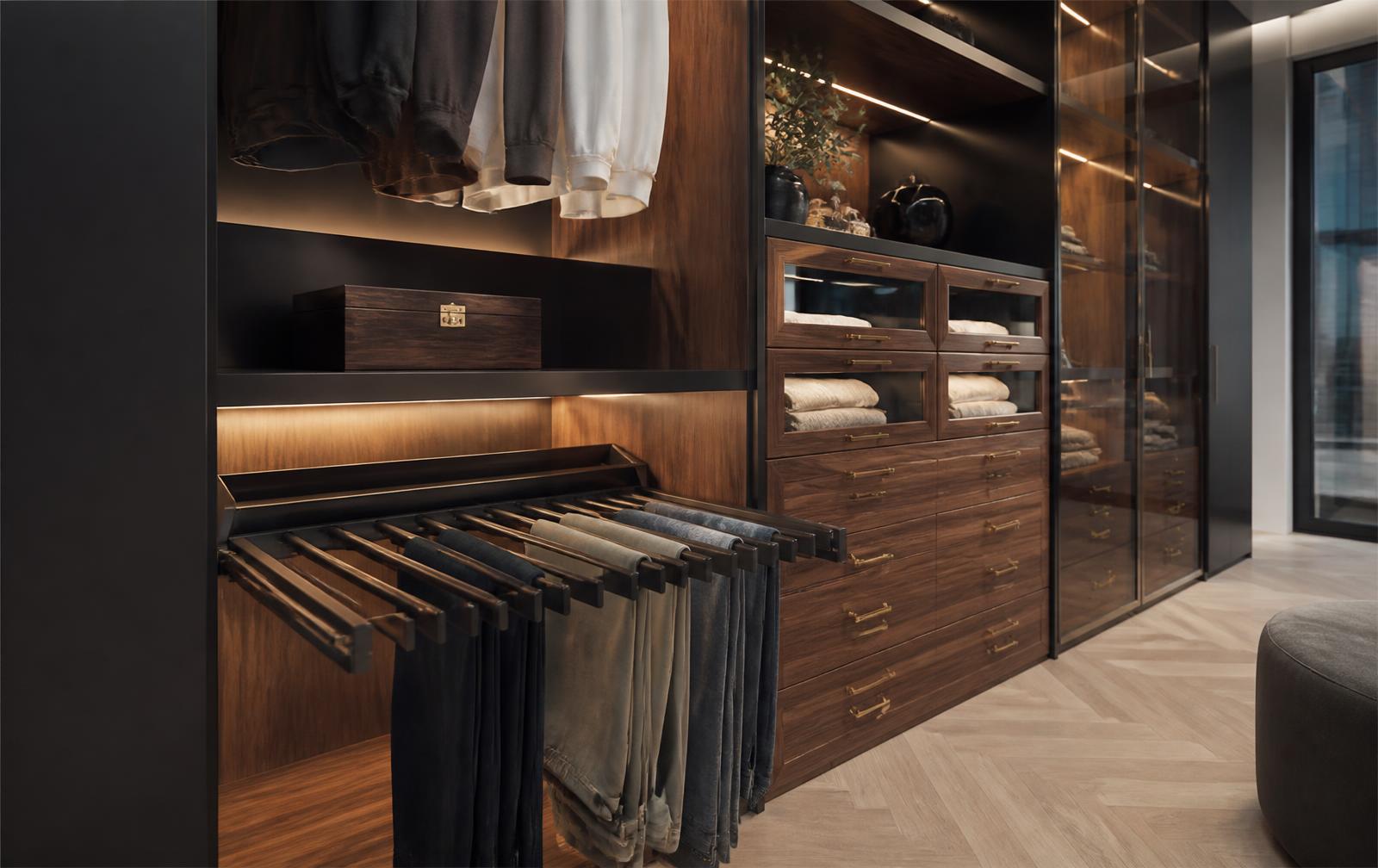
Wardrobe Fittings
Sliding, openable and walk-in wardrobe hardware, budgeted category by category.
Explore range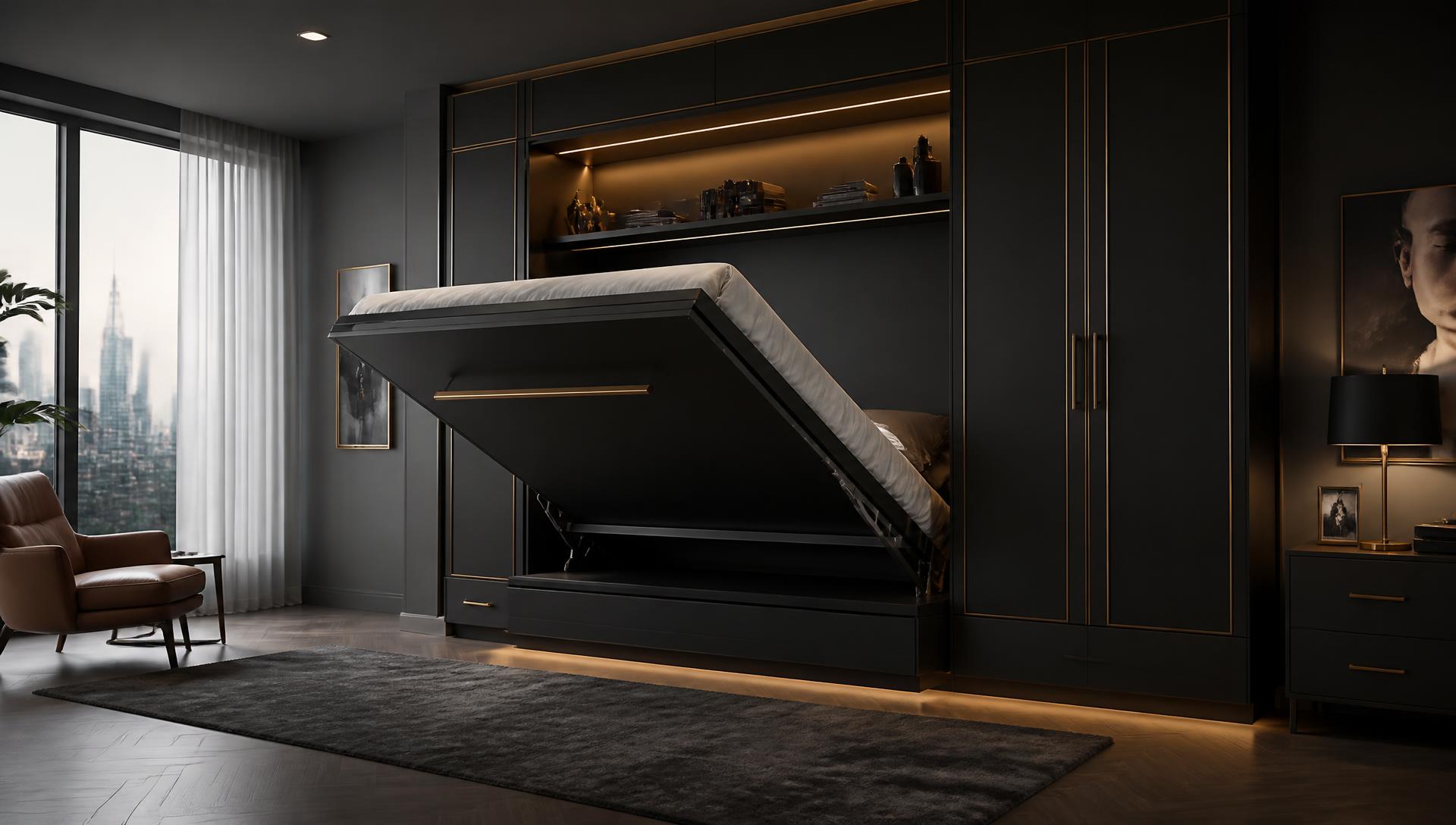
Bed Fittings
Manual and motorized wall bed mechanisms for space-saving furniture.
Explore rangeWork with a supplier you can verify
Ready to specify hardware from a supplier you can verify?
Mirano by Varun Impex has supplied premium modular kitchen, wardrobe and bed hardware to architects, interior designers, OEM manufacturers and 300+ dealers across India since 2006.